


Some error occured while loading the Quick View. Please close the Quick View and try reloading the page.
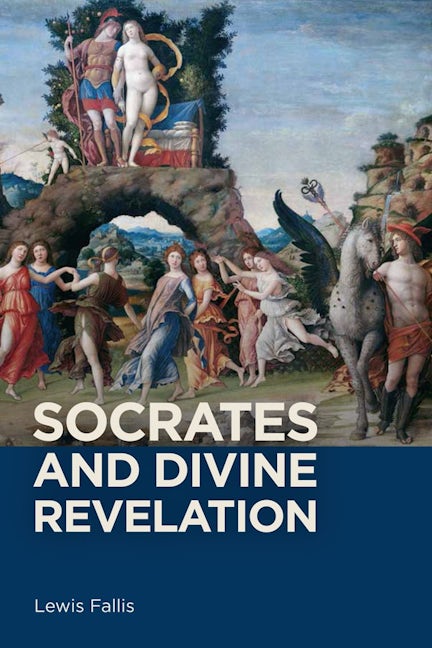
An account of Socrates' encounter with divine revelation
The philosopher Socrates was guided in his investigations by nothing other than his own reason. But did Socrates address adequately the possibility of guidance from a different and higher source -- the possibility of divine revelation?
In this book, Lewis Fallis examines Socrates' study of divine revelation. Giving interpretations of two of Plato's dialogues, the Euthyphro and the Ion -- which each depict Socrates conversing witha believer in revelation -- Fallis argues that in each dialogue Socrates explores the connection between knowledge of justice or nobility on the one hand and divine wisdom on the other. By doing so, Socrates searches for common ground between reason and revelation. Shedding new light on Socratic dialectics, Fallis uncovers the justification for understanding political philosophy to be the necessary starting point for an adequate inquiry into divine revelation.
Lewis Fallis is an independent scholar of political theory.
The philosopher Socrates was guided in his investigations by nothing other than his own reason. But did Socrates address adequately the possibility of guidance from a different and higher source -- the possibility of divine revelation?
In this book, Lewis Fallis examines Socrates' study of divine revelation. Giving interpretations of two of Plato's dialogues, the Euthyphro and the Ion -- which each depict Socrates conversing witha believer in revelation -- Fallis argues that in each dialogue Socrates explores the connection between knowledge of justice or nobility on the one hand and divine wisdom on the other. By doing so, Socrates searches for common ground between reason and revelation. Shedding new light on Socratic dialectics, Fallis uncovers the justification for understanding political philosophy to be the necessary starting point for an adequate inquiry into divine revelation.
Lewis Fallis is an independent scholar of political theory.

Price: $120.00
Pages: 194
Publisher: Boydell & Brewer Inc.
Imprint: University of Rochester Press
Publication Date:
15 January 2018
Trim Size: 9.00 X 6.00 in
ISBN: 9781580469081
Format: Hardcover
BISACs:
POLITICAL SCIENCE / History & Theory, Political science and theory, PHILOSOPHY / Political, RELIGION / Philosophy, Social and political philosophy

As the provocative title of Lewis Fallis's book suggests, he seeks to uncover what Plato may have to teach us here and now about the conflict between reason and revelation or between philosophy and faith. To this end, the book offers careful interpretations of two Platonic dialogues not usually considered in tandem, and it ably demonstrates that the concerns of Plato's Socrates do relate to our own. Among the many virtues of this fine study are the clarity of prose, the gravity of the question that remains front and center, and the impeccable scholarship on display. --
Acknowledgments
1. The Contemporary Dismissal of Piety and the Platonic Alternative
2. Euthyphro's Character
3. Defining the Pious
4. Artfulness and Mindlessness in Plato's "Ion"
5. Ion's Knowledge
6. Dialectics and Divinity
Notes
Works Cited
Index
1. The Contemporary Dismissal of Piety and the Platonic Alternative
2. Euthyphro's Character
3. Defining the Pious
4. Artfulness and Mindlessness in Plato's "Ion"
5. Ion's Knowledge
6. Dialectics and Divinity
Notes
Works Cited
Index