


Some error occured while loading the Quick View. Please close the Quick View and try reloading the page.
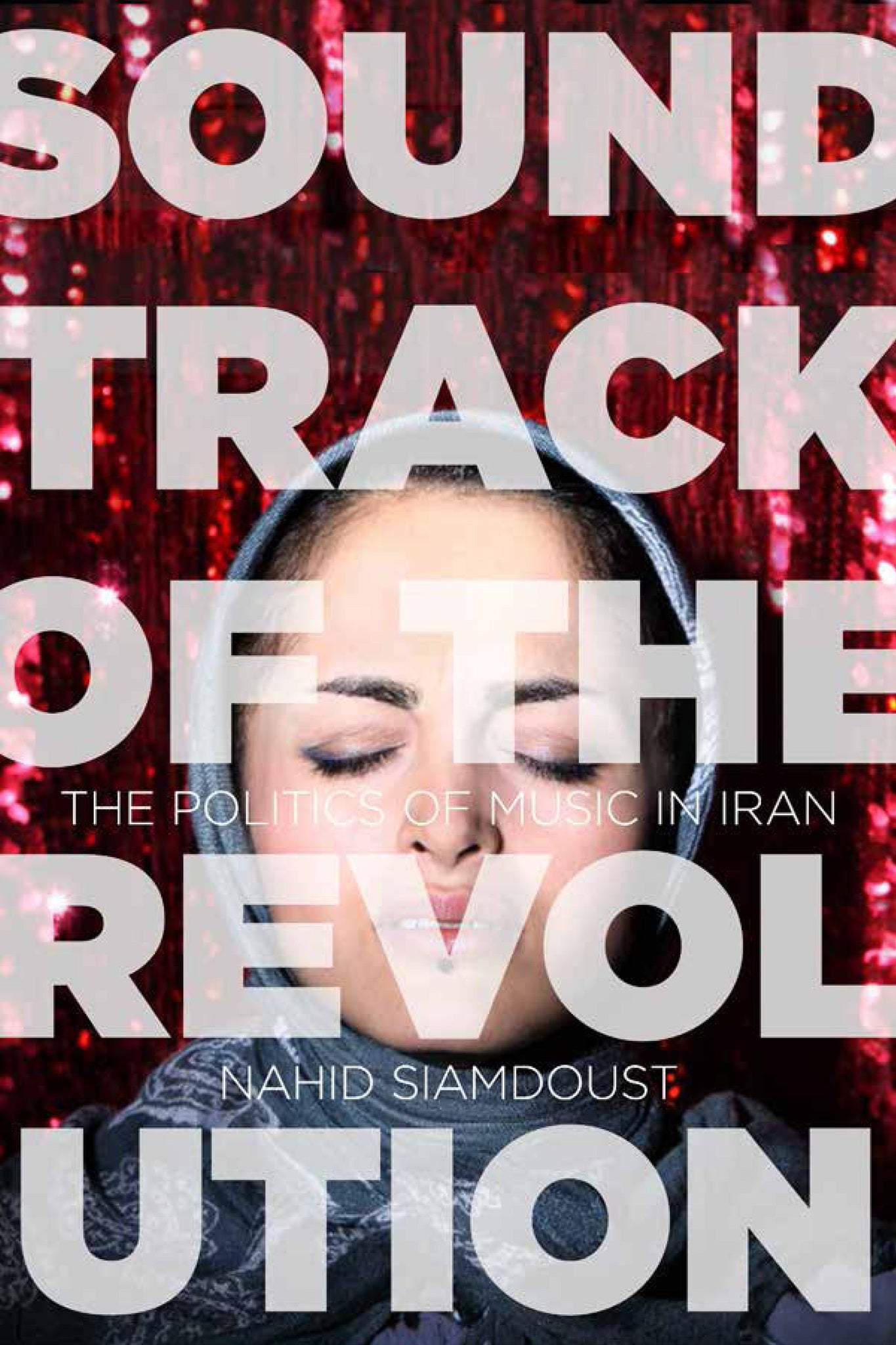
Music was one of the first casualties of the Iranian Revolution. It was banned in 1979, but it quickly crept back into Iranian culture and politics. The state made use of music for its propaganda during the Iran–Iraq war. Over time music provided an important political space where artists and audiences could engage in social and political debate. Now, more than thirty-five years on, both the children of the revolution and their music have come of age. Soundtrack of the Revolution offers a striking account of Iranian culture, politics, and social change to provide an alternative history of the Islamic Republic.
Drawing on over five years of research in Iran, including during the 2009 protests, Nahid Siamdoust introduces a full cast of characters, from musicians and audience members to state officials, and takes readers into concert halls and underground performances, as well as the state licensing and censorship offices. She closely follows the work of four musicians—a giant of Persian classical music, a government-supported pop star, a rebel rock-and-roller, and an underground rapper—each with markedly different political views and relations with the Iranian government. Taken together, these examinations of musicians and their music shed light on issues at the heart of debates in Iran—about its future and identity, changing notions of religious belief, and the quest for political freedom.
Siamdoust shows that even as state authorities resolve, for now, to allow greater freedoms to Iran's majority young population, they retain control and can punish those who stray too far. But music will continue to offer an opening for debate and defiance. As the 2009 Green Uprising and the 1979 Revolution before it have proven, the invocation of a potent melody or musical verse can unite strangers into a powerful public.


— Mark LeVine
"Nahid Siamdoust's Soundtrack of the Revolution is a groundbreaking study of a potent cultural register in post-revolutionary Iran. For both the casual reader and the aficionado, Siamdoust's pioneering insights are revelatory."
— Hamid Dabashi
"Music is the language of liberation. Nahid Siamdoust, who knows all the players and has taken personal risks to tell this story, has written a lovely tribute to the courage and creativity of Iran's musicians. This is a book that, like Iran itself, is filled with hope and sadness—and the universal human desire for freedom."
— Joe Klein
"Siamdoust manages to capture valuable qualities about the practice of popular music in Iran in depth, while also covering a broad period. This is a premium resource for students and researchers at the intersection of popular music and politics. Overall, it is an eye-opening and enjoyable work."
— Amin Hashemi
This chapter provides the historical and political context for an understanding of the issue of music in post-revolutionary Iran. It narrates the process of the Islamization of Iranian politics after the revolution and the problematic of music within Islamic tradition, and posits music as an alternative public sphere. It also provides short overviews of the history of Persian music, music education in Iran, as well as government regulations on music and female musicians, in particular.
Chapter Two offers insight into the status of music in the immediate years before the revolution and goes on to highlight the trajectory of Iran's preeminent vocalist of Persian classical music, Mohammad Reza Shajarian. It delves into discussions about Persian art music versus popular music, pop music in Shah-era Iran, evolving forms of poetic protest in twentieth-century Iran, and the important role of radio both for Persian classical music as well as for the making of Shajarian.
This chapter follows Mohammad Reza Shajarian's trajectory from a "revolutionary" singer and one of the most prominent voices of the Chavosh group—at the onset of the 1979 revolution—to a vocalist whose "popular" politics are increasingly at odds with those of the new state. It provides the necessary background for an understanding of evolutions in state policy and media technology before returning to a closer look at Shajarian's carefully charted repertoire of resistance. As he breaks into open opposition to state policy following the 2009 Green Uprising, he is increasingly portrayed as a lowly entertainer and traitor by hardline state media.
Chapter Four examines the approach of the new state and its leader Ayatollah Ruhollah Khomeini to music, and to cultural policymaking more generally. Initially Khomeini had pronounced music forbidden, but what did he mean by "music," and how did "music" come to be permitted eventually? What Islamic traditions have Islamic Republic officials abided by for their understanding of music's permissibility? This chapter also examines the musical fare on state media during the revolution's first decade, and provides an in-depth look at the official structures that regulate music in the Islamic Republic.
This chapter tells the as yet untold story of the creation of state-approved pop music in Islamic Iran, as shared by the officials and musicians at the center of its making. Pop music, once banned because the new state perceived it as representing the cultural promiscuity of Shah-era Iran, was greenlighted and broadcast from within conservative state media toward the end of the 1990s, following President Akbar Hashemi Rafsanjani's reconstruction period. This chapter presents the musicians that spearheaded this process. It highlights the work of one of the most popular stars among post-revolutionary Iran's first generation of pop singers, Alireza Assar, and argues that his projection of an alternative religiosity in contradistinction to the state's dogmatic Islam attracted Iran's post-1980–88 war youth.
Chapter Six examines the rebirth of independent music in post-revolutionary Iran, which flourished during the terms of reformist President Mohammad Khatami and his government's more liberal music policy. The chapter narrates the beginnings of rock and fusion music starting in the late 1980s and onward to Iran's "first" semi-public underground rock concert, as well as the importance of the webzine Tehranavenue in bringing to light Iran's active underground music scene. The chapter follows the trajectory of the musician Mohsen Namjoo in delineating these processes.
This chapter is a study of the coming of age of the alternative musician Mohsen Namjoo, and his struggles to emerge as a musician under politically repressive circumstances. It narrates his cultivation of a discourse of absurdist nihilism, which finds great resonance with a community of post-ideological cynics, as well as his rhetorical and musical iconoclasm. It traces his arc from a student struggling to make it as a musician in Iran to his emigration and self-stated decision to break his "self-censorship" following the 2009 unrest.
Chapter Eight proceeds in the book's chronological treatment of music in post-revolutionary Iran to discuss the changes in cultural policy from the more liberal government of Mohammad Khatami to that of Mahmoud Ahmadinejad. This transition coincided with a period of great technological transformation around 2005, when the impact of new media was changing the face of music production, distribution, and consumption in Iran. It then goes on to describe discussions of the category of underground music, how it is defined and categorized internally, and the government's reckoning with this new reality.
This chapter delves deeper into the underground music scene by foregrounding one of its best-known performers, Soroush Lashkary, aka Hichkas. It discusses categorizations of Rap-e Farsi and the coming of age of Hichkas, the "Godfather of Rap-e Farsi," from a middle-class kid in Tehran to a household name. The chapter also analyzes the generational differences between Namjoo and Hichkas, and how these differences are reflected in their music. It further explores the music of Hichkas, which draws on an old Iranian honor ethic to find traction with its listeners.
Chapter Ten narrates developments in music during the 2009 Green Uprising, and draws comparisons to musical trajectories at the time of the 1979 revolution, as discussed in Chapters One and Two. It also discusses the election of President Hassan Rouhani as a continuation of the political sentiments of the Green Movement, and proceeds to narrate more recent musical developments. The chapter then offers some conclusions on the bigger questions in the book about expressions of joy, freedom, and political repression.