


Some error occured while loading the Quick View. Please close the Quick View and try reloading the page.
A free open access ebook is available upon publication. Learn more at www.luminosoa.org.
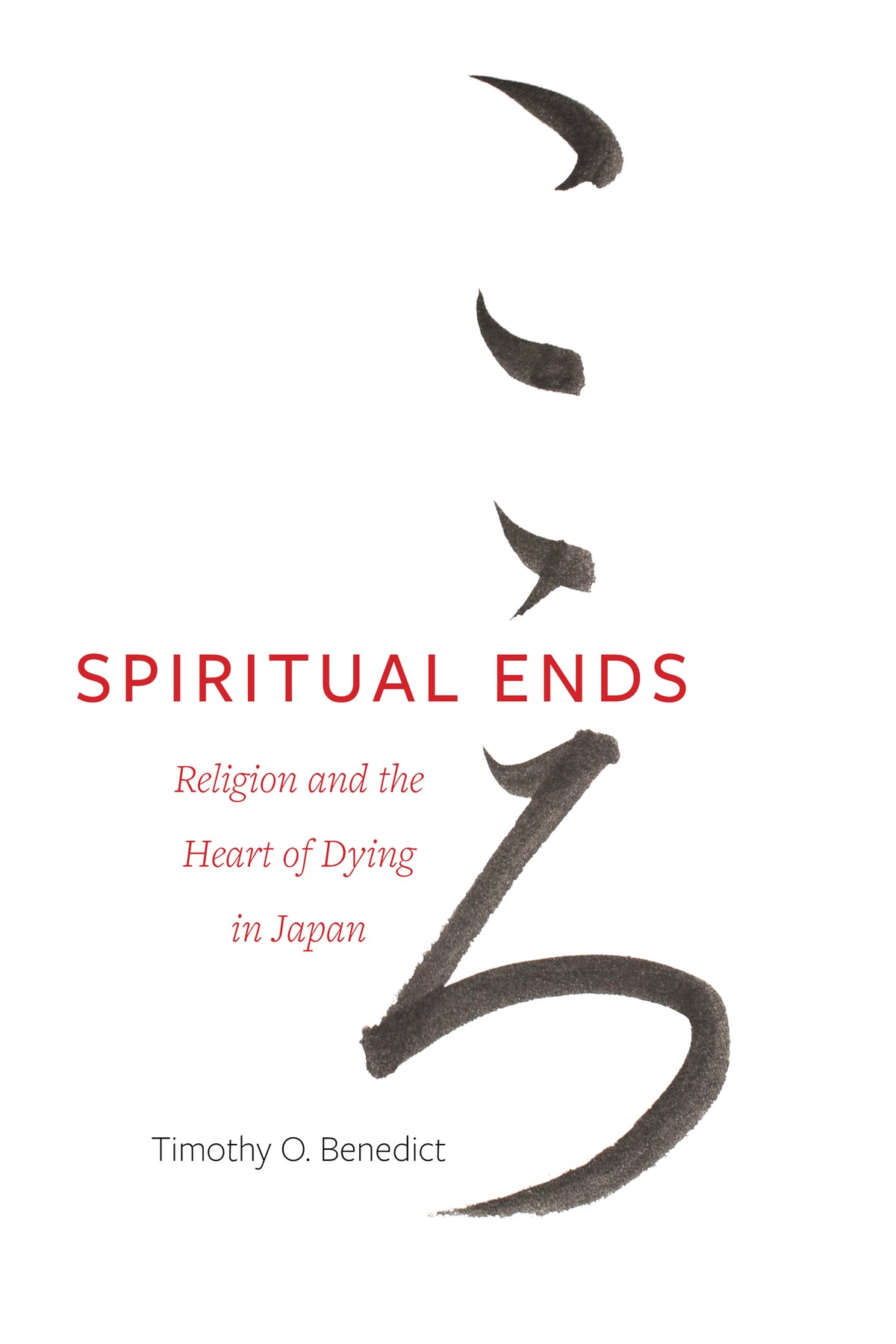
What role does religion play at the end of life in Japan? Spiritual Ends draws on ethnographic fieldwork and interviews with hospice patients, chaplains, and medical workers to provide an intimate portrayal of how spiritual care is provided to the dying in Japan. Timothy O. Benedict uses both local and cross-cultural perspectives to show how hospice caregivers in Japan are appropriating and reinterpreting global ideas about spirituality and the practice of spiritual care. Benedict relates these findings to a longer story of how Japanese religious groups have pursued vocational roles in medical institutions as a means to demonstrate a so-called “healthy” role in society. By paying attention to how care for the kokoro (heart or mind) is key to the practice of spiritual care, this book enriches conventional understandings of religious identity in Japan while offering a valuable East Asian perspective to global conversations on the ways religion, spirituality, and medicine intersect at death.
What role does religion play at the end of life in Japan? Spiritual Ends draws on ethnographic fieldwork and interviews with hospice patients, chaplains, and medical workers to provide an intimate portrayal of how spiritual care is provided to the dying in Japan. Timothy O. Benedict uses both local and cross-cultural perspectives to show how hospice caregivers in Japan are appropriating and reinterpreting global ideas about spirituality and the practice of spiritual care. Benedict relates these findings to a longer story of how Japanese religious groups have pursued vocational roles in medical institutions as a means to demonstrate a so-called “healthy” role in society. By paying attention to how care for the kokoro (heart or mind) is key to the practice of spiritual care, this book enriches conventional understandings of religious identity in Japan while offering a valuable East Asian perspective to global conversations on the ways religion, spirituality, and medicine intersect at death.

Price: $34.95
Pages: 208
Publisher: University of California Press
Imprint: University of California Press
Series: New Interventions in Japanese Studies
Publication Date:
December 20, 2022
Trim Size: 9.00 X 6.00 in
ISBN: 9780520388666
Format: Paperback

"Highly recommend[ed] to anyone interested in hospice care, spiritual care, or end-of-life care in, but not limited to, Japan."
"A valuable addition to the ongoing discussion on the role of religiosity in Japan’s purportedly greatly secularized contemporary society, which will surely spark new debates regarding what religion can and cannot do for the dying."
"A valuable addition to the ongoing discussion on the role of religiosity in Japan’s purportedly greatly secularized contemporary society, which will surely spark new debates regarding what religion can and cannot do for the dying."
“This is an important and daring work that adds significant layers to our understandings of Japanese meaning making in the context of end-of-life care. It lays crucial groundwork for further research in the field and significant suggestions for new ways to approach questions of spirituality in Japan.”
Timothy O. Benedict is Assistant Professor in the School of Sociology at Kwansei Gakuin University, Japan.