


Some error occured while loading the Quick View. Please close the Quick View and try reloading the page.
Winner, 2025 Francesco Guicciardini Prize for Best Book in Historical International Relations, Historical International Relations section, International Studies Association
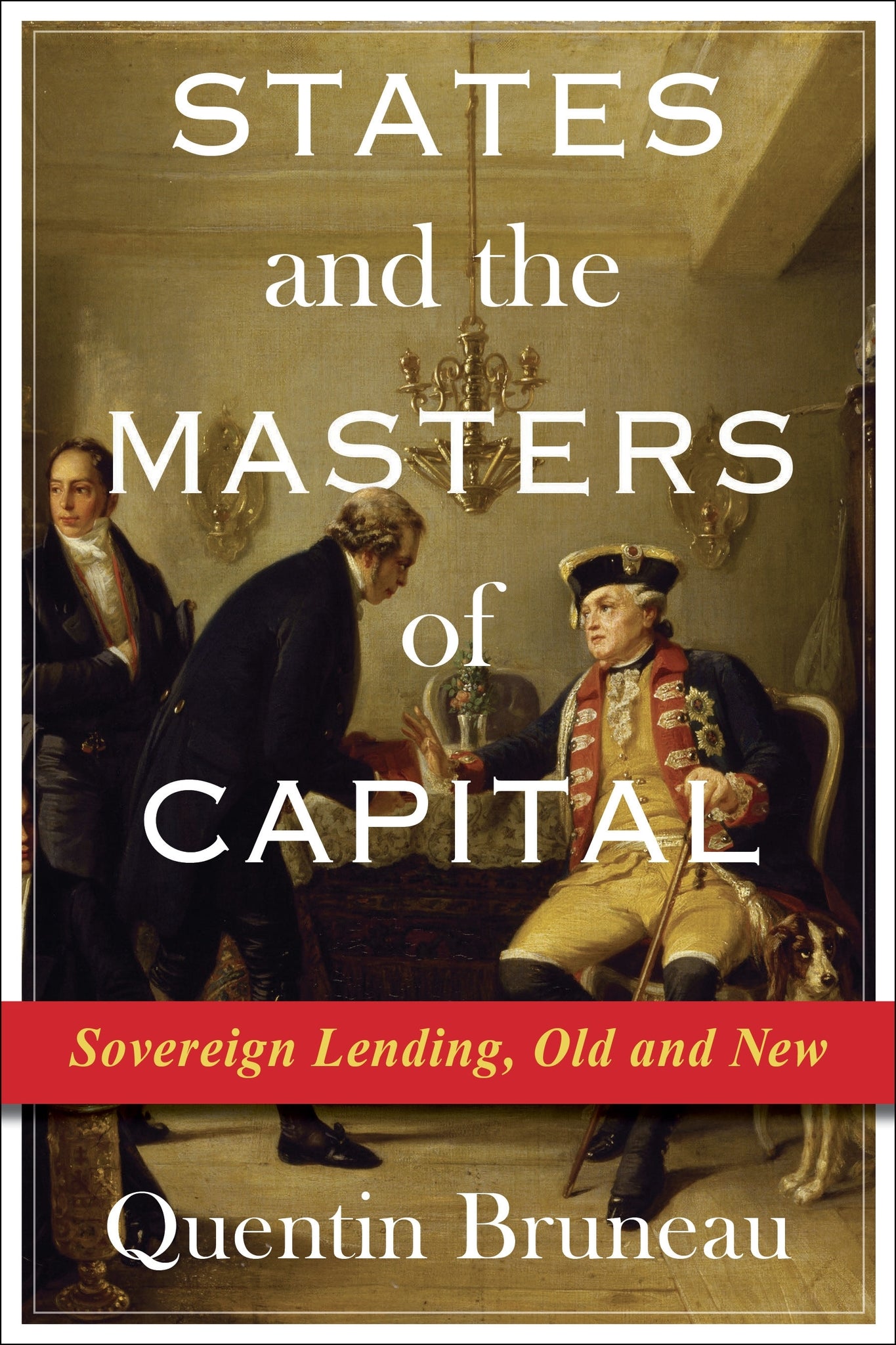
Today, states’ ability to borrow private capital depends on stringent evaluations of their creditworthiness. While many presume that this has long been the case, Quentin Bruneau argues that it is a surprisingly recent phenomenon—the outcome of a pivotal shift in the social composition of financial markets.
Investigating the financiers involved in lending capital to sovereigns over the past two centuries, Bruneau identifies profound changes in their identities, goals, and forms of knowledge. He shows how an old world made up of merchant banking families pursuing both profit and status gradually gave way to a new one dominated by large companies, such as joint stock banks and credit rating agencies, exclusively pursuing profit. Lacking the web of personal ties to sovereigns across the world that their established rivals possessed, these financial institutions began relying on a different form of knowledge created to describe and compare states through quantifiable data: statistics. Over the course of this epochal shift, which only came to an end a few decades ago, financial markets thus reconceptualized states. Instead of a set of individuals to be known in person, they became numbers on a page. Raising new questions about the history of sovereign lending, this book illuminates the nature of the relationship between states and financial markets today—and suggests that it may be on the cusp of another major transformation.


— Emily Erikson, author of Trade and Nation: How Companies and Politics Reshaped Economic Thought
Quentin Bruneau shines a deep and penetrating light on financial institutions and the changing forms of knowledge which guide their activities. The historical mode of enquiry he adopts is a critical advance on more static conceptions of institutional agency, and is an important contribution towards understanding what is new and innovative in contemporary global finance.
— Randall Germain, author of Global Politics and Financial Governance
Pithy, intelligent, illuminating. This exciting book reveals the changing and pivotal role played by financial actors and markets in modern state formation.
— Patricia Clavin, coeditor of Internationalisms: A Twentieth-Century History
Bruneau has written a brilliant book about the ‘ways of knowing’ in international finance.
This book is a compelling read, and its ambition to create an interdisciplinary bridge is highly commendable. It undoubtedly contributes insights for gaining an interesting perspective on some of the foundational aspects of sovereign lending.
The book is a significant achievement, providing a novel method through which IR scholars can recover the pivotal yet ‘seemingly most mundane aspects of a given epoch’s thought, among specific social groups.’
Acknowledgments
Introduction
1. How International Practitioners Think About States
Part I: The Old Sovereign Lending
2. The Insiders: Merchant Bankers
3. Gentility as a Form of Knowledge
Part II: The New Sovereign Lending
4. The Outsiders: Joint Stock Banks
5. Statistics as a Form of Knowledge
6. The New Sovereign Lending Triumphs
Conclusion
Notes
Bibliography
Index