Skip to product information
1 of 1

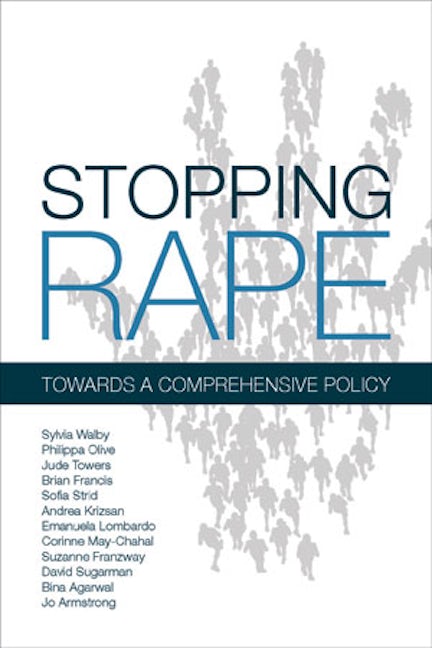
Stopping Rape

Regular price $43.95
Regular price $43.95 Sale price $43.95
Sold out
Available Open Access under CC-BY-NC licence. The need to stop rape is pressing and, since it is the outcome of a wide range of practices and institutions in society, so too must the policies be to...
Read More
  • 01 August 2015
View Product Details

Available Open Access under CC-BY-NC licence. The need to stop rape is pressing and, since it is the outcome of a wide range of practices and institutions in society, so too must the policies be to stop it This important book offers a comprehensive guide to the international policies developed to stop rape , together with case study examples on how they work. The book engages with the law and criminal justice system, health services, specialised services for victim-survivors, educational and cultural interventions, as well as how they can best be coordinated. It is informed by theory and evidence drawn from scholarship and practice from around the world.

The book will be of interest to a global readership of students, practitioners and policy makers as well as anyone who wants to know how rape can be stopped.

files/i.png Icon
Price: $43.95
Pages: 320
Publisher: Bristol University Press
Imprint: Policy Press
Publication Date: 01 August 2015
ISBN: 9781447322092
Format: Paperback
BISACs: FAMILY & RELATIONSHIPS / Abuse / General, Sociology, SOCIAL SCIENCE / Women's Studies, SOCIAL SCIENCE / Violence in Society, Gender studies: women and girls
REVIEWS Icon
The book is written by scholars from around the world, led by Sylvia Walby: Philippa Olive, Jude Towers, Brian Francis, Sofia Strid, Andrea Krizsán, Emanuela Lombardo, Corinne May-Chahal, Suzanne Franzway, David Sugarman, Bina Agarwal and Jo Armstrong. Walby is a Distinguished Professor of Sociology and UNESCO Chair in Gender Research, at Lancaster University and has received funding from UN Women, UNECE, European Parliament, European Institute for Gender Equality, Council of Europe, Home Office, and ESRC.

Introduction;

Strategy;

Health and victim services;

Law and the criminal justice system;

Conflict zones;

Culture, media and education;

Economy;

Conclusions.