


Some error occured while loading the Quick View. Please close the Quick View and try reloading the page.
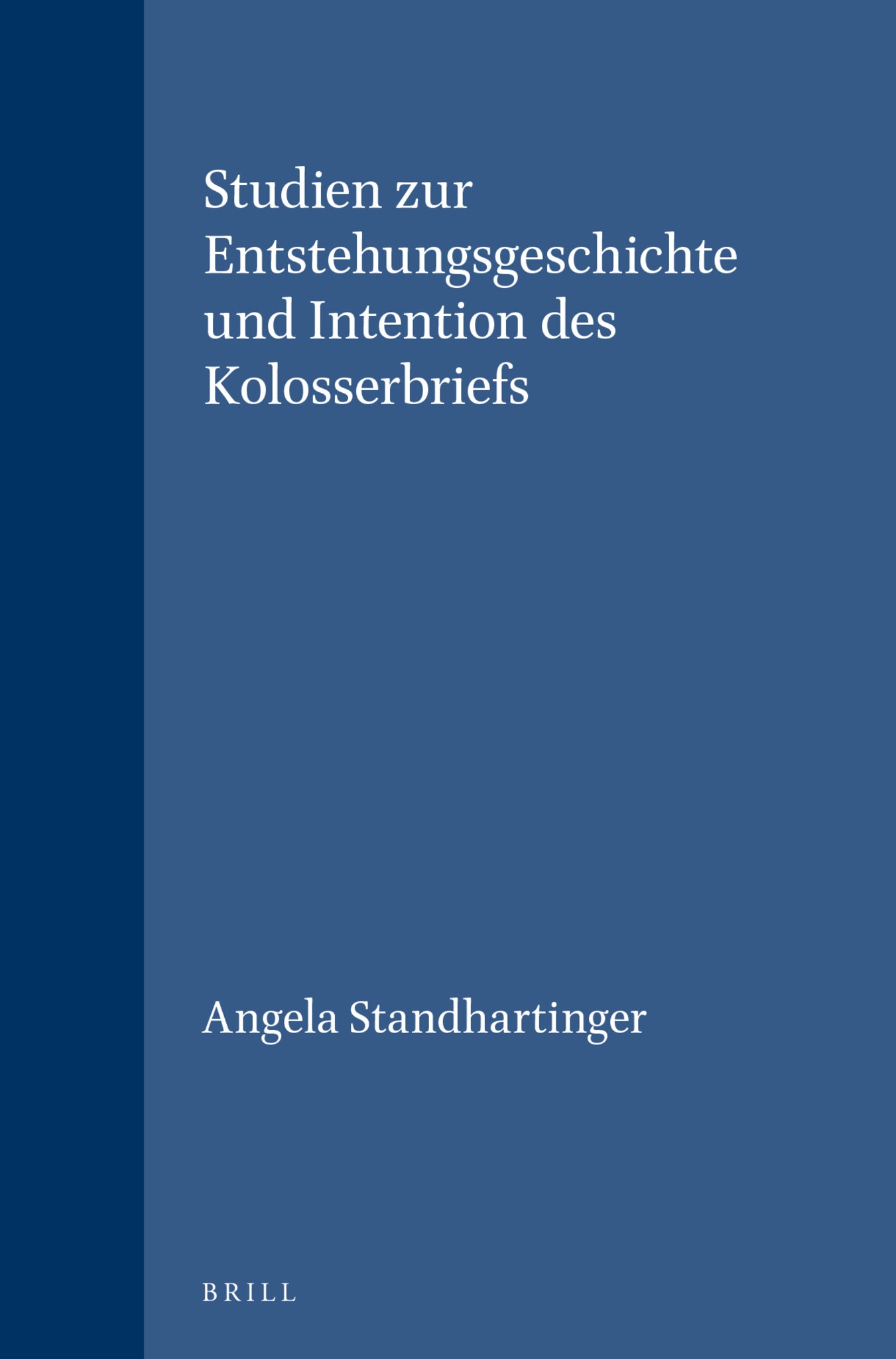
This volume examines the Epistle to the Colossians as a pseudepigraphic letter. It is concerned with how different traditions associated with Paul and his thought were appropriated by Pauline communities in the aftermath of his death. Extensive attention is paid to the possibility of Colossians' interaction with oral traditions, which includes consideration of the oral context for Paul's own correspondence and ministry. In recovering these traditions, Colossians creates a heavenly letter and a testament, designed so as to assure readers of the apostle's ongoing aid and to interpret the theological significance of his death. The analysis of different literary and rhetorical characteristics of Colossians (pseudephigraphy, orality, etc.) is placed within the context of both contemporaneous Jewish (esp. Sapiential) traditions and the traditions of the Greco-Roman philosophic schools. One chapter deals with the origin and purpose of the 'Haustafel'.

Price: $275.00
Pages: 362
Publisher: Brill
Imprint: Brill
Series: Novum Testamentum, Supplements
Publication Date:
01 December 1998
ISBN: 9789004112865
Format: Other

Angela Standhartinger, Dr. Theol. Habil., is Privatdozent for New Testament Studies at the Fachbereich Evangelische Theologie der Johann Wolfgang Goethe-Universität in Frankfurt am Main. She has published on New Testament and Hellenistic Judaism including Das Frauenbild im Judentum der Hellenistischen Zeit (Brill, 1995).