


Some error occured while loading the Quick View. Please close the Quick View and try reloading the page.
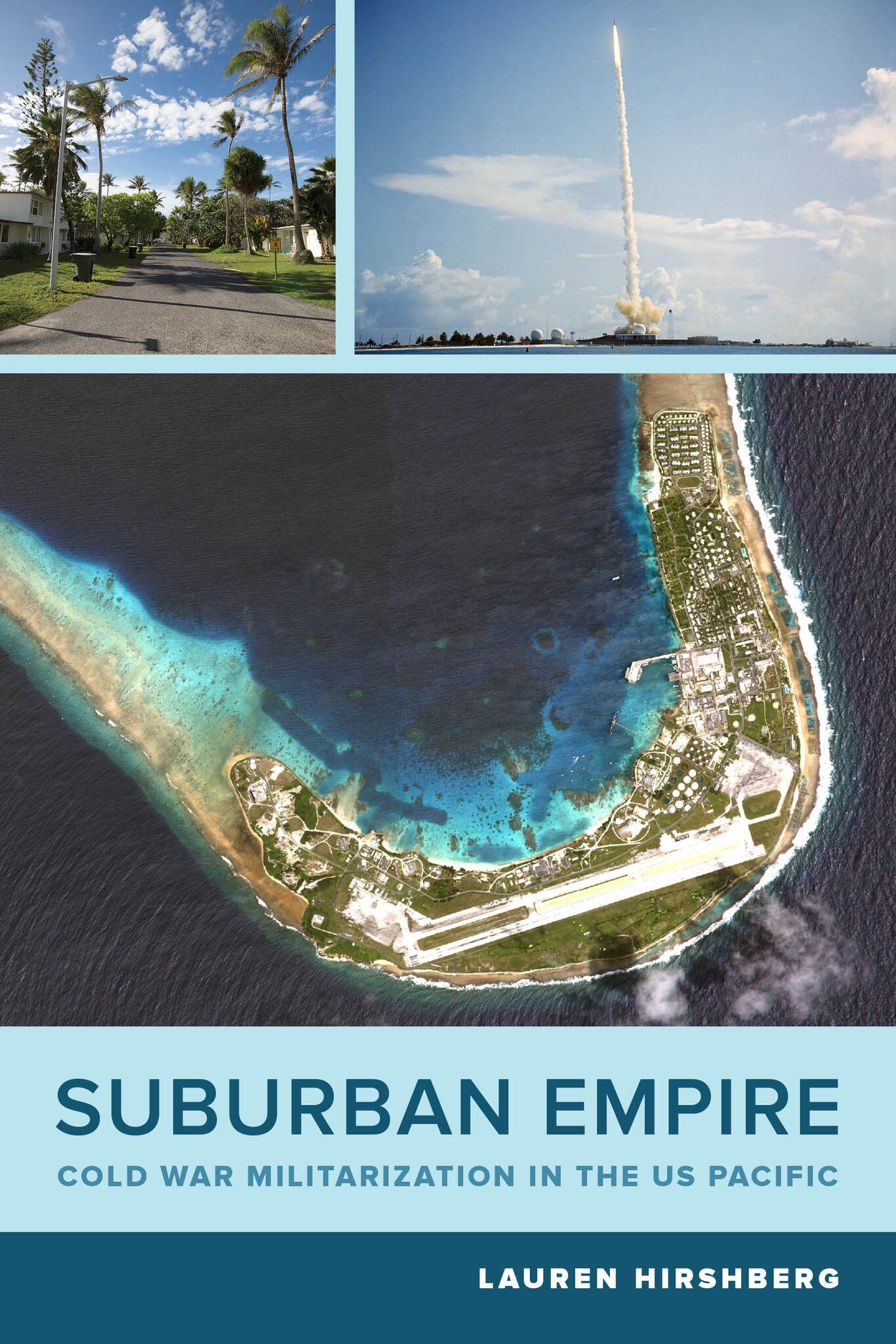
Suburban Empire takes readers to the US missile base at Kwajalein Atoll in the Marshall Islands, at the matrix of postwar US imperial expansion, the Cold War nuclear arms race, and the tide of anti-colonial struggles rippling across the world. Hirshberg shows that the displacement of indigenous Marshallese within Kwajalein Atoll mirrors the segregation and spatial politics of the mainland US as local and global iterations of US empire took hold. Tracing how Marshall Islanders navigated US military control over their lands, Suburban Empire reveals that Cold War–era suburbanization was perfectly congruent with US colonization, military testing, and nuclear fallout. The structures of suburban segregation cloaked the destructive history of control and militarism under a veil of small-town innocence.

Price: $29.95
Pages: 386
Publisher: University of California Press
Imprint: University of California Press
Series: American Crossroads
Publication Date:
15 March 2022
ISBN: 9780520963856
Format: eBook

Contents
List of Illustrations
A Note on Language
Introduction—Home on the Range: US Empire and Innocence in the Cold War Pacific
1. From Wartime Victory to Cold War Containment in the Pacific:
Building the Postwar US Security State on Marshallese Insecurity
2. New Homes for New Workers: Colonialism, Contract, and Construction
3. Domestic Containment in the Pacific: Segregation and Surveillance on Kwajalein
4. “Mayberry by the Sea”: Americans Find Home in the Marshall Islands
5. Reclaiming Home: Operation Homecoming and the Path toward Marshallese
Self-Determination
6. US Empire and the Shape of Marshallese Sovereignty in the “Postcolonial” Era
Conclusion: Kwajalein and Ebeye in a New Era of Insecurity
Acknowledgments
Notes
Works Cited
Index
List of Illustrations
A Note on Language
Introduction—Home on the Range: US Empire and Innocence in the Cold War Pacific
1. From Wartime Victory to Cold War Containment in the Pacific:
Building the Postwar US Security State on Marshallese Insecurity
2. New Homes for New Workers: Colonialism, Contract, and Construction
3. Domestic Containment in the Pacific: Segregation and Surveillance on Kwajalein
4. “Mayberry by the Sea”: Americans Find Home in the Marshall Islands
5. Reclaiming Home: Operation Homecoming and the Path toward Marshallese
Self-Determination
6. US Empire and the Shape of Marshallese Sovereignty in the “Postcolonial” Era
Conclusion: Kwajalein and Ebeye in a New Era of Insecurity
Acknowledgments
Notes
Works Cited
Index