


Some error occured while loading the Quick View. Please close the Quick View and try reloading the page.
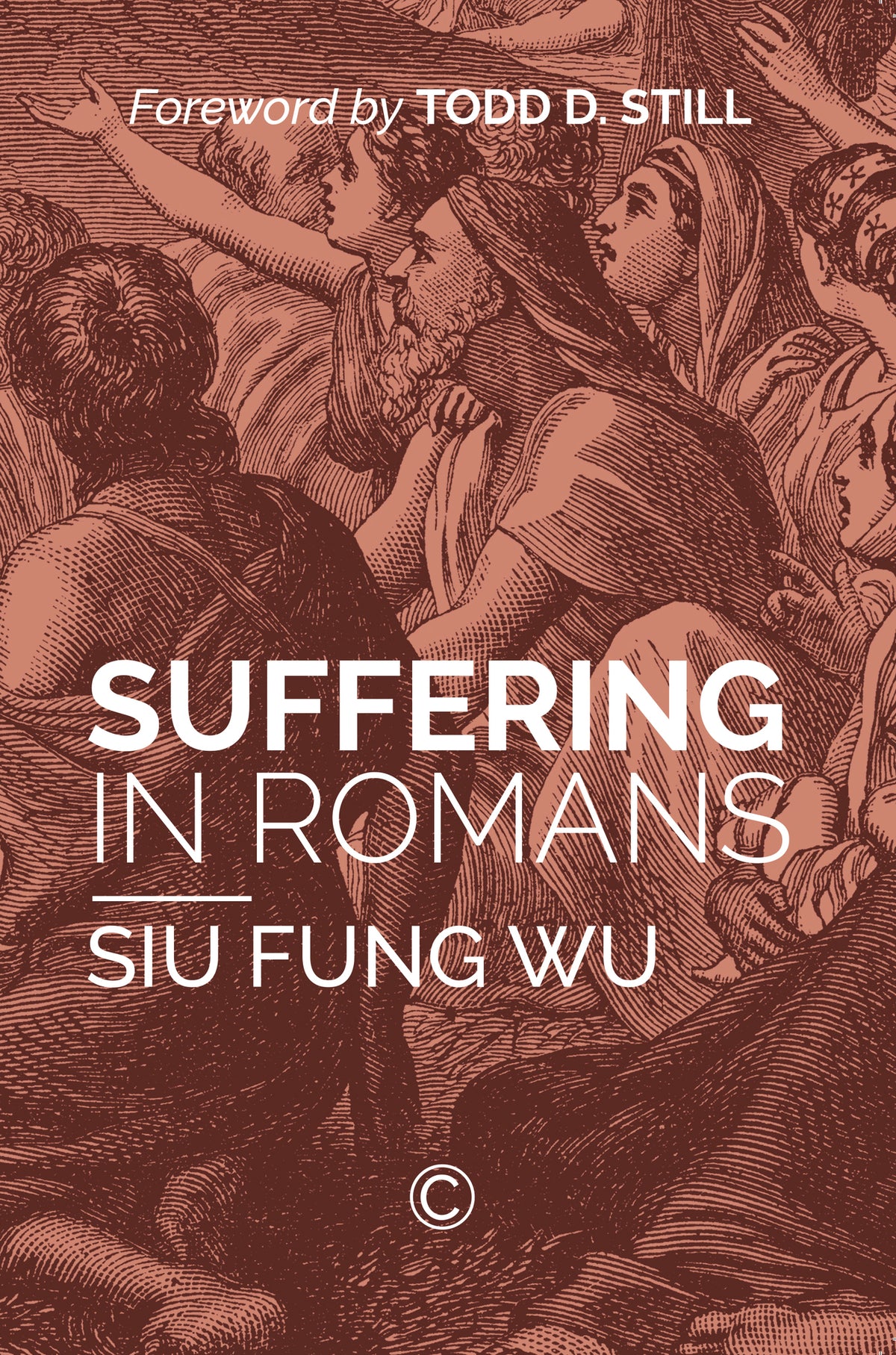
An elucidation of suffering in Paul's Epistle to the Romans, its meaning in the lives of Paul's audience, and its role in transforming humanity through Christ.
Most of the Jesus-followers in Rome would have been familiar with socioeconomic hardship. Suffering was a daily reality either for themselves or for someone they knew. Many lived below or just above subsistence level. Some were slaves, homeless, or chronically sick. Followers of Christ might have experienced persecution because of their refusal to take part in the local religious festivals. Suffering is, of course, a significant theme in Romans 5:1-11 and 8:17, 18-39. Paul mentions various types of affliction many times in these texts. How might Paul's audience have understood them? In Suffering in Romans Siu Fung Wu argues that Paul speaks of the vocation of the Jesus-followers to participate in Christ's suffering, with the purpose that they may be glorified with him. Indeed, their identification with Christ's suffering is an integral part of God's project of transforming humanity and renewing creation. It is in their faithful suffering that Christ-followers participate in God's triumph over evil. This is counter-intuitive, because most people think that victory is won by power and strength. Yet the children of God partake in his cosmic victory by their suffering, aided by the Spirit and the hope of glory.
Most of the Jesus-followers in Rome would have been familiar with socioeconomic hardship. Suffering was a daily reality either for themselves or for someone they knew. Many lived below or just above subsistence level. Some were slaves, homeless, or chronically sick. Followers of Christ might have experienced persecution because of their refusal to take part in the local religious festivals. Suffering is, of course, a significant theme in Romans 5:1-11 and 8:17, 18-39. Paul mentions various types of affliction many times in these texts. How might Paul's audience have understood them? In Suffering in Romans Siu Fung Wu argues that Paul speaks of the vocation of the Jesus-followers to participate in Christ's suffering, with the purpose that they may be glorified with him. Indeed, their identification with Christ's suffering is an integral part of God's project of transforming humanity and renewing creation. It is in their faithful suffering that Christ-followers participate in God's triumph over evil. This is counter-intuitive, because most people think that victory is won by power and strength. Yet the children of God partake in his cosmic victory by their suffering, aided by the Spirit and the hope of glory.

Price: $36.95
Pages: 306
Publisher: Boydell & Brewer Inc.
Imprint: James Clarke
Publication Date:
25 February 2016
Trim Size: 9.02 X 6.02 in
ISBN: 9780227175903
Format: Paperback
BISACs:
RELIGION / Biblical Studies / General, Criticism and exegesis of sacred texts, HISTORY / Wars & Conflicts / World War II / General, Bibles, Second World War

The theme of suffering is explicit in Romans 5 and 8, but Dr Siu Fung Wu shows that it underlies the whole of Paul's letter and is characteristic of the lives of the people Paul addresses. As one whose own background has involved suffering in the garment factories of East Asia, Wu reads Romans with that experience and understanding, providing a powerful challenge to those of us interpreting the text from positions of comfort and power.
— Keith Dyer, Associate Professor, University of Divinity (Whitley College)
Wu's analysis of Romans 5-8 represents an original contribution to the study of Paul's great letter. Against the backdrop of this social reconstruction, Wu elucidates Paul's argument regarding the creation of a new humanity in Christ and its vocation to suffer in anticipation of sharing in Christ's glory. Deftly drawing together several lines of inquiry - scriptural echoes, the Greco-Roman religio-political matrix - Wu engages a wide range of scholarship to provide a sound exegetical study.
— Timothy G. Gombis, Associate Professor of New Testament, Grand Rapids Theological Seminary
[T]his is a very fine piece of work, which makes a welcome addition to the ever-growing body of literature on Romans. ... [W]ell presented and very engaging. ... Wu is conscious of the relevance of the texts he examines to not only the original Roman audience, but to a great many of today's Christian believers, and his book helps us all be more aware of that.
— Gary W. Burnett
This fascinating exploration demonstrates that Paul's audience were very much familiar with the realities of daily suffering.' 'The author has a gift for locating his current argument within his larger argument.' 'This monograph should represent a significant contribution to the field of Pauline scholarship.'
— Hayden, Mcihael, Castle Church, Stafford, Churchman, Winter 2018, pg265
— Keith Dyer, Associate Professor, University of Divinity (Whitley College)
Wu's analysis of Romans 5-8 represents an original contribution to the study of Paul's great letter. Against the backdrop of this social reconstruction, Wu elucidates Paul's argument regarding the creation of a new humanity in Christ and its vocation to suffer in anticipation of sharing in Christ's glory. Deftly drawing together several lines of inquiry - scriptural echoes, the Greco-Roman religio-political matrix - Wu engages a wide range of scholarship to provide a sound exegetical study.
— Timothy G. Gombis, Associate Professor of New Testament, Grand Rapids Theological Seminary
[T]his is a very fine piece of work, which makes a welcome addition to the ever-growing body of literature on Romans. ... [W]ell presented and very engaging. ... Wu is conscious of the relevance of the texts he examines to not only the original Roman audience, but to a great many of today's Christian believers, and his book helps us all be more aware of that.
— Gary W. Burnett
This fascinating exploration demonstrates that Paul's audience were very much familiar with the realities of daily suffering.' 'The author has a gift for locating his current argument within his larger argument.' 'This monograph should represent a significant contribution to the field of Pauline scholarship.'
— Hayden, Mcihael, Castle Church, Stafford, Churchman, Winter 2018, pg265
Foreword by Todd D. Still
Preface
Abbreviations
1. Aim and Approach of Study
2. Social Location of the Audience and Ancient Worldviews on Suffering
3. From Adamic Humanity to a New Humanity in Christ
4. The Work of Christ and the Eschatological Spirit
5. The Vocation to Participate in Christ’s Suffering
6. Cosmic Renewal and the Purpose of Suffering
7. Participating in the Triumph of God
8. Overall Conclusion
Appendices
Bibliography
Index of Ancient Sources
Index of Subjects
Index of Modern Authors
Preface
Abbreviations
1. Aim and Approach of Study
2. Social Location of the Audience and Ancient Worldviews on Suffering
3. From Adamic Humanity to a New Humanity in Christ
4. The Work of Christ and the Eschatological Spirit
5. The Vocation to Participate in Christ’s Suffering
6. Cosmic Renewal and the Purpose of Suffering
7. Participating in the Triumph of God
8. Overall Conclusion
Appendices
Bibliography
Index of Ancient Sources
Index of Subjects
Index of Modern Authors