


Some error occured while loading the Quick View. Please close the Quick View and try reloading the page.
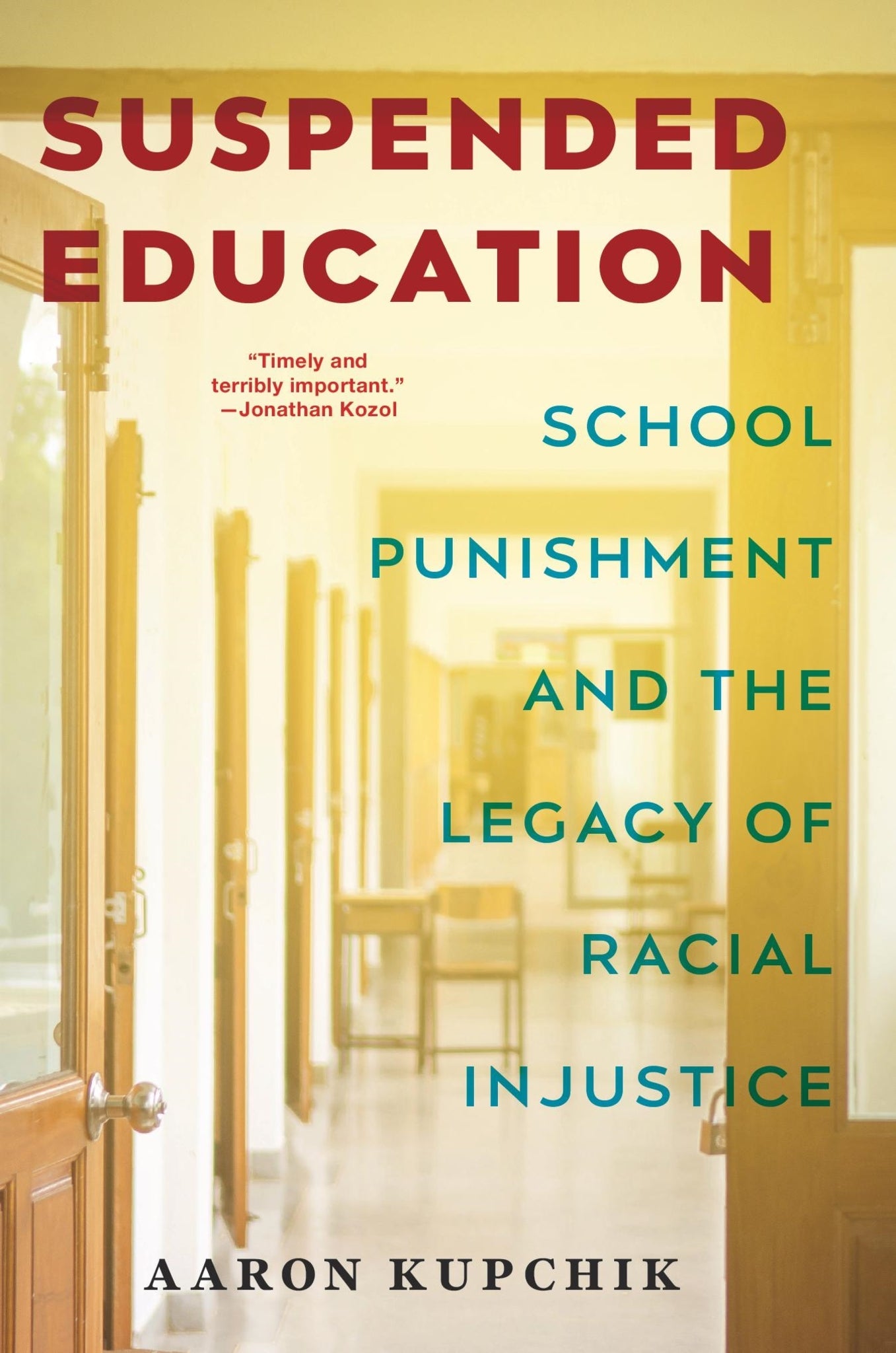
How the historic resistance to racial desegregation in schools led to the over-punishment of students today
Every year, millions of public school students are suspended. This overused punishment removes students from the classroom, but it does not improve their behavior. Instead, suspension disrupts their education, harming the students, their families, and their schools. Black students suffer most within this broken system, experiencing a far greater risk of school punishment and the significant harms that accompany it. Many activists and scholars have considered how school punishment increases racial inequity, but few have thought to ask why. Why do we punish students the way we do, and why have we allowed this harmful practice to impact the lives of our nation’s children?
In Suspended Education, Aaron Kupchik takes readers to the root of the issue. Suspensions were not intended as a behavior management tool. Instead, they were designed to remove unwanted students from the classroom. Through statistical analysis and in-depth case studies of schools in Massachusetts and Delaware, Kupchik reveals how suspension rates skyrocketed after the 1954 Brown v. Board of Education decision, serving as an unofficial means of removing Black children from newly desegregated schools. His groundbreaking research traces the legacy of these segregationist movements, demonstrating that school districts with more desegregation-related legal battles from the 1950s onward suspend more Black students today. Combining expert analysis with compelling, accessible prose, Kupchik makes a powerful case for the end of suspension and other exclusionary punishments. The result is a revelatory explanation of a pressing problem facing all children, parents, and educators today.


"While Black suspension rates remain disproportionately high today, Kupchik makes a convincing case that the lessening of the gap between Black and white suspension rates shows that while explicit racism is less likely to be the impetus behind suspension, unconscious bias is still motivating the practice... It’s an essential read for educators."
"In this ground-breaking book, Kupchik dives deep into the contentious issue of school suspensions, revealing the stark ineffectiveness and harm of such punitive measures. Drawing on a rich structural race perspective, the author delves into historical battles over racial segregation and how they shape today's punitive approaches to student behavior. The volume shines a critical light on the disproportionate impact of these practices on students of color, particularly Black students. Through a convincing blend of historical context, statistical evidence, and a call for a paradigm shift towards more inclusive and restorative practices, this book challenges educators, policymakers, and society at large to reevaluate the use of suspension. By examining the roots of these policies and their long-term effects, the book challenges us to reconsider the role of education in perpetuating racial oppression. This book is a critical addition to the conversation on race, education, and the enduring legacy of segregation in America."
"Suspended Education is a fascinating, well-written, and informative book that illustrates the need to center structural, historical understandings of racism in our analyses of all aspects of contemporary American society, including how and why we punish kids the way we do. Bringing together historical research, national data on school punishment trends over time, and rich findings from two qualitative case studies, Kupchik shows that the ineffective practice of suspending kids from school—a practice we take to be “normal” despite being ineffective and unfair—is tied directly to the history of white backlash to U.S. school desegregation efforts in the 1970s. I hope criminologists, school officials, and anyone who cares about the education of all of our children reads this book carefully and takes its lessons seriously."
"Suspended Education is a deeply researched, compelling examination of the racial biases embedded in America’s school disciplinary systems. Through meticulous archival analysis and interviews, Kupchik reveals how exclusionary practices, like suspensions, disproportionately target Black students - a modern legacy of resistance to desegregation. Thought-provoking and empirically grounded, this work exposes the structural racism that persists within educational systems, offering a well-substantiated case for reform."
"Aaron Kupchik’s Suspended Education is a powerful and meticulously researched account of how racial inequality continues to shape the way schools in the U.S. punish their students. Clearly written and deeply persuasive, the book posits that punitive approaches to student behavior—particularly the widespread use of suspension—are not only ineffective but also deeply intertwined with implicit and explicit racial biases and with the broader legacies of systemic racism and segregation."