


Some error occured while loading the Quick View. Please close the Quick View and try reloading the page.
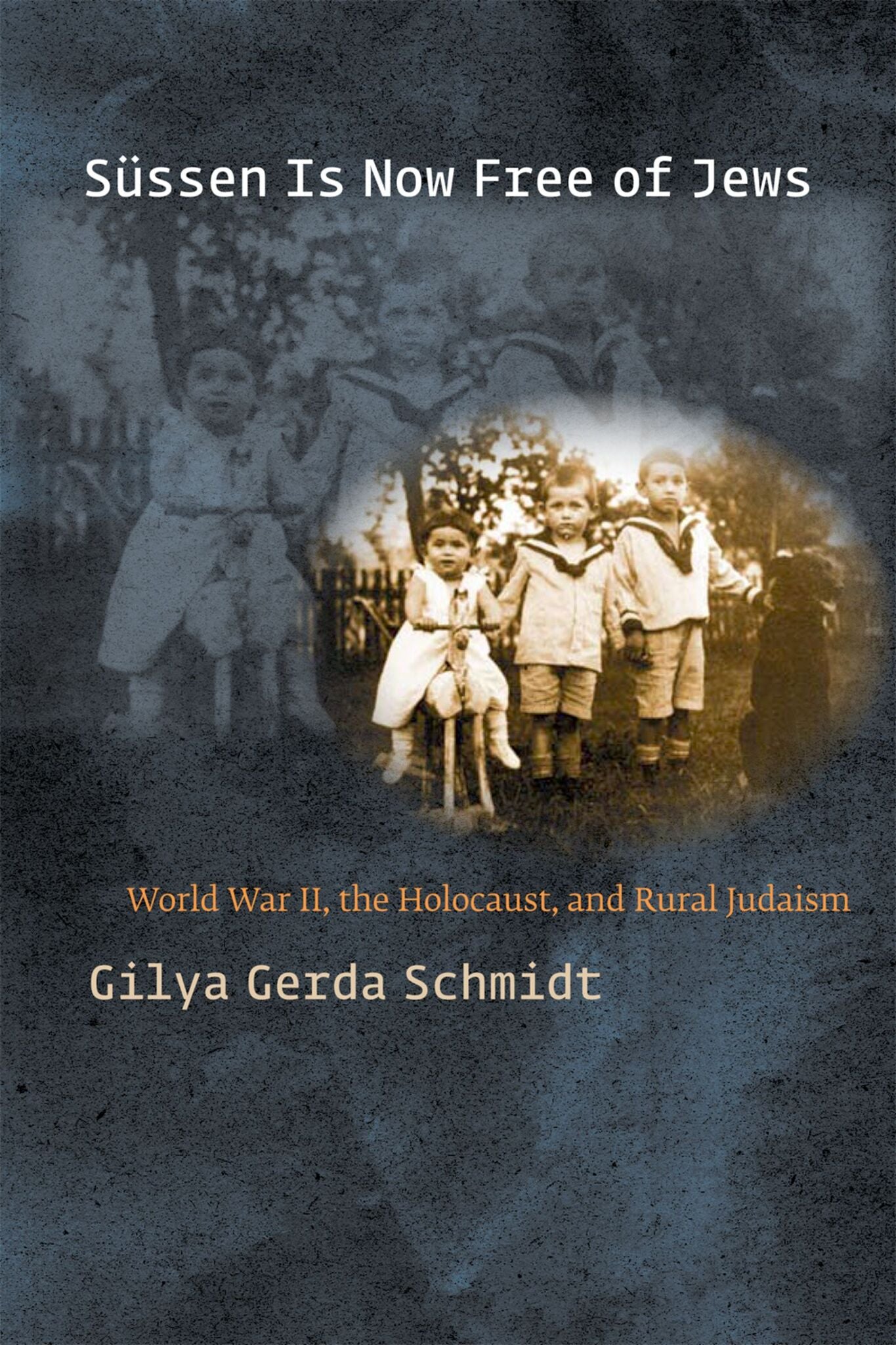
Süssen Is Now Free of Jews offers a close look at the legacy of a few Jewish families from Süssen—a village in the District of Göppingen, which is located in the state of Baden Württemberg in southern Germany. The author, Gilya Gerda Schmidt, looks at this rural region through the lens of two Jewish families—the Langs and the Ottenheimers—who settled there in the early twentieth century. As a child, she shared with the Langs the same living space for just a few months. She remembers her mother’s telling her of the Jews who lived in Süssen until the Holocaust.
More than thirty years later, in a used bookstore in Knoxville, Tennessee, the author accidentally found documentation verifying the Jewish presence in a book about the surviving Jews of Württemberg. In it, she found confirmation that there had been Jews living in Süssen until the Holocaust. For the first time, she had the proof she needed to look into the reality behind this lingering mystery. Here began her detective-like journey to find out what happened to the Jews of Süssen.
A decade of research into local and regional archives ensued, and this very penetrating study is the result. In it, the author attempts to shed light on not just the original question of what happened to the two families during the Holocaust but also on a host of other questions: What was it like to be Jewish in rural southern Germany a century ago? What were the Jewish traditions of this region? What were the relations between Jews and Christians before the Holocaust? And where did those family members who were able to escape or who survived the concentration camps go when they left Süssen or Göppingen? Few witnesses came forward, yet the documents in the archives spoke volumes. This micro-history records the not-so-romantic journey of two Jewish families who lived in the Fils Valley. The study also addresses issues of being an American prisoner of war; of resuming life after the Holocaust; of the bureaucratic nightmare of requisitions, restitution, and reparations; and of life in America.
This unique book will be of interest to a general readership and is an important book for scholars in German and Holocaust studies.


Offers a close look at the legacy of a few Jewish families from this region, their long family histories, their engagements in commerce, industry and civic life before 1933, their fate under the Nazis, and their scattered stories after the Holocaust. In this sense this book offers a kind of micro-history of Jews in Germany before, during and after the Holocaust. It is a kind of Yiskor or Memory book for the Jewish communities of this region and especially Süssen. With new and little known material, this book brings new insight into the life of rural Jews in Germany, both through original historical scholarship, interviews, and an engagement with sources only available in German.---—Laura Levitt, Temple University
Sussen is Now Free of Jews features an enormous amount of original research and illustrates the inherent importance of talking about Landjudentum (village Jewry) to an English reading audience. Schmidt's ability to combine archival material, memoir literature, interviews and personal recollections is both impressive and moving.---—Alan T. Levenson, University of Oklahoma