


Some error occured while loading the Quick View. Please close the Quick View and try reloading the page.
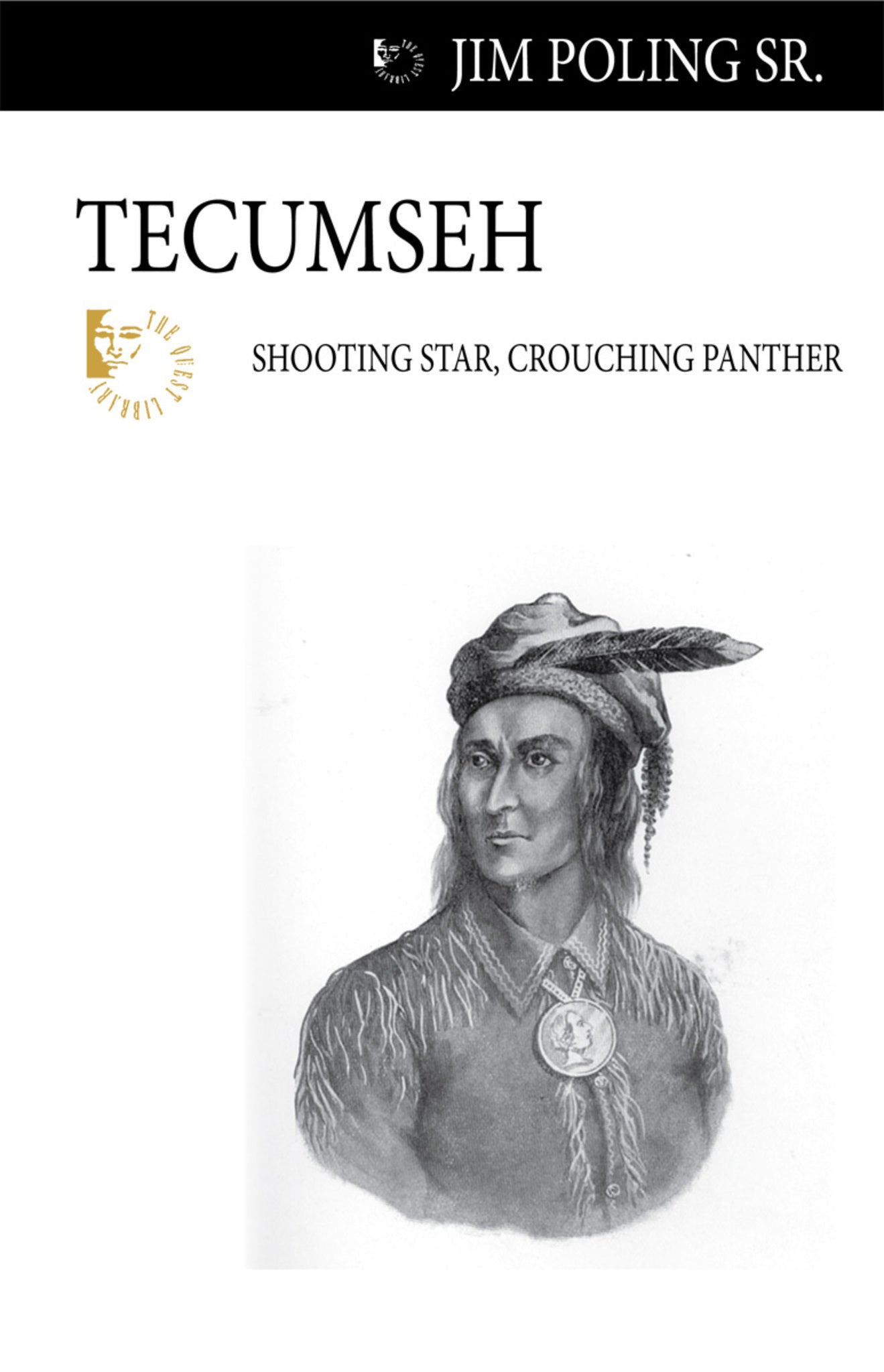
Shawnee war chief Tecumseh dedicated his life to stopping American expansion and preserving the lands and cultures of North American Aboriginal peoples. He travelled relentlessly trying to build a confederation of tribes that would stop the territorial ambitions of the newly created United States of America.
Tecumseh tried both diplomacy and battle to preserve his Ohio Valley homelands. When he realized that neither could stop the American advancement, he turned to the British in Canada for help as the War of 1812 began. He and Isaac Brock, British geneal and Canadian hero, caputured Detroit early in the war and historians believe they would have gone on to more impressive battles had Brock not fallen at Queenston Heights in 1812. After the loss of Brock, some success was achieved against the Americans, notably in the woods at Fort Meigs, Ohio, in May 1813. But when the Americans won the decisive Battle of Lake Erie later that summer, the door to Canada was opened. Chased by his nemesis William Henry Harrison, Tecumseh and the British retreated, making a final stand at the Battle of Moraviantown. Tecumseh was killed in the battle. His death marked the end of First Nations resistence to American expansion south of the Great Lakes.
A great leader, Tecumseh left an indelible mark on the history of both Canada and the United States. The story of his struggle to preserve a vanishing culture is one that remains relvant toda. One of the greatest tributes to Tecumseh came from his enemy, Harrison, who later became president of the United States. He called Tecumseh an "uncommon genius," who in another place, another time, could have built an empire.


Poling's writing is as straight as an arrow: no fluff, yet packed with information, peppered with pictures and with enough visceral appeal for the average reader. It is a small, polished gem of a book that will appeal to anyone with an interest in the role of the British in the Aboriginal resistance, North American history, the Shawnee people of the Ohio river valley - and above all else, chief Tecumseh himself - a man of "uncommon genius" as characterized by his enemies.
— Chronicle Journal
Overall, this is a very good biography and resource for studying Tecumseh's period of history in the American northwest and the role that native peoples played in the War of 1812.
Anyone with an interest in the role of the British in Aboriginal resistance, North American history, the Shawnee people or Tecumseh will benefit from this title.
— Resource Links
Jim Poling Sr. was a newspaper journalist for thirty-five years before turning to freelance magazine and book writing. Much of his journalism career was spent with the national news agency Canadian Press. His postings there includeed Edmonton, Ottawa, Vancouver, and Toronto, as well as assignments across the Far North, Alaska, Russia, Scandinavia, and Cuba. He began his CP career as a reporter and worked as editori, bureau chief, editor-in-chief, and general manager.
Jim is also the author of Waking Nanabijou, a memoir about his search for his mother's origins and an exploration of the shameful ongoing discrimination against First Nations people. His other books include Tom Thomson: The Life and Death of the Famous Canadian Painter and The Canoe: An Illustrated History. Jim lives in Alliston, Ontario.