


Some error occured while loading the Quick View. Please close the Quick View and try reloading the page.
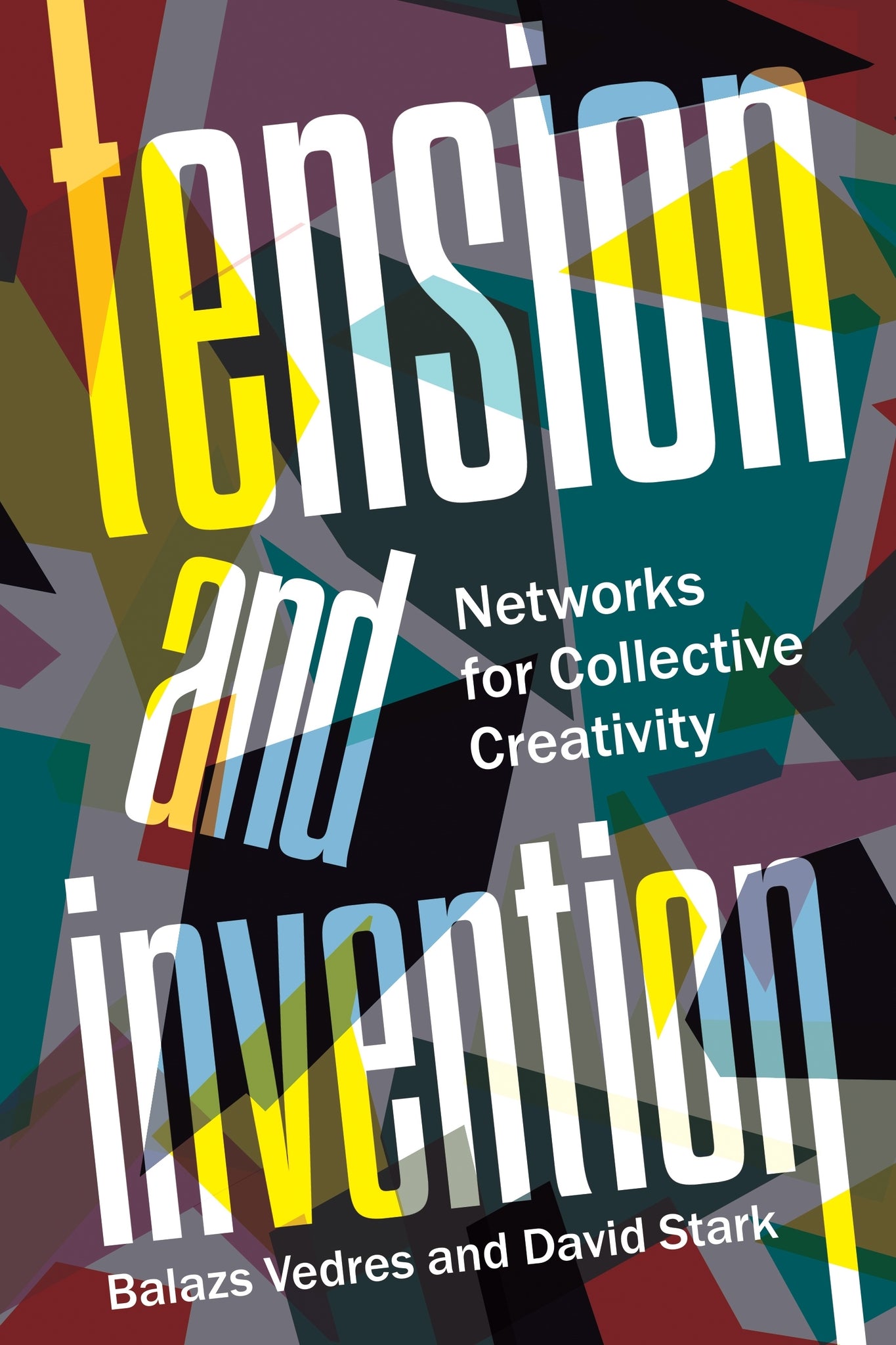
How friction, diversity, and tension drive breakthrough ideas in business, technology, and culture
In the popular imagination, innovation is associated with the lone genius. Innovation, however, is never the product of one individual, but rather occurs through the combined efforts of a network of people. But how do these networks operate? In Tension and Invention, Balazs Vedres and David Stark argue that generative tension is the critical, yet often unacknowledged, mechanism that drives innovation.
The authors deconstruct conventional accounts of organizational behavior that equate efficiency with efficacy in creative endeavors. Using a diverse variety of empirical case studies including jazz combos, business groups, and video game developers, Vedres and Stark show how friction, far from being a liability, actively precipitates invention in contexts of radical uncertainty. The result is a theory of innovation on how disjuncture and dissonance, when structurally organized, can be harnessed for discovery.
Offering a compelling theoretical and empirical basis for rethinking the foundations of creative production, Tension and Invention delivers a powerful message: creativity is not born from smoothness or consensus, but from the productive struggles of difference. Invention happens because of tension, not despite it.


This superb book demonstrates that breakthrough innovation emerges from the productive friction of structural folds, where insiders to multiple communities hold divergent views in generative tension. From bebop to video games to business groups, Vedres and Stark reveal that creativity doesn’t rest on harmony or bridging, but on uncomfortable overlaps. A masterful historical network analysis!
Building on decades of rigorous and insightful research, Vedres and Stark have produced an eminently readable, fast-paced tour-de-force of the structural and temporal origins of creativity. It is impossible to fully understand innovation without understanding the network substratum that makes it possible. Everyone interested in harnessing the tensions that make creativity possible should read this book.