


Some error occured while loading the Quick View. Please close the Quick View and try reloading the page.
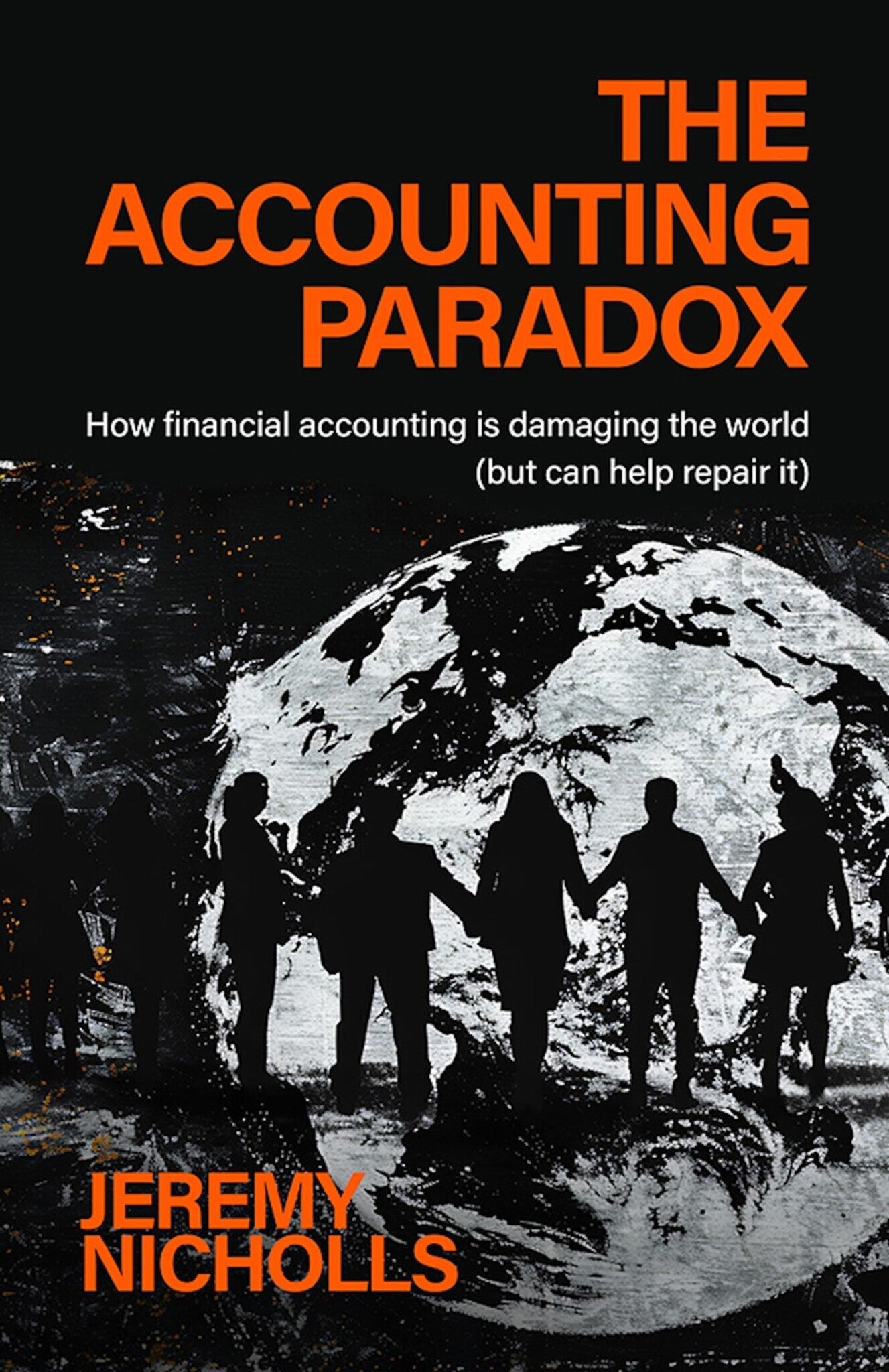
When you think about the tools at our disposal to address the ecological, social and biodiversity challenges we face today, accounting might not immediately come to mind. And yet it is accounting standards, not science and not public policy, that set out how profit is calculated, which in turn drives investment decisions. What if we demanded that those standards reflect the true cost of business and its consequences?
Unless we look again at these fundamental principles, which have gone under the radar for so long, capital markets will continue to contribute to inequality, nature loss and climate change. What’s remarkable is that we already have in place everything we need for a more just and complete approach to accounting, and forward-thinking businesses are beginning to recognize that.
Jeremy Nicholls – accountant, sustainability professional, historian and activist – sets out a vision for new way of accounting, and it’s one that we can adopt immediately.


Jeremy Nicholls has spent his career challenging how we account for value. He trained and worked with PwC, spending time living and working in both Liberia and Tanzania. He went on to co-found and lead Social Value International, a global community of social accountants, before contributing to the United Nations Development Programme’s SDG Impact Standards. Jeremy is an Ashoka Fellow, an honorary senior fellow at the University of Liverpool, and remains involved with other organizations and initiatives focused on the intersection between accounting and sustainability.
Introduction
Part 1: The problem: Why accounting is destroying us
- Chapter 1: Accounting – the blind spot of economics
- Chapter 2: The mess we’re in
- Chapter 3: Two futures
Part 2: The background: How we got where we are today
- Chapter 4: The foundations of accountancy – up to 17th century
- Chapter 5: Imperialism and industry – 18th and 19th centuries
- Chapter 6: Capitalism and internationalization – 20th century onwards
Part 3: The solution: A manifesto for tomorrow
- Chapter 7: True and Fair
- Chapter 8: Make the change – essential short-term and medium-term actions
Conclusion