


Some error occured while loading the Quick View. Please close the Quick View and try reloading the page.
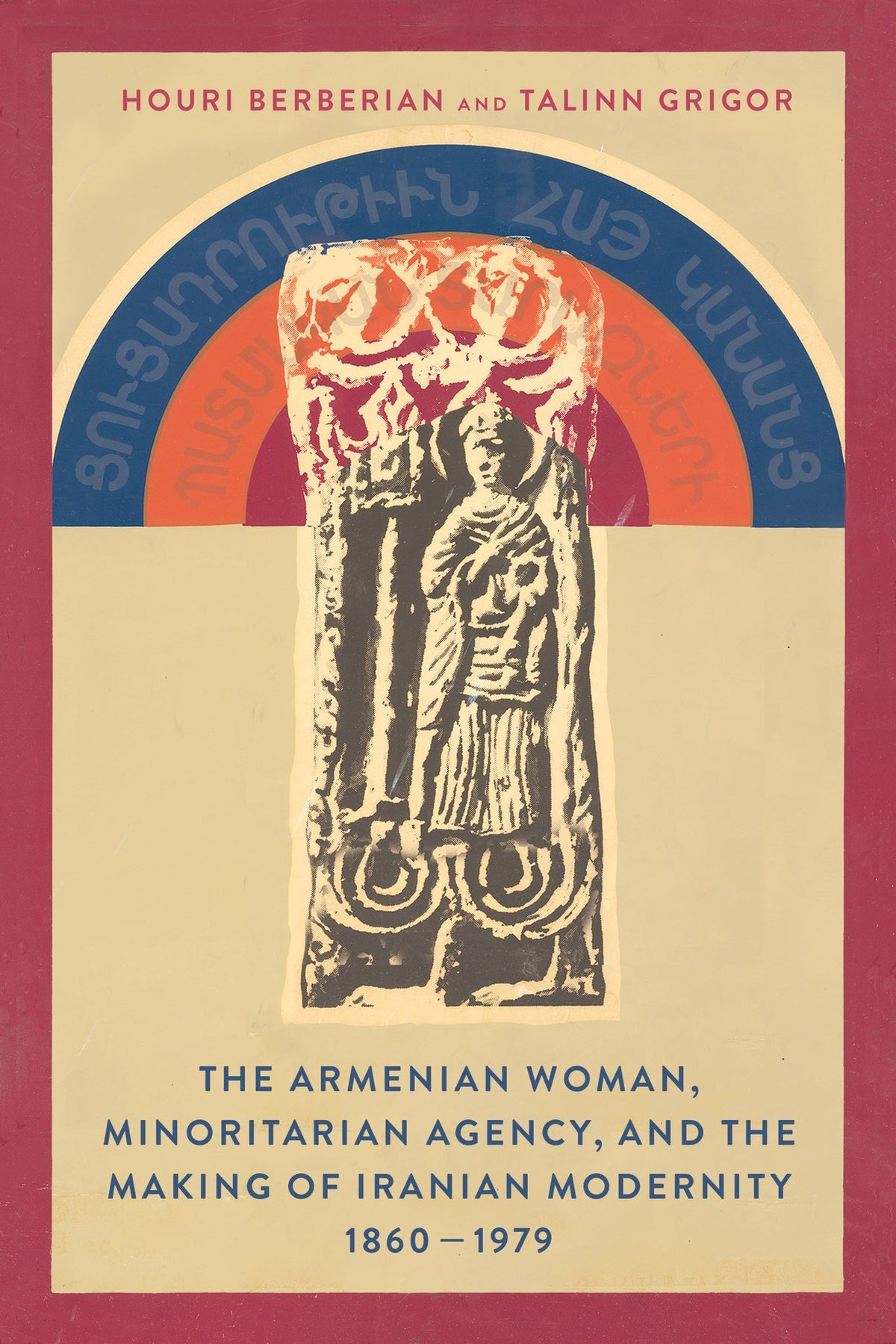
With this book, Houri Berberian and Talinn Grigor offer the first history of Armenian women in modern Iran. Foregrounding the work of Armenian women's organizations, the authors trace minoritarian politics and the shifting relationships among doubly minoritized Armenian female subjects, Iran's central nodes of power, and the Irano-Armenian patriarchal institutions of church and political parties.
Engaging broader considerations around modernization, nationalism, and feminism, this book makes a conceptually rich contribution to how we think about the history of women and minoritized peoples. Berberian and Grigor read archival, textual, visual, and oral history sources together and against one another to challenge conventional notions of "the archive" and transform silences and absences into audible and visual presences. Understanding minoritarian politics as formulated by women through their various forms of public and intellectual activisms, this book provides a groundbreaking intervention in Iran's history of modernization, Armenian diasporic history, and Iranian and Armenian feminist historiography.


"This beautifully conceived and groundbreaking history of modern Armenian women fills a gaping lacuna in studies of Armenians in Iran and the Middle East. Working with a vast array of sources, the authors give texture to the multifaceted experiences of Armenian women and a critical re-reading of portrayals of Armenians." —Firoozeh Kashani-Sabet, University of Pennsylvania
"Houri Berberian and Talinn Grigor skillfully weave analysis of the cultural production of Armenian Iranian women with direct accounts from the women themselves, inviting us to reimagine Iranian modernity as the product of a pluralistic society. This book is a triumph of collaborative research, interpretation, and storytelling." —Camron Amin, University of Michigan-Dearborn
"An important and welcome intervention as the first comprehensive study of Iranian Armenian women's representation, agency, and activism in the modern era." —Jasamin Rostam-Kolayi, Diaspora
"Berberian and Grigor have produced a first-rate book that deserves a wide readership, especially but not exclusively by those who study, or have been influenced by, Iran's diverse history and the enduring nature of women's organizations and activities in Iran. The Armenian Woman, Minoritarian Agency, and the Making of Iranian Modernity 1860–1979 will be a highly cited book." —Valentine M. Moghadam, Caucasus Survey
I. From Photo-Studio Sitters to Organizational Leaders, 1860–1899
1. Ethnographic Subjects and Advocates of Education
2. Transimperial Connections and Disciplinary Power
II. Volunteerism and Revolutionary Benevolence, 1892–1925
3. Volunteerist Ethos and Performance of Solidarity
4. Radical Politics of Charity and Progress
III. The Satirized and Contested New Woman, 1925–1958
5. Charity's Triumph and Patriarchal Reckoning
6. The New Armenian Woman in Action and in Print
IV. Indigenous Feminism and State-Minority Engagements, 1960–1977
7. The Golden Age of Feminism
8. Nation-Community and State-Minority Bonds
Conclusion: Vision Interrupted