


Some error occured while loading the Quick View. Please close the Quick View and try reloading the page.
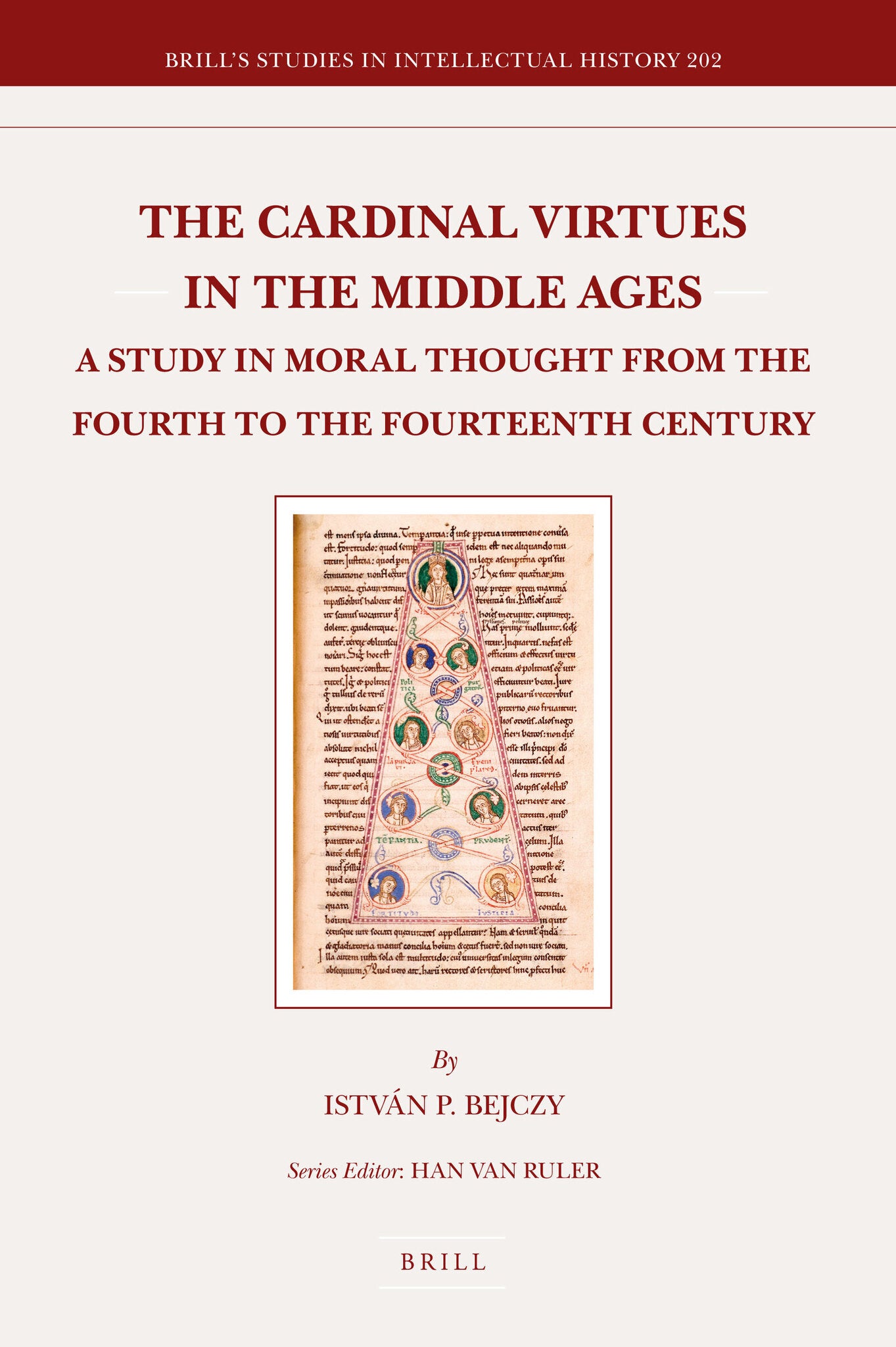
Despite its non-Christian origins, the scheme of the cardinal virtues (prudence, justice, fortitude, and temperance) found wide acceptance in medieval theology, philosophy, and religious literature. The present study is the first to investigate the history of the four virtues in the Latin Middle Ages from patristic times to the late fourteenth century. It examines the position of the cardinal virtues between religious and secularized conceptions of morality and attempts to reveal some distinctly Christian aspects of medieval virtue theory notwithstanding its manifest indebtedness to ancient ethics. Exploring learned and popularizing sources alike, including much unedited material, this study covers a broad spectrum of moral debate during ten centuries of Western intellectual history.

Price: $181.00
Pages: 364
Publisher: Brill
Imprint: Brill
Publication Date:
11 August 2011
ISBN: 9789004210141
Format: Hardcover

"Le livre de Bejczy est une étude magistrale, qui deviendra sans aucun doute un ouvrage de référence pour tous les historiens de l'éthique médiévale."
Guy Guldentops, Bulletin de théologie et de philosophie médiévales 78, 2: 535-542.
„Das flüssig geschriebene, bestens dokumentierte und klar gegliederte Buch von István Bejczy bietet nichts Geringeres als eine konsistente (und bisher tatsächlich fehlende) Geschichte der vier sog. Kardinaltugenden (prudentia, iustitia, fortitudo, temperantia) von der christlichen Spätantike bis ins Spätmittelalter. […] Es ist beeindruckend, welche Fülle an Primär- und Sekundärquellen B. verarbeitet hat, wie er dabei stets den Überblick behält und sein Buch nie ausufern läßt, ihm vielmehr auf sympathische Weise seine Handlichkeit bewahrt.”
Mittellateinisches Jahrbuch, Bd. 47 (2012), H. 3, p. 498.
Guy Guldentops, Bulletin de théologie et de philosophie médiévales 78, 2: 535-542.
„Das flüssig geschriebene, bestens dokumentierte und klar gegliederte Buch von István Bejczy bietet nichts Geringeres als eine konsistente (und bisher tatsächlich fehlende) Geschichte der vier sog. Kardinaltugenden (prudentia, iustitia, fortitudo, temperantia) von der christlichen Spätantike bis ins Spätmittelalter. […] Es ist beeindruckend, welche Fülle an Primär- und Sekundärquellen B. verarbeitet hat, wie er dabei stets den Überblick behält und sein Buch nie ausufern läßt, ihm vielmehr auf sympathische Weise seine Handlichkeit bewahrt.”
Mittellateinisches Jahrbuch, Bd. 47 (2012), H. 3, p. 498.
István P. Bejczy, Ph.D. (1994) in History, Radboud University Nijmegen, has published on medieval culture (including La Lettre du Prêtre Jean: Une utopie médiévale) and Renaissance humanism (including Erasmus and the Middle Ages: The Historical Consciousness of a Christian Humanist).