


Some error occured while loading the Quick View. Please close the Quick View and try reloading the page.
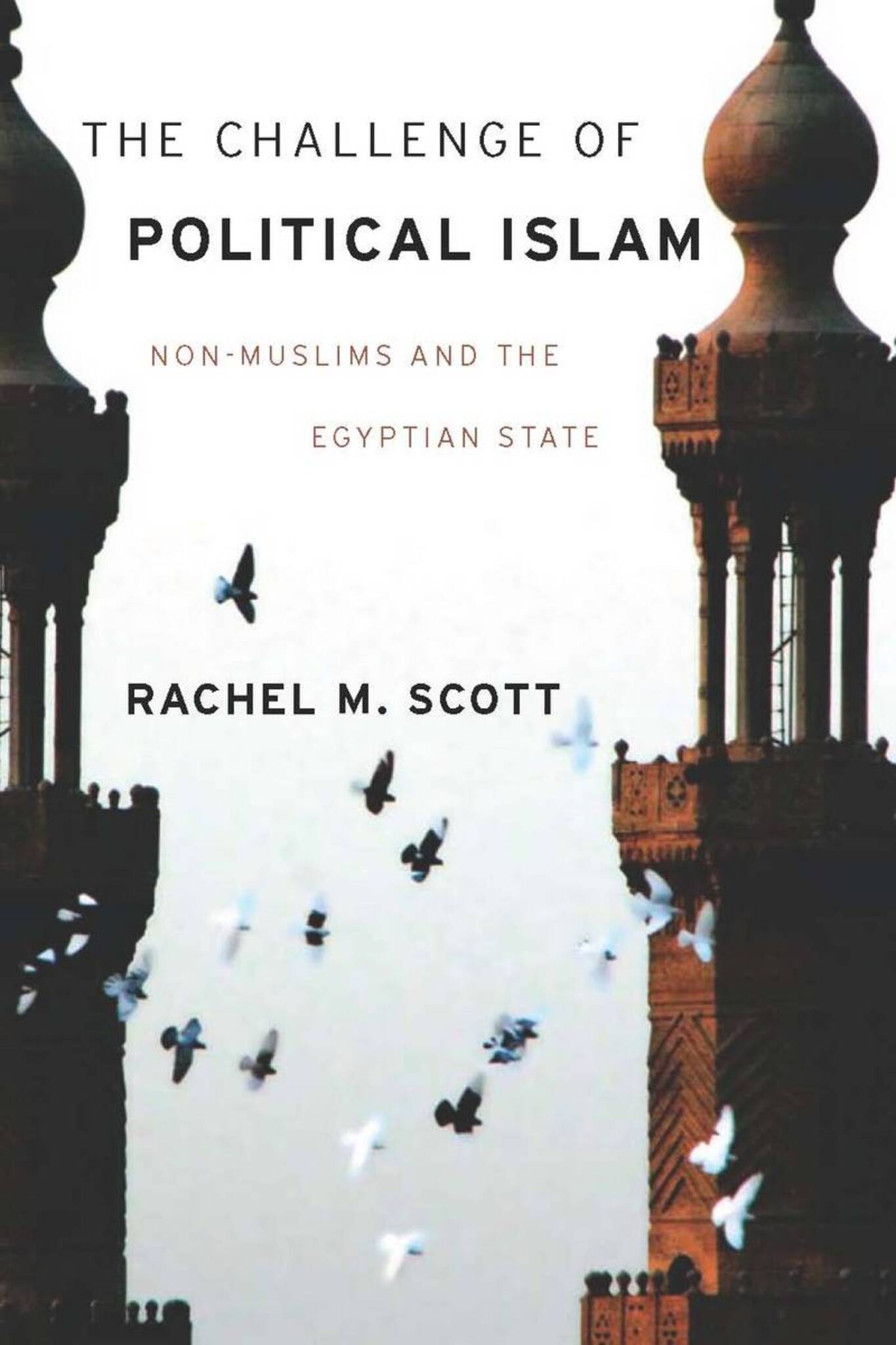
The rise of political Islam has provoked considerable debate about the compatibility of democracy, tolerance, and pluralism with the Islamist position. As The Challenge of Political Islam reveals, Egyptian Islamists today are more integrated into the political arena than ever, and are voicing a broad spectrum of positions, including a vision of Islamic citizenship more inclusive of non-Muslims.
Based on Islamist writings, political tracts, and interviews with Islamists—including members of Egypt's Muslim Brotherhood and other important contemporary thinkers—this book looks closely at how modern, politically-oriented Egyptian Islamists perceive non-Muslims in an Islamic state and how non-Muslims respond. Clarifying the movement's aims, this work uncovers how Islamists have responded to the pressures of modernity, the degree to which the movement has been influenced by both a historical Islamic framework and Western modes of political thinking, and the necessity to reconsider the notion that secularism is a precondition for toleration.

Price: $110.00
Pages: 294
Publisher: Stanford University Press
Imprint: Stanford University Press
Publication Date:
April 23, 2010
Trim Size: 9.00 X 6.00 in
ISBN: 9780804769051
Format: Hardcover

"The Challenge of Political Islam stands alone. It addresses a very sensitive topic with great subtlety and detail, revealing the many faultlines in the complicated and evolving debate over non-Muslims, dhimma, and citizenship."
— Andrew March
"Scott presents her timely subject with the nuance and complexity that it deserves . . . [S]tudents of Christian-Muslim relations and of the intersection between religion and politics in the Middle East will find Scott's research to be a rich mine of data and analysis. The book will be of considerable interest to those who wish to learn about the political situation of Middle Eastern Christian, especially the Copts in Egypt."
— Dustin W. Ellington
"Drawing on her extraordinary access to both Coptic and Muslim Brotherhood intellectuals, Rachel Scott provides a lucid and important study that transcends the posturing and the polemics. A must-read for anyone interested in Christian-Muslim relations in general and the issues being negotiated in Egypt in particular."
— Yvonne Yazbeck Haddad
"Scott gauges seismic changes within Middle Eastern society from the bottom up. This exemplary work demonstrates how far some Islamists, namely the moderate middle, have departed from their contemporaries, and links crucial debates framed mainly in Arabic discourse to broader debates concerning citizenship, national identity, and public consensus in 21st-century Egypt."
— Bruce Lawrence
— Andrew March
"Scott presents her timely subject with the nuance and complexity that it deserves . . . [S]tudents of Christian-Muslim relations and of the intersection between religion and politics in the Middle East will find Scott's research to be a rich mine of data and analysis. The book will be of considerable interest to those who wish to learn about the political situation of Middle Eastern Christian, especially the Copts in Egypt."
— Dustin W. Ellington
"Drawing on her extraordinary access to both Coptic and Muslim Brotherhood intellectuals, Rachel Scott provides a lucid and important study that transcends the posturing and the polemics. A must-read for anyone interested in Christian-Muslim relations in general and the issues being negotiated in Egypt in particular."
— Yvonne Yazbeck Haddad
"Scott gauges seismic changes within Middle Eastern society from the bottom up. This exemplary work demonstrates how far some Islamists, namely the moderate middle, have departed from their contemporaries, and links crucial debates framed mainly in Arabic discourse to broader debates concerning citizenship, national identity, and public consensus in 21st-century Egypt."
— Bruce Lawrence
Rachel Scott is Assistant Professor of Islamic Studies in the Department of Religion and Culture at Virginia Polytechnic Institute and State University.