


Some error occured while loading the Quick View. Please close the Quick View and try reloading the page.
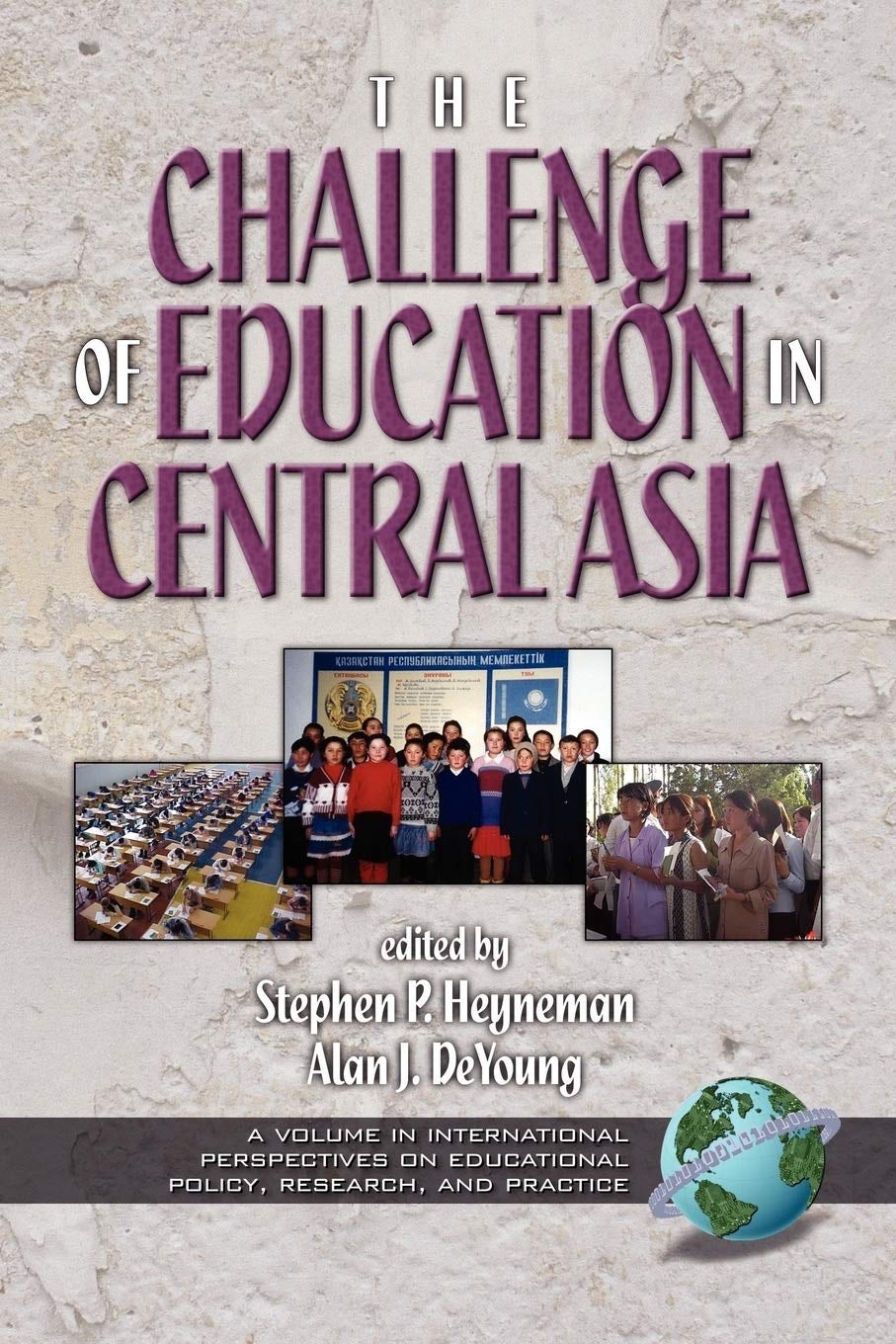
A look at the challenges facing education in Central Asia. In many ways, the story of education since the beginning of the transition in Central Asia is integrated with similar processes in other parts of the former Soviet Union. It may not explain everything, but understanding the challenges throughout the 15 former republics is helpful in understanding the progress and setback in the Central Asian Republics. Most importantly, the Central Asia republics have demonstrated their independence in the adherence of Western-recommendations; they have articulated their demand for respect on their own terms, and not just as the recipient of strategies developed elsewhere. One would hope that this sense of independence and of autonomy of spirit would continue, but that it would not interfere; with the universal principles that pertain to all modern societies: those of equality of opportunity, and the necessity for achieving consensus over what to teach about history that is fair to all citizens.


Part I. Overview.
Chapter 1. One Step Back, Two Steps Forward: The First Stage of the Transition for Education in Central Asia; Stephen P. Heyneman.
Part II. Social and Political Background.
Chapter 2. Introduction to Central Asia: Ancient Societies and the New Millennium; Gregory Gleason.
Chapter 3. The Legacy of Russian and Soviet Education and the Shaping of Ethnic, Religious, and National Identities in Central Asia; Mark S. Johnson.
Chapter 4. The Effects of the Collapse of the USSR on Teachers' Lives and Work in Tajikistan; Sarfaroz Niyozov.
Chapter 5. Central Asian Educational Issues and Problems: Internet Coverage and Sources; Alan J. DeYoung and Charlene Santos.
Chapter 6. Turkish Higher Education Initiatives Towards Central Asia; Ahmet Aypay.
Chapter 7. Challenges of Education in Central Asia: Education and Linguistic Division in Kyrgyzstan; Britta Korth.
Chapter 8. Academic Exchange Programs in Central Asia: The First Eight Years; David Mikosz.
Part III. Economic Background.
Chapter 9. Education in Central Asia During the Transition to a Market Economy; Kathryn H. Anderson.
Chapter 10. Education in Central Asia During the Transition to a Market Economy; Richard Pomfret and Natalya S. Usseinova.
Chapter 11. Education in Asia, with Particular Reference to the Kyrgyz Republic; Michael Mertaugh.
Chapter 12. Access to Education in Five Newly Independent States of Central Asia and Mongolia: A Regional Agenda; John C. Weidman, David W. Chapman, Marc Cohen, and Marcrina Lelei.
Part IV. Elementary and Secondary Education.
Chapter 13. On the Demise of the Action Plan for Kyrgyz Education Reform: A Case Study; Alan J. DeYoung.
Chapter 14. Perspectives and Problems in Education Reform in Kyrgyzstan: The Case of National Scholarship Testing; Todd Drummond and Alan J. DeYoung.
Chapter 15. Secondary Education Reform in Kazakhstan: The Case of School Maksat; Svetlana Zhanabayeva and Lyubov Isatayeva.
Part V. Higher Education.
Chapter 16. University Ranking in Central Asia: The Experience of Kazakhstan; Vladimir Briller and Shnara Iskakova.
Chapter 17. Straddling Market and State: Higher Education Governance and Finance Reform in Kazakhstan; Michael K. McLendon.
Chapter 18. Diversification of Financial Resources in Kazakh Higher Education; Timothy C. Caboni.
Chapter 19. Strategic Planning at East Kazakhstan University: How a University Can Survive in a Rapidly Shifting Policy Environment; Serik M. Abilov.
Chapter 20. Trials in the Humanities; Rafique Keshavjce.
Chapter 21. The Reform of Kazakhstan's Educational System: The Problems of State Monopoly on Educational Quality; Zhomart K. Medeuov.
Chapter 22. Cultivating Citizens of a New Type: The Politics and Practice of Educational Reform at the American University in Kyrgyzstan; Madeleine Reeves.