


Some error occured while loading the Quick View. Please close the Quick View and try reloading the page.
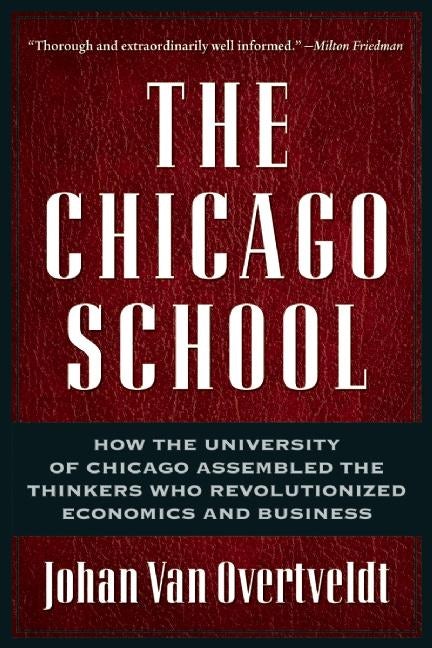
When Richard Nixon said “We are all Keynesians now” in 1971, few could have predicted that the next three decades would result in a complete transformation of the global economic landscape. The transformation was led by a small, relatively obscure group within the University of Chicago’s business school and its departments of economics and political science. These thinkers — including Milton Friedman, Gary Becker, George Stigler, Robert Lucas, and others — revolutionized economic orthodoxy in the second half of the 20th century, dominated the Nobel Prizes awarded in economics, and changed how business is done around the world. Written by a leading European economic thinker, The Chicago School is the first in-depth look at how this remarkable group came together. Exhaustively detailed, it provides a close recounting of the decade-by-decade progress of the Chicago School's evolution. As such, it's an essential contribution to the intellectual history of our time.

Price: $25.00
Pages: 432
Publisher: Agate Publishing
Imprint: Agate B2
Publication Date:
01 January 2009
Trim Size: 9.00 X 6.00 in
ISBN: 9781932841190
Format: Paperback
BISACs:
BUSINESS & ECONOMICS / Economic History, BUSINESS & ECONOMICS / Economics / Theory, HISTORY / United States / State & Local / Midwest (IA, IL, IN, KS, MI, MN, MO, ND, NE, OH, SD, WI)

"This is an admirably detailed and thoroughly welcome history of a great centre of economic thought." — The Economist
“Overtveldt is at his best in his depiction of the ruthless yet stimulating internal culture of the department during these years. Workshops that might be polite but sleepy seminars at other campuses became ‘bloodbaths’ at Chicago. Graduate classes were exercises in ‘terror.’” — Kim Phillips-Fein, Chicago Tribune
“Unique and fascinating.” — Publishers Weekly
“I enjoyed the book very much. Instead of stopping at Friedman, Coase and Director, it also offers a comprehensive treatment of [many] neglected figures… it is a landmark in the history of economic thought.” — Tyler Cowen, “The Marginal Revolution”