


Some error occured while loading the Quick View. Please close the Quick View and try reloading the page.
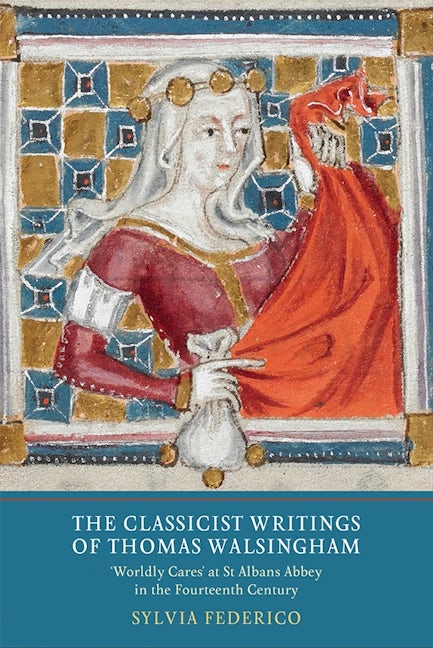
A comparative reading of the "literary" works of Thomas Walsingham, highlighting his reaction to contemporary historical events.
The literary career of Thomas Walsingham, a significant figure in late fourteenth-century classicist letters in England and an overlooked contemporary of Chaucer, has been neglected - which this book remedies. Following the texts,rather than individuals or institutions, it demonstrates both authors' participation in a previously unrecognized discursive field that spans Latinate clerical prose and secular vernacular poetry, opening for reexamination the "idea" of public literature in the late Middle Ages and recalibrating the terms of the conversation about the advent of humanistic textual practice in England. Providing a connected and comparative reading of Walsingham's works, alongside those of Chaucer, and taking both historical and literary approaches, the book extends our understanding of Chaucer through the exploration of his relationship to the clerical constituencies of London, Oxford, and monasteries in the South-East, and inserts Walsingham into the modern study of the reception of the Latin classics among the vernacular authors of his period.
Sylvia Federico is Professor of English and member of the Classical and Medieval Studies Program at Bates College.
The literary career of Thomas Walsingham, a significant figure in late fourteenth-century classicist letters in England and an overlooked contemporary of Chaucer, has been neglected - which this book remedies. Following the texts,rather than individuals or institutions, it demonstrates both authors' participation in a previously unrecognized discursive field that spans Latinate clerical prose and secular vernacular poetry, opening for reexamination the "idea" of public literature in the late Middle Ages and recalibrating the terms of the conversation about the advent of humanistic textual practice in England. Providing a connected and comparative reading of Walsingham's works, alongside those of Chaucer, and taking both historical and literary approaches, the book extends our understanding of Chaucer through the exploration of his relationship to the clerical constituencies of London, Oxford, and monasteries in the South-East, and inserts Walsingham into the modern study of the reception of the Latin classics among the vernacular authors of his period.
Sylvia Federico is Professor of English and member of the Classical and Medieval Studies Program at Bates College.

Price: $120.00
Pages: 216
Publisher: Boydell & Brewer Inc.
Imprint: York Medieval Press
Publication Date:
19 May 2016
Trim Size: 9.21 X 6.14 in
ISBN: 9781903153635
Format: Hardcover
BISACs:
LITERARY CRITICISM / Medieval, Literary studies: ancient, classical and medieval, HISTORY / Europe / Medieval, European history: medieval period, middle ages

Introduction: The Watlyng Street Circuit and the Field of Classicist Letters
Portraits of Princes in Liber benefactorum, Prohemia poetarum, and the 'Monk's Tale'
The Textual Environment of the Historia Alexandri magni principis
Court Politics and Italian Letters in Ditis ditatus and Troilus and Criseyde
Omnia vincit amor: Passion in the Chronicle
Conclusion: The Learned Clerk and Humanistic Practice'
Portraits of Princes in Liber benefactorum, Prohemia poetarum, and the 'Monk's Tale'
The Textual Environment of the Historia Alexandri magni principis
Court Politics and Italian Letters in Ditis ditatus and Troilus and Criseyde
Omnia vincit amor: Passion in the Chronicle
Conclusion: The Learned Clerk and Humanistic Practice'