


Some error occured while loading the Quick View. Please close the Quick View and try reloading the page.
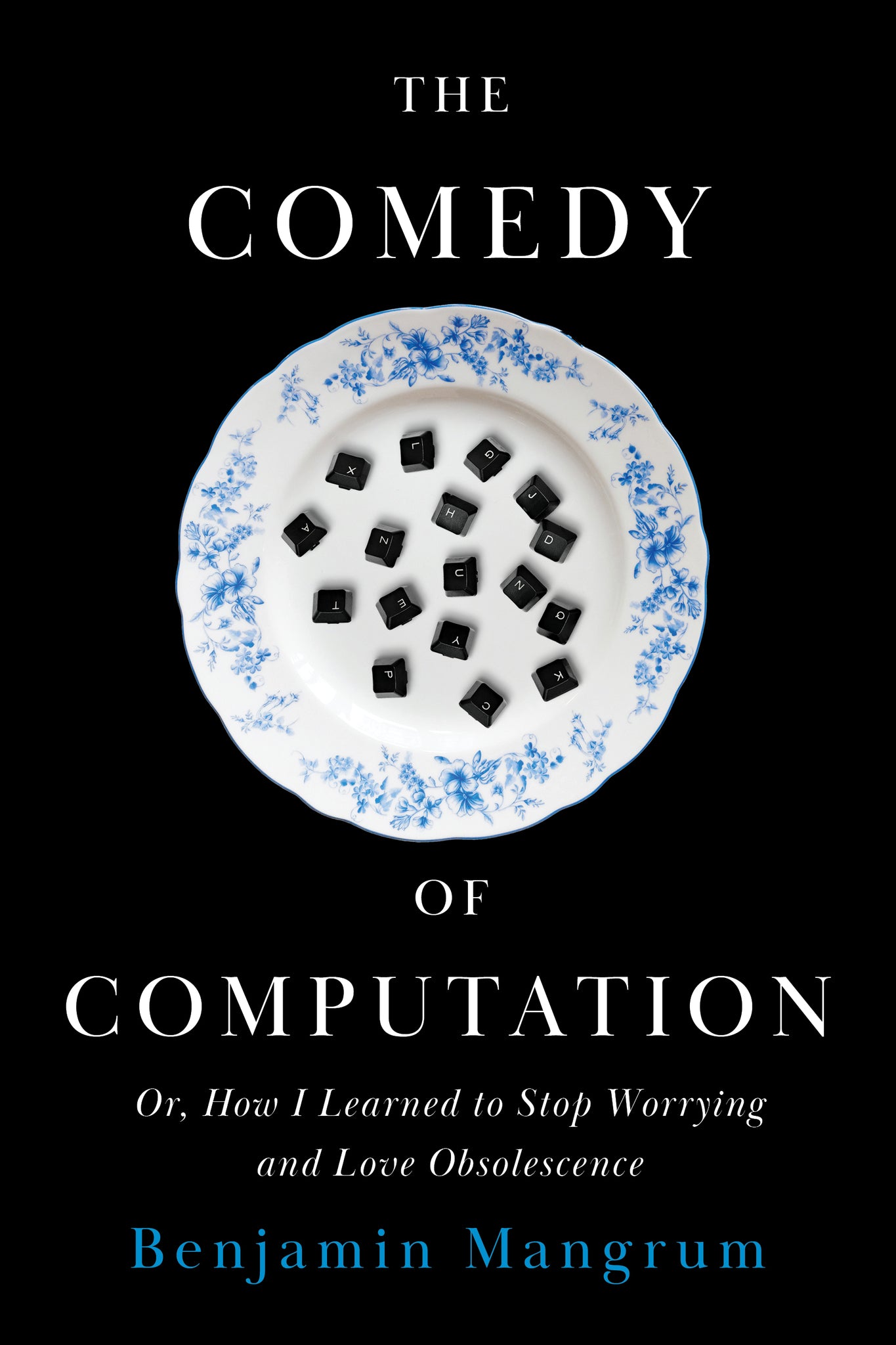
In this cultural history of the computer, Benjamin Mangrum shows that comedy has been central to how we've made sense of the technology's sweeping effects on public life and private experience. From the first Broadway play to include a computer in the 1950s to popular films like You've Got Mail and joke-telling digital assistants, Mangrum assembles an extensive archive of work by writers, filmmakers, programmers, engineers, and other technologists who have coupled comedy with computation. Many have used comedy to make the computer seem ordinary. Others have tried to stage the assimilation of computers within corporate life as a kind of comic drama. Mangrum describes these and many other ways in which comedy and computation have come together as a new genre of experience: the comedy of computation.
The modern world exalts advances in technology, but we are constantly haunted by the specter of falling behind and becoming obsolete. Mangrum examines how comedy serves as a stage for working out these conflicted modes of experience in writing by Dave Eggers, Curtis Sittenfeld, Ishmael Reed, and Kurt Vonnegut Jr., among others, arguing that when we look at the comic forms that shape the cultures of computing, we come to better understand the tensions and contradictions internal to the social world we inhabit.


"Mangrum helps readers understand that anxieties about automation are old, not new, and that arts and culture play an essential role in the conversation around computation. An important and illuminating work for scholars of American literature and cultural studies." —Aarthi Vadde, Duke University
"Mangrum's book makes a convincing case for comedy as central to the genre story that will in turn be central to our understanding of the current era of computational technology as it continues to develop in the coming decades." —Kate Marshall, Critical Inquiry
"The Comedy of Computation offers a toolkit for understanding a significant, load-bearing portion of the ever-shifting discourse about new technologies." —Scott Selisker, ASAP/Journal
1. The One about Race and Robots
2. The One about Being Generic
3. The One about Authenticity
4. The One about Couples
5. The One with All the Absurdity
The One after the End
Acknowledgments
Notes
Index