


Some error occured while loading the Quick View. Please close the Quick View and try reloading the page.
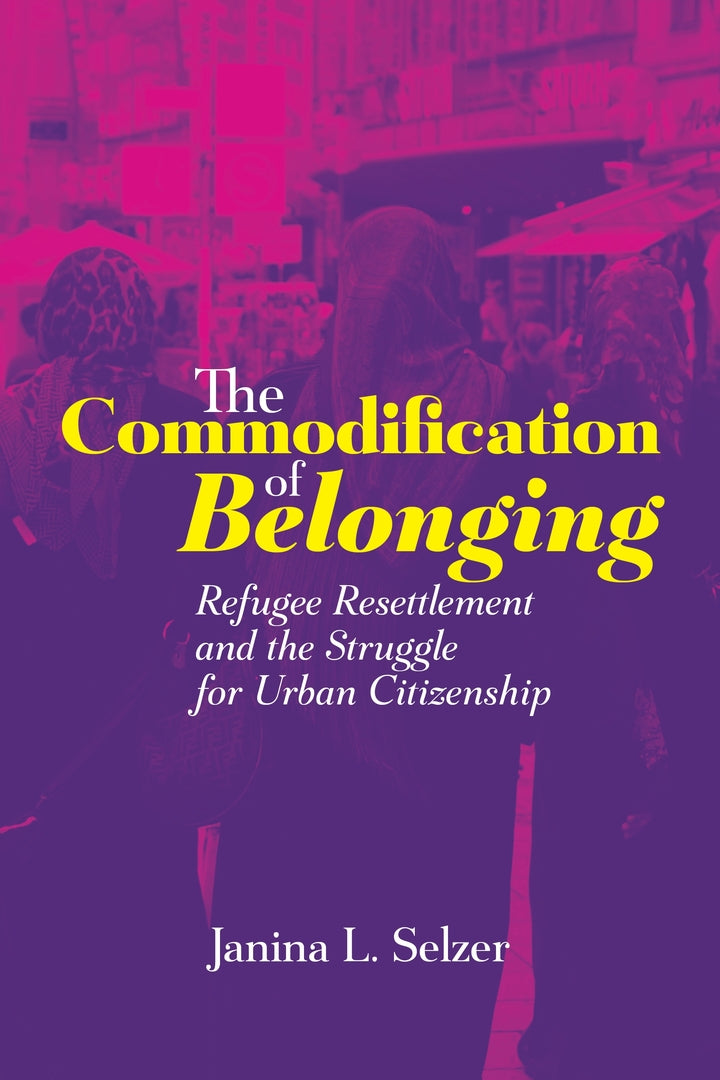
Exposes the human costs of viewing refugees through a predominantly economic lens
At a time when forcibly displaced individuals are portrayed as either illegal transgressors or nameless casualties, little attention is given to the needs and desires of those who have been uprooted. The Commodification of Belonging centers the voices of Yazidi and Chaldean Iraqis who escaped recurring persecution, violence, and genocide to find themselves in largely unfamiliar urban environments. Janina L. Selzer argues that the very systems that are meant to offer refugees support interfere with their ability to develop a sense of belonging. Unable to transcend the oversimplified depiction of refugees, these systems fail to recognize forcibly displaced individuals as complex human beings.
To better understand the role that cities play in shaping the localized politics of belonging, Selzer spent two years interviewing Yazidi and Chaldean Iraqis in Bielefeld, Germany, and Detroit. Confronted with the prospect of future or continuous population loss, these two cities promised newcomers a welcoming environment, hoping to eventually reap the economic benefits of their permanent settlement. Tracing the emerging discrepancies between the cities’ expectations and individuals’ own longings ultimately exposes the dangers of what Selzer terms the commodification of belonging. She illustrates how celebrating opportunities for newcomers to flourish in their respective enclaves tends to overlook their continued vulnerability. Simultaneously, overemphasizing newcomers' need for constant support risks overlooking their resilience.
By foregrounding the humanity and subjectivity of forcibly displaced individuals, The Commodification of Belonging draws attention to the very real consequences of viewing refugees through a predominantly economic lens. Selzer cautions that even if newcomers’ human capital is publicly embraced to foster pro-immigrant alliances, belonging doesn’t necessarily follow.


Selzer’s intensive ethnography of two Iraqi women living in different destinations—the German city of Bielefeld and U.S. city of Detroit— draws out the emotional side of how refugees reground their lives in new places. This critical anthropology shows how local contexts and macro forces shape the making of community and home.
Through a comparative, relational framework, The Commodification of Belonging examines Iraqi immigration in Detroit and Bielefeld, reminding us that belonging is never simple or neutral—it is complex, layered, and place-dependent. Foregrounding emotional dimensions and power dynamics, the book shows how destination cities’ revitalization goals and welcoming commitments to forcibly displaced immigrants can ultimately forge a sense of belonging. It is a timely and original contribution that deserves wide readership.
This ambitious comparative study of Iraqi refugees in Germany and the U.S. significantly advances the multidisciplinary field of refugee studies and forced migration on a global scale. With aching sensitivity and deep empathy, Selzer painstakingly captures her respondents’ transnational journeys from displaced victims to emplaced residents in Bielefeld and Detroit. Her insightful analysis of the politics of belonging offers a rare window into these newcomers' emotional lives and their longing for safety and security in resettlement, while highlighting the promise and pitfalls of local urban policies that commodify refugee belonging. This timely and policy-relevant book will interest readers across political science, sociology, and urban studies.
Selzer moves between Bielefeld and Detroit with real elegance, weaving a comparison that illuminates what no single case ever could. A compelling and deeply humane account of the bitter irony at the heart of refugee resettlement: that the very systems designed to welcome the displaced end up denying them the belonging they seek.