


Some error occured while loading the Quick View. Please close the Quick View and try reloading the page.
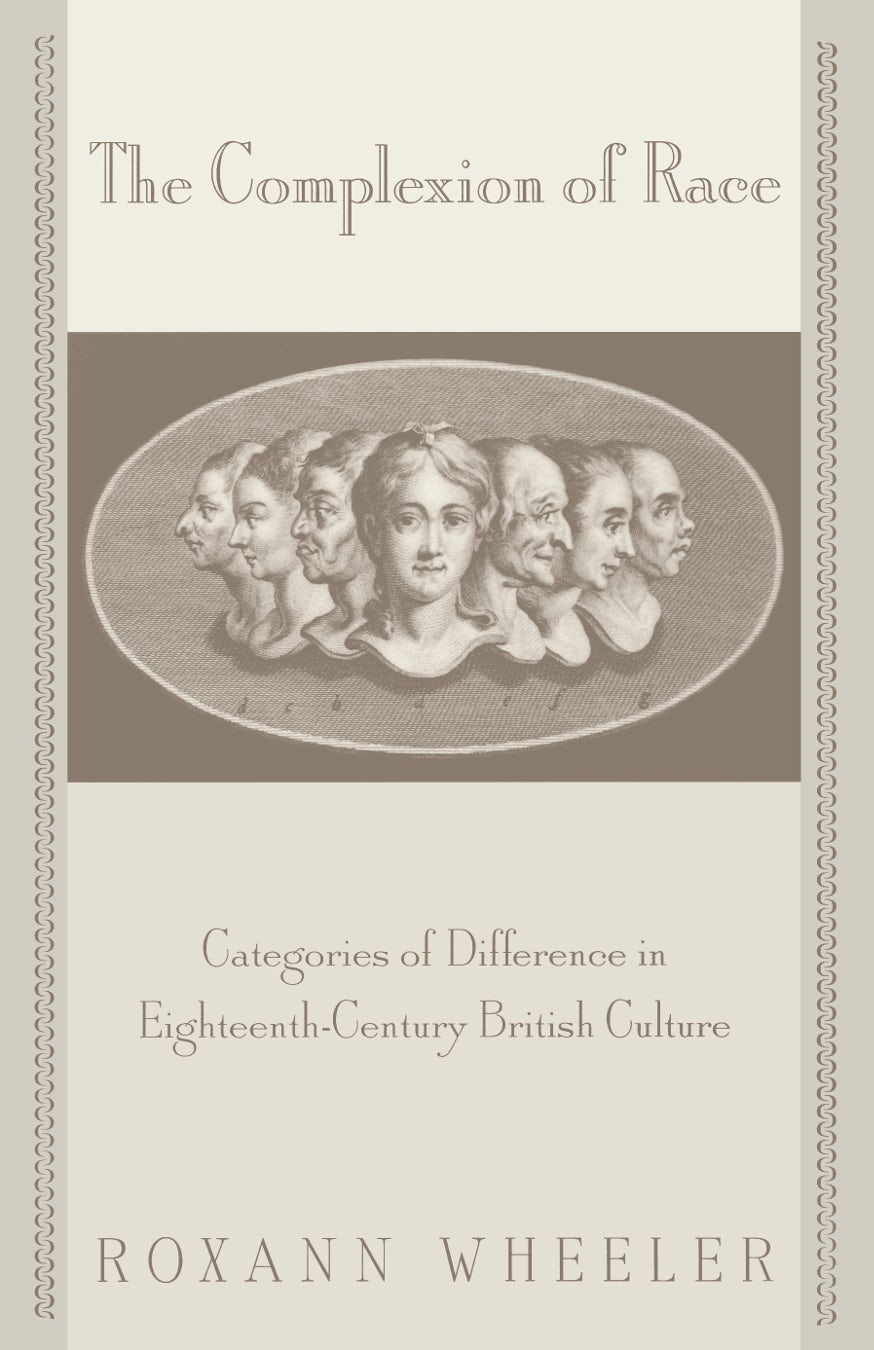
In the 1723 Journal of a Voyage up the Gambia, an English narrator describes the native translators vital to the expedition's success as being "Black as Coal." Such a description of dark skin color was not unusual for eighteenth-century Britons—but neither was the statement that followed: "here, thro' Custom, (being Christians) they account themselves White Men." The Complexion of Race asks how such categories would have been possible, when and how such statements came to seem illogical, and how our understanding of the eighteenth century has been distorted by the imposition of nineteenth and twentieth century notions of race on an earlier period.
Wheeler traces the emergence of skin color as a predominant marker of identity in British thought and juxtaposes the Enlightenment's scientific speculation on the biology of race with accounts in travel literature, fiction, and other documents that remain grounded in different models of human variety. As a consequence of a burgeoning empire in the second half of the eighteenth century, English writers were increasingly preoccupied with differentiating the British nation from its imperial outposts by naming traits that set off the rulers from the ruled; although race was one of these traits, it was by no means the distinguishing one. In the fiction of the time, non-European characters could still be "redeemed" by baptism or conversion and the British nation could embrace its mixed-race progeny. In Wheeler's eighteenth century we see the coexistence of two systems of racialization and to detect a moment when an older order, based on the division between Christian and heathen, gives way to a new one based on the assertion of difference between black and white.


List of Illustrations
Introduction. The Empire of Climate: Categories of Race in Eighteenth-Century Britain
1. Christians, Savages, and Slaves: From the Mediterranean to the Atlantic
2. Racializing Civility: Violence and Trade in Africa
3. Romanticizing Racial Difference: Benevolent Subordination and the Midcentury Novel
4. Consuming Englishness: On the Margins of Civil Society
5. The Politicization of Race: The Specter of the Colonies in Britain
Epilogue. Theorizing Race and Racism in the Eighteenth Century
Notes
Index
Acknowledgments