


Some error occured while loading the Quick View. Please close the Quick View and try reloading the page.
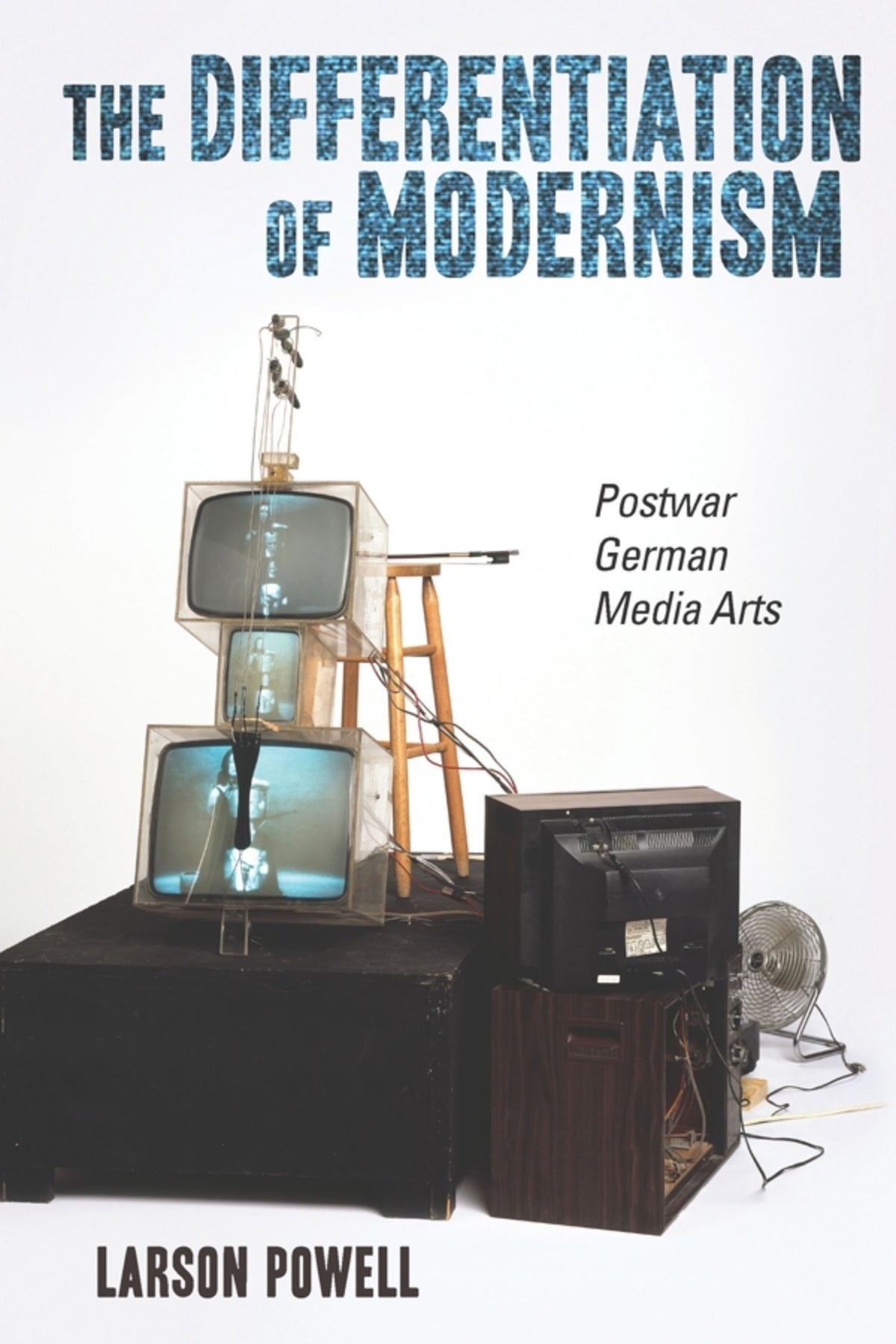
The Differentiation of Modernism analyzes the phenomenon of intermediality in German radio plays, film music, and electronic music of the late modernist period (1945-1980).
After 1945, the purist "medium specificity" of high modernism increasingly yielded to the mixed forms of intermediality. Theodor Adorno dubbed this development a "Verfransung," or "fraying of boundaries," between the arts. TheDifferentiation of Modernism analyzes this phenomenon in German electronic media arts of the late modernist period (1945-80): in radio plays, film music, and electronic music. The first part of the book begins with a chapter on Adorno's theory of radio as an instrument of democratization, going on to analyze the relationship of the Hörspiel or radio play to electronic music. In the second part, on film music, a chapter on Adorno and Eisler's Composing for the Film sets the parameters for chapters on the film Das Mädchen Rosemarie (1957) and on the music films of Jean-Marie Straub and Danièle Huillet. The third part examines the music of Karlheinz Stockhausen and its relationship to radio, abstract painting, recording technology, and theatrical happenings. The book's central notion of the "differentiation of culture" suggests that late modernism, unlike high modernism, accepted the contingency of modern mass-media driven society and sought to find new forms for it.
Larson Powell is Curator's Professor of Film Studies at University of Missouri, Kansas City. He is the author of The Technological Unconscious in German Modernist Literature (Camden House, 2008).
After 1945, the purist "medium specificity" of high modernism increasingly yielded to the mixed forms of intermediality. Theodor Adorno dubbed this development a "Verfransung," or "fraying of boundaries," between the arts. TheDifferentiation of Modernism analyzes this phenomenon in German electronic media arts of the late modernist period (1945-80): in radio plays, film music, and electronic music. The first part of the book begins with a chapter on Adorno's theory of radio as an instrument of democratization, going on to analyze the relationship of the Hörspiel or radio play to electronic music. In the second part, on film music, a chapter on Adorno and Eisler's Composing for the Film sets the parameters for chapters on the film Das Mädchen Rosemarie (1957) and on the music films of Jean-Marie Straub and Danièle Huillet. The third part examines the music of Karlheinz Stockhausen and its relationship to radio, abstract painting, recording technology, and theatrical happenings. The book's central notion of the "differentiation of culture" suggests that late modernism, unlike high modernism, accepted the contingency of modern mass-media driven society and sought to find new forms for it.
Larson Powell is Curator's Professor of Film Studies at University of Missouri, Kansas City. He is the author of The Technological Unconscious in German Modernist Literature (Camden House, 2008).

Price: $130.00
Pages: 262
Publisher: Boydell & Brewer Inc.
Imprint: Camden House
Series: Studies in German Literature Linguistics and Culture
Publication Date:
02 December 2013
Trim Size: 9.00 X 6.00 in
ISBN: 9781571135728
Format: Hardcover
BISACs:
PERFORMING ARTS / Film / History & Criticism, Film history, theory or criticism, PERFORMING ARTS / Radio / History & Criticism, MUSIC / Genres & Styles / Electronic, Radio / podcasts, History of Performing Arts

[D]ense and thought-provoking . . . . Powell's meta-formalist readings of his chosen canon [are] always thought-provoking and at times brilliant.
Acknowledgments
Introduction
The Differentiation of Culture
The Destruction of the Symphony: Adorno and American Radio
The War with Other Media: Bachmann's Der gute Gott von Manhattan
Radio Jelinek: From Discourse to Sinthome
Jokes and Their Relation to Film Music
Allegories of Management: Norbert Schultze's Soundtrack to Das Mädchen Rosemarie
Straub and Huillet's Music Films
The Modulated Subject: Stockhausen's Mikrophonie II
Music Beyond Theater: Stockhausen's Aus den Sieben Tagen
In Lieu of a Conclusion: Mediating the Divide
Bibliography
Index
Introduction
The Differentiation of Culture
The Destruction of the Symphony: Adorno and American Radio
The War with Other Media: Bachmann's Der gute Gott von Manhattan
Radio Jelinek: From Discourse to Sinthome
Jokes and Their Relation to Film Music
Allegories of Management: Norbert Schultze's Soundtrack to Das Mädchen Rosemarie
Straub and Huillet's Music Films
The Modulated Subject: Stockhausen's Mikrophonie II
Music Beyond Theater: Stockhausen's Aus den Sieben Tagen
In Lieu of a Conclusion: Mediating the Divide
Bibliography
Index