


Some error occured while loading the Quick View. Please close the Quick View and try reloading the page.
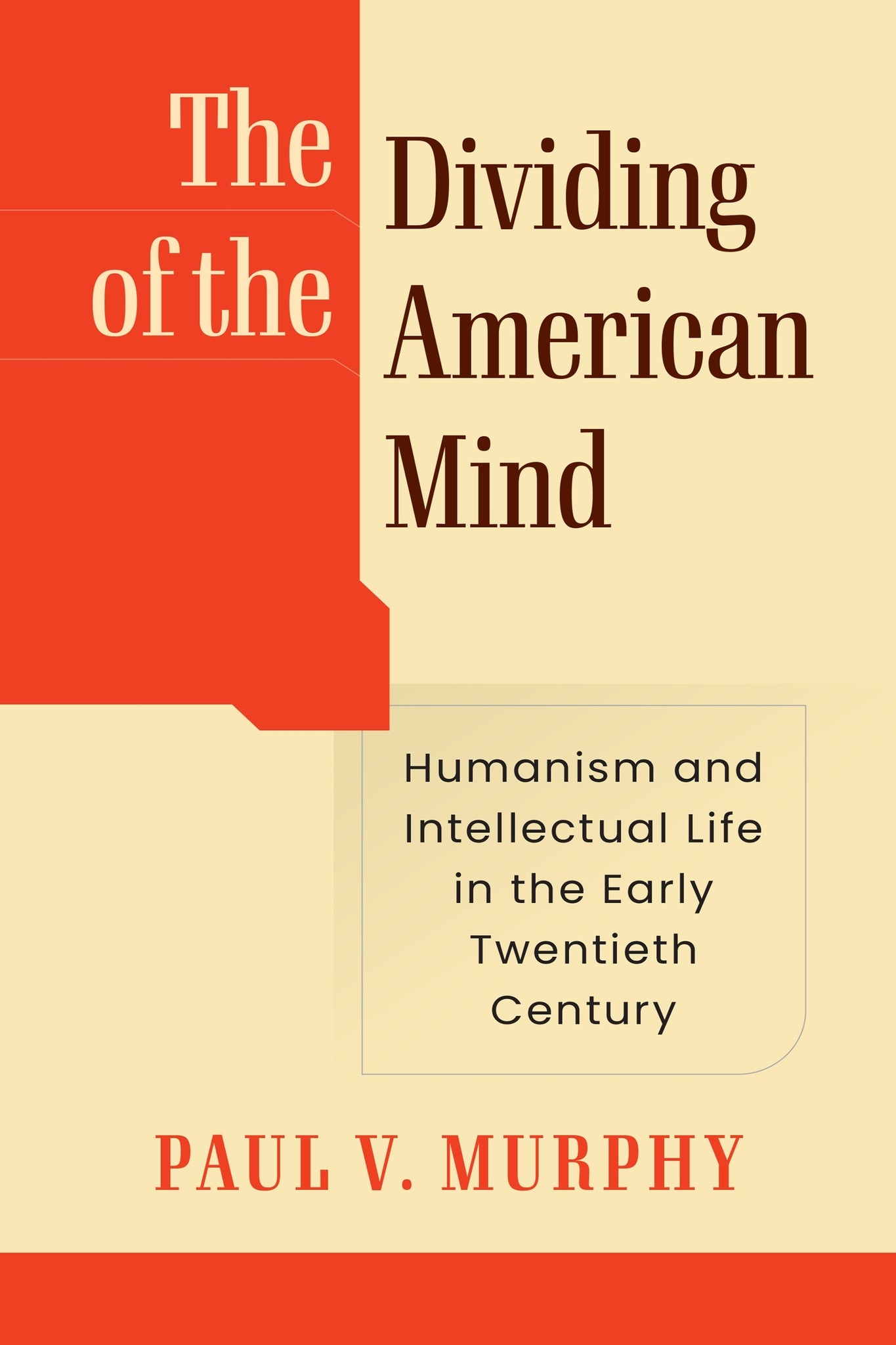
A history of the twentieth-century New Humanists and religious humanists who envisioned a unified national mind only to create a divided one
Many early twentieth-century American intellectuals believed humanism could replace the Protestant establishment as a source of values in a secular age. They disagreed, however, about what those values were and what humanism meant. The Dividing of the American Mind tells the story of two groups of thinkers—one conservative, the other liberal—who believed humanism could provide American culture unity only to discover that their efforts revealed the nation’s divisions more starkly than before.
The book braids together the history of the New Humanists and religious humanists. The New Humanists were a group of literary scholars led by Irving Babbitt and Paul Elmer More who considered humanism a secular philosophy of self-discipline and character formation. The religious humanists were composed of dissident Unitarian ministers, such as John Dietrich and Curtis Reese, and like-minded religious scholars and philosophers, including Albert Eustace Haydon, who thought of humanism as a science-based religious viewpoint that rejected all supernatural beliefs, including that of an omniscient, all-powerful God. They authored the Humanist Manifesto in 1933. Both groups engaged the dominant American philosophy of pragmatism. The New Humanists rejected it; the religious humanists embraced it and took John Dewey as their (somewhat reluctant) leader.
Both appealed to the power of reason and considered ideas the basis of a civilization. Both believed that science and religion were not opposed and could fruitfully be reconciled in a new secular order. Yet, rather than unifying America, they foreshadowed profound divisions, which emerged more clearly after World War II. Among other things, they disagreed deeply on moral values and moral judgment. The Dividing of the American Mind reaches an ironic conclusion: The intellectuals’ project to use reason to create a common worldview fostered division more than understanding. The humanist intellectuals envisioned a unified national mind only to create a divided one.


"This book brings a range of important voices and perspectives back into the historical narrative by exploring how key groups of US thinkers staked their hopes on humanism as they sought moral guidance in the new world of science and industrial capitalism. Their clashing formulations of humanism reflected sharp disagreements over the meanings of sensory evidence, intuition, and received tradition. Through painstaking research and judicious analysis, Paul V. Murphy provides a crucial resource for interpreters of science, religion, morality, and culture in the twentieth-century United States."