


Some error occured while loading the Quick View. Please close the Quick View and try reloading the page.
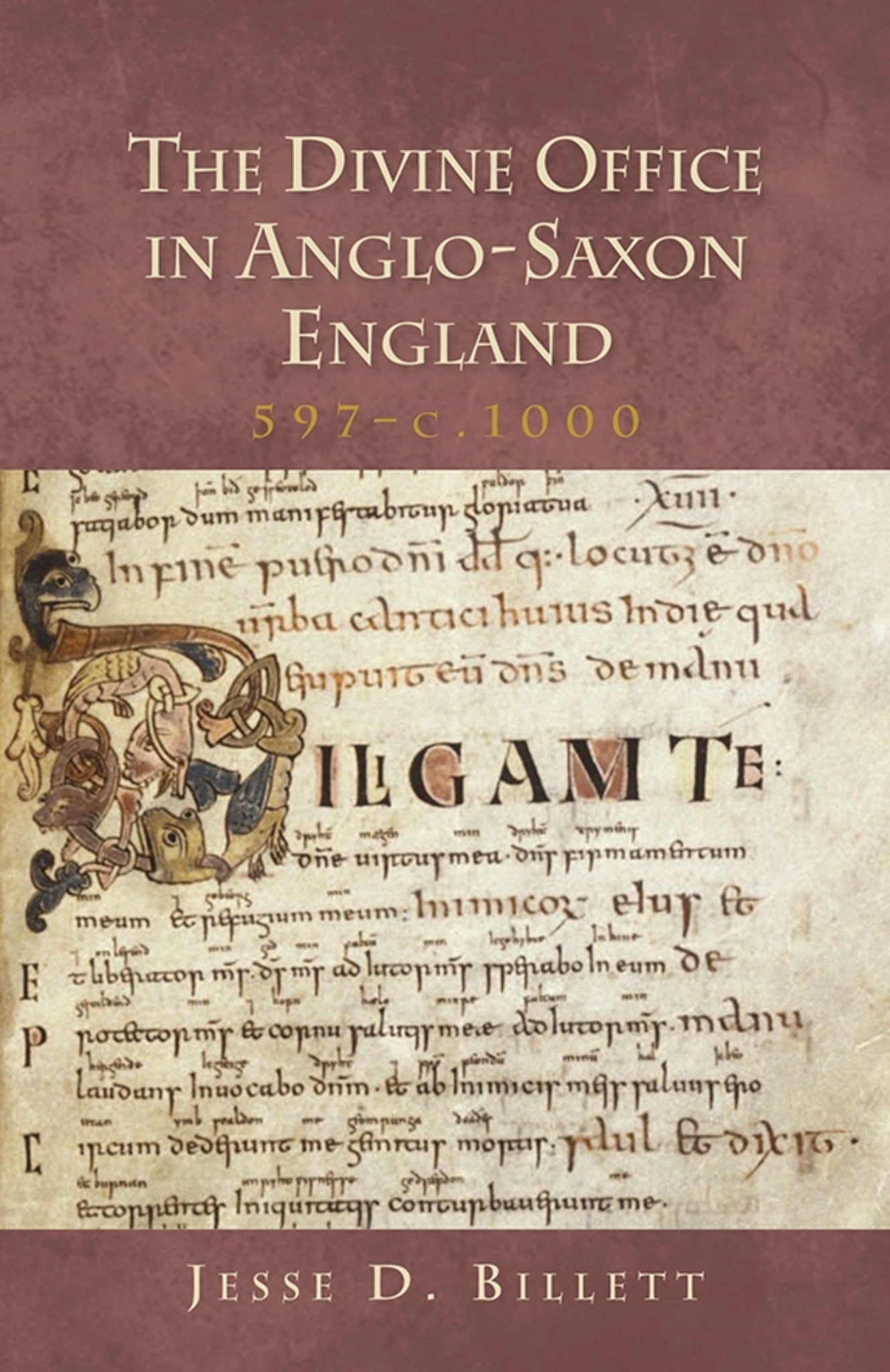
First full-scale survey and examination of liturgical practice and its fundamental changes over four centuries.
At the heart of life in any medieval Christian religious community was the communal recitation of the daily "hours of prayer" or Divine Office. This book draws on narrative, conciliar, and manuscript sources to reconstruct the history of how the Divine Office was sung in Anglo-Saxon minster churches from the coming of the first Roman missionaries in 597 to the height of the "monastic revival" in the tenth century.
Going beyond both the hagiographic "Benedictine" assumptions of older scholarship and the cautious agnosticism of more recent historians of Anglo-Saxon Christianity, the author demonstrates that the early Anglo-Saxon Church followed a non-Benedictine "Roman" monasticliturgical tradition. Despite Viking depredations and native laxity, this tradition survived, enriched through contact with varied Continental liturgies, into the tenth century. Only then did a few advanced monastic reformers conclude, based on their study of ninth-century Frankish reforms fully explained for the first time in this book, that English monks and nuns ought to follow the liturgical prescriptions of the Rule of St Benedict to the letter. Fragmentary manuscript survivals reveal how monastic leaders such as Dunstan and Æthelwold variously adapted the native English liturgical tradition - or replaced it - to implement this forgotten central plank of the "Benedictine Reform".
JESSE D. BILLETT is Assistant Professor in the Faculty of Divinity, Trinity College, Toronto.
At the heart of life in any medieval Christian religious community was the communal recitation of the daily "hours of prayer" or Divine Office. This book draws on narrative, conciliar, and manuscript sources to reconstruct the history of how the Divine Office was sung in Anglo-Saxon minster churches from the coming of the first Roman missionaries in 597 to the height of the "monastic revival" in the tenth century.
Going beyond both the hagiographic "Benedictine" assumptions of older scholarship and the cautious agnosticism of more recent historians of Anglo-Saxon Christianity, the author demonstrates that the early Anglo-Saxon Church followed a non-Benedictine "Roman" monasticliturgical tradition. Despite Viking depredations and native laxity, this tradition survived, enriched through contact with varied Continental liturgies, into the tenth century. Only then did a few advanced monastic reformers conclude, based on their study of ninth-century Frankish reforms fully explained for the first time in this book, that English monks and nuns ought to follow the liturgical prescriptions of the Rule of St Benedict to the letter. Fragmentary manuscript survivals reveal how monastic leaders such as Dunstan and Æthelwold variously adapted the native English liturgical tradition - or replaced it - to implement this forgotten central plank of the "Benedictine Reform".
JESSE D. BILLETT is Assistant Professor in the Faculty of Divinity, Trinity College, Toronto.

Price: $60.00
Pages: 486
Publisher: Boydell & Brewer Inc.
Imprint: Henry Bradshaw Society
Publication Date:
15 February 2019
Trim Size: 8.50 X 5.43 in
ISBN: 9781907497353
Format: Paperback
BISACs:
RELIGION / History, History of religion, RELIGION / Monasticism, Religious communities and monasticism

Magisterial . . . This excellently written book should be in your library, or even on your shelf, because it has so much detail in its pages that you may find yourself referring back to it often. It is, in short, a very well-written book with succinct and clear conclusions filled with erudite and scholarly analysis, but still accessible to those of us who know less about liturgy.
The Divine Office in Anglo-Saxon England has earned itself a place of honor alongside Pfaff's The Liturgy in Medieval England and The Liturgical Books of Anglo Saxon England on the liturgical bookshelf . Students of the English liturgy will be starting from Billett's new narrative for years to come.
Jesse Billett has produced a truly magisterial work on the development of the Divine Office throughout the Anglo-Saxon period.
Billett has achieved a major piece of scholarship, and it should be circulated as widely as possible.
This is a book not only for specialists in liturgical history but also for anyone interested in the varieties of Anglo-Saxon religious life. Because Billett writes so accessibly about even the most technical aspects of his subject, the results of his important research should reach a wide audience.
The author uses extensive documentation to craft a narrative that steers away from some of the traditional simplification that assumed all monks, from Augustine of Canterbury on, were Benedictine and thus the liturgical prayer was also.
The Divine Office in Anglo-Saxon England has earned itself a place of honor alongside Pfaff's The Liturgy in Medieval England and The Liturgical Books of Anglo Saxon England on the liturgical bookshelf . Students of the English liturgy will be starting from Billett's new narrative for years to come.
Jesse Billett has produced a truly magisterial work on the development of the Divine Office throughout the Anglo-Saxon period.
Billett has achieved a major piece of scholarship, and it should be circulated as widely as possible.
This is a book not only for specialists in liturgical history but also for anyone interested in the varieties of Anglo-Saxon religious life. Because Billett writes so accessibly about even the most technical aspects of his subject, the results of his important research should reach a wide audience.
The author uses extensive documentation to craft a narrative that steers away from some of the traditional simplification that assumed all monks, from Augustine of Canterbury on, were Benedictine and thus the liturgical prayer was also.
Towards a 'New Narrative' of the History of the Divine Office in Anglo-Saxon England
The Divine Office in the Latin West in the Early Middle Ages
The Divine Office in England from the Augustinian Mission to the First Viking Invasions, 597 - c.835
The Divine Office in England from the first Viking age to the abbacy of Dunstan at Glastonbury, c.835 - c.940
The Divine Office and the Tenth-Century English Benedictine Reform
A Methodology for the Study of Anglo-Saxon Chant Books for the Office
Two Witnesses to the Chant of the Secular Office in England in the Tenth Century
A Fragment of a Tenth-Century English Benedictine 'Breviary'
A Fragment of a Tenth-Century English Benedictine Chant Book
Conclusion: Ways of Making a Benedictine Office
Appendices
Bibliography
Index of Manuscripts
Index of Liturgical Forms
The Divine Office in the Latin West in the Early Middle Ages
The Divine Office in England from the Augustinian Mission to the First Viking Invasions, 597 - c.835
The Divine Office in England from the first Viking age to the abbacy of Dunstan at Glastonbury, c.835 - c.940
The Divine Office and the Tenth-Century English Benedictine Reform
A Methodology for the Study of Anglo-Saxon Chant Books for the Office
Two Witnesses to the Chant of the Secular Office in England in the Tenth Century
A Fragment of a Tenth-Century English Benedictine 'Breviary'
A Fragment of a Tenth-Century English Benedictine Chant Book
Conclusion: Ways of Making a Benedictine Office
Appendices
Bibliography
Index of Manuscripts
Index of Liturgical Forms