


Some error occured while loading the Quick View. Please close the Quick View and try reloading the page.
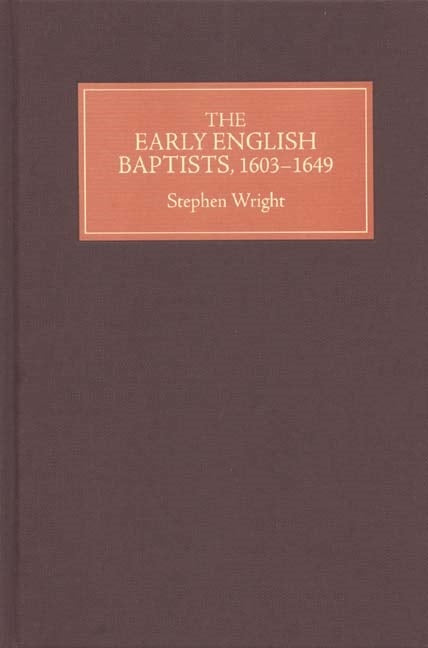
A fresh examination of the Baptist movement, showing its growth and development to be more complex than hitherto assumed.
This book challenges the orthodoxy that seventeenth-century Baptists were divided from the first into two separate denominations, 'Particular' and 'General', defined by their differing attitudes to predestination and the atonement, showing how the position was in fact much more complicated. It describes how from the foundation of the 'Generals' in 1609 there were always two tendencies, one clericalist and pacifist, influenced by the Dutch Mennonites, and one reflecting the English traditions of erastianism and local lay predominance in religion. It re-analyses the confessional struggle during and after the civil war, showing how Independent and erastian sentiment in Parliament increasingly combined to baulk Presbyterian ambition; during and partly because of this process (which they also influenced), the Baptists evolved into three recognisable tendencies. Amongst General Baptists there was a politically radical current, but also a more passive tendency which was starting to gain ground. In 1647-9 most but by no means all Particular Baptist leaders were hostile to the Levellers. The book looks at the nature of religious convictionin the New Model Army, reassessing the role and influence of Baptists in it. In the late 40s, many Baptists, soldiers and civilians, rejected formal ordinances altogether.
STEPHEN WRIGHT received his Ph.D. from the Universityof London. He has been visiting lecturer at the University of Hertfordshire and the University of North London.
This book challenges the orthodoxy that seventeenth-century Baptists were divided from the first into two separate denominations, 'Particular' and 'General', defined by their differing attitudes to predestination and the atonement, showing how the position was in fact much more complicated. It describes how from the foundation of the 'Generals' in 1609 there were always two tendencies, one clericalist and pacifist, influenced by the Dutch Mennonites, and one reflecting the English traditions of erastianism and local lay predominance in religion. It re-analyses the confessional struggle during and after the civil war, showing how Independent and erastian sentiment in Parliament increasingly combined to baulk Presbyterian ambition; during and partly because of this process (which they also influenced), the Baptists evolved into three recognisable tendencies. Amongst General Baptists there was a politically radical current, but also a more passive tendency which was starting to gain ground. In 1647-9 most but by no means all Particular Baptist leaders were hostile to the Levellers. The book looks at the nature of religious convictionin the New Model Army, reassessing the role and influence of Baptists in it. In the late 40s, many Baptists, soldiers and civilians, rejected formal ordinances altogether.
STEPHEN WRIGHT received his Ph.D. from the Universityof London. He has been visiting lecturer at the University of Hertfordshire and the University of North London.

Price: $130.00
Pages: 288
Publisher: Boydell & Brewer Inc.
Imprint: Boydell Press
Publication Date:
01 March 2006
Trim Size: 9.21 X 6.14 in
ISBN: 9781843831952
Format: Hardcover
BISACs:
RELIGION / Christianity / Baptist, Baptist Churches, RELIGION / History, History of religion

In addition to a detailed analysis of some of the key documents for early Baptist history, the book contains in both the text and the appendices a wealth of biographical information on members of individual congregations.