


Some error occured while loading the Quick View. Please close the Quick View and try reloading the page.
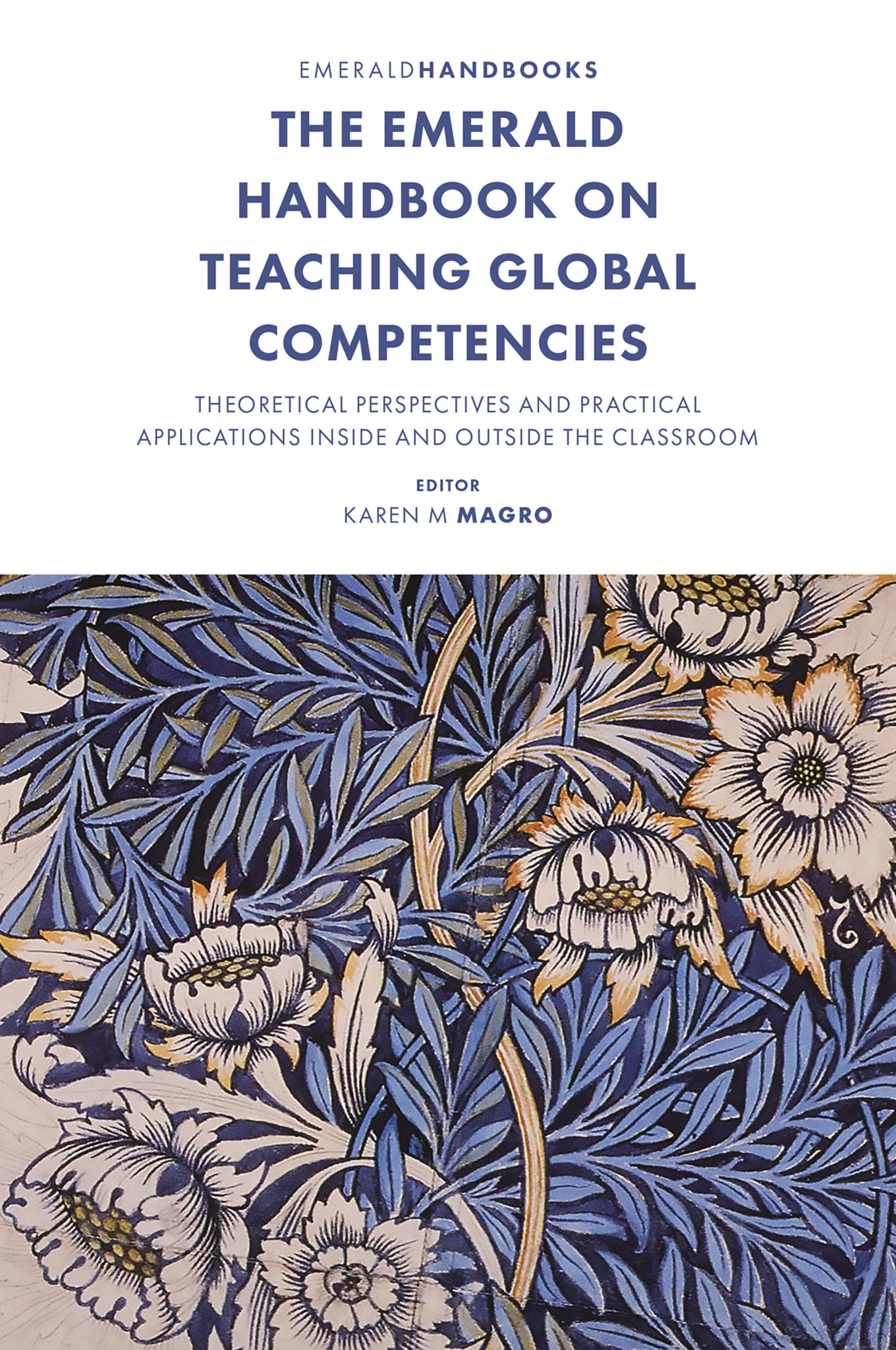
Worldwide, educational institutions at every level are increasingly recognizing that learners must cultivate and demonstrate key global competencies - skills that seamlessly translate across work, academic, and community settings. Offering a timely and rigorously researched exploration into the future of learning, The Emerald Handbook on Teaching Global Competencies redefines citizenship by revealing how cultural, linguistic, and technological transformations are reshaping our collective identity and suggests that education must transcend traditional, geographically bound disciplines to fully equip learners for the challenges and opportunities of a rapidly evolving global landscape.
In this comprehensive work, interdisciplinary research meets practice. The Emerald Handbook on Teaching Global Competencies champions an integrated approach that fosters emotional and social intelligence, creative problem solving, and interdisciplinary thinking, while also valuing transcultural insights and Indigenous knowledge. Through a rich array of case studies, empirical research, and innovative pedagogies, chapter authors demonstrate how dynamic, multimodal, lifelong learning environments can cultivate the key global competencies needed to bridge cultural divides, empower communities, and promote sustainable development.
An essential resource for academics, educators, and policymakers, this volume offers not only a critical synthesis of theory and practice but also an inspiring vision for reimagining educational spaces. Chapter authors challenge conventional models and call for a transformative rethinking of what it means to be educated in the 21st century, where learning is a catalyst for creating resilient, inclusive, and globally engaged communities.


Globalization in the 21st century is generating enormous problems and opportunities that demand stronger, more holistic and visionary education. Unfortunately, most education systems in the world today are strongly influenced by narrow-minded, shortsighted, rigid thinking that emerges from sociocultural and economic dogmatism. Fortunately, this handbook pushes back hard against that dogmatism by producing a holistic perspective on 21st-century education. The editor and contributing authors use impressive creativity, interdisciplinary thinking, and diverse perspectives to produce very promising ideas and strategies that can improve education systems, and ultimately the world. This volume launches us forward into a highly productive, ethical 21st-century vision of education and learning.
— Dr. Donald Ambrose, Rider University, New Jersey, United States
The Emerald Handbook on Teaching Global Competencies is a significant and well crafted contribution to the field. The volume addresses central themes such as emotional and social intelligence, creative problem solving, interdisciplinary thinking, and global awareness in a concrete and practice oriented manner. The inclusion of transcultural perspectives and Indigenous knowledge gives the book an important breadth and situates global competencies within diverse cultural and educational contexts.
As a professor of History Didactics, I particularly value the handbook’s analytical approach to how learners develop the capacity to understand perspectives, handle complexity, and engage constructively with global challenges. Through case studies, empirical research, and innovative pedagogies, the contributors demonstrate how multimodal and lifelong learning environments can build competencies that help learners bridge cultural divides, strengthen community participation, and support sustainable development.
This is a thoughtful and relevant resource for educators, teacher educators, and researchers who seek practical tools as well as deeper theoretical grounding. I recommend it with confidence.
— Professor Jan Frode Hatlen, NTNU – The Norwegian University of Science and Technology, Trondheim, Norway
In this terrible world scenario in which might is portrayed as right, wreaking carnage all over, each time gunning down "the Bird that makes the breeze to blow", we constantly require voices of sanity which exalt what the poet Samuel Taylor Coleridge called the 'one life'. It represents a clarion call to value our cosmic connectedness. Education, though never an independent variable, is indispensable to render these voices audible and, more importantly, heeded by one and all. They reverberate throughout this painstakingly crafted volume. Let them not be cries in the wilderness. They furnish us with insights for a redemptive education nurturing relational beings, relational with all species beings.
— Peter Mayo, Professor, UNESCO co-Chair Global Adult Education, University of Malta
The Emerald Handbook on Teaching Global Competencies is an essential resource for educators, researchers, and practitioners who see promise and possibility in today’s sociopolitical landscape. Expertly edited by Dr. Karen Magro, this multifaceted volume not only unpacks the dimensions of global competencies but also underscores the vital need for multiliteracies, creativity, cultural inclusion, critical thinking, and empathy in the classroom and beyond. In a time of deep division, The Handbook offers a compelling roadmap for those committed to embracing our interdependence and co-creating a more just and inclusive world.
— Jaye Jones, PhD, City University of New York, PhD CUNY, United States
Education has the power to transform individuals and communities - nowhere is this better explored than in this book. The book argues powerfully for education that develops global citizens with global competencies who understand issues such as human rights, sustainability and cultural diversity. Moreover, the book emphasises the imperative to develop an educational approach that transforms us from global conflicts to respect for inclusion, equity and creation.
Through five themed sections, the reader is taken through exploration of local and global issues that impact on education; creativity and critical thinking; emotional and social intelligence; multiliteracies and transcultural issues such as inclusion. The text draws on a wide range of ways of knowing, including scientific and indigenous approaches, that each shape understandings of the world around us and our relationships with each other and our planet. It is a journey of learning that is values-based in its exploration of theoretical and practical aspects of education. Most importantly, it offers hope though new ways of co-existing in and with our world and this has to matter to all of us!
— Charlotte L. Clarke, Associate Pro-Vice-Chancellor (Health) and Executive Director of the Wolfson Research Institute for Health & Wellbeing, Durham University, UK
Karen M. Magro is a Full Professor of Education in the Faculty of Education at The University of Winnipeg, Canada. Karen is a professor, writer, editor, and international educational researcher with over 40 years of teaching experience at all levels of education.
Part 1. Visionary Perspectives: Encouraging Sustainability and Life-Affirming Values
Chapter 1. The “Great Work” of Transformation: Learning that Anticipates a Symbiocene Era; Elizabeth A. Lange
Chapter 2. Envisioning Sustainable Futures with Global Competencies: A Comparison of Place-Based and Contextualised Pedagogies in Aotearoa, New Zealand and Urban Singapore; Patricia A. L. Ong
Chapter 3. Bringing Moral and Cultural Cosmopolitanism into Global Leadership Competencies: Promising Perspectives and Challenges; Ghada Sfeir
Chapter 4. Designing for Global Competence in Adult e-Learning: Building Reflective and Adaptive Learning through Inclusive Design; Ceri Pimblett and Lisa Rowe
Chapter 5. A Case for Relational Sustainability: Textiles, Early Childhood, and Sustainable Futures both Manageable and Imaginable; Catherine-Laura Dunnington
Part 2. Creativity, Critical Thinking, and Collaboration
Chapter 6. “Creativity is Our Hope”; Lynn Newton
Chapter 7. Experiential Learning Design to Teach Global Competencies: Cultivating Creative and Critical Thinking using Transformative Technologies; Saima Qutab, Nina Brosius, and Sean Kelly
Chapter 8. The Role of “Soft Skills” in Promoting Creative Productivity in Academically Talented Students: Integrating the Schoolwide Enrichment Model and Houndstooth Theory; Joseph S. Renzulli and Sally M. Reis
Chapter 9. Competent Thinking in a Challenging World; Douglas P. Newton
Chapter 10. Cultivating Adaptability Via Education and Continuing Professional Development; Daniel Xerri
Chapter 11. Intercultural Communication Competence in Pre-Service Teachers: From Traditional Activities to Digital Simulations; Alisa B. Wilson and Gabrielle Heard
Chapter 12. Metaphor and Personal Story: Teaching Communication, Creative-Critical Thinking and Collaboration; Christine Boyko-Head
Part 3. Connection to Self and Others: Encouraging Intra and Interpersonal Skills
Chapter 13. Emotional Intelligence and Practical Strategies to Enhance Human Skills in a Digital World; Joanne Irving-Walton
Chapter 14. Integrating Social and Emotional Learning with Multimodal Learning Approaches; Amy Van Buren
Chapter 15. Care, Compassion and Catharsis: Emotional and Social Literacies Considered in an Autobiography and Memoir-engaging Imagination of a Lifelong Learner; Bev Hayward
Chapter 16. From Preparation to Practice: The Adjustment Journey of Teachers in Canadian Curriculum Schools Overseas; Robert C. Mizzi and Sunny L. Munn
Chapter 17. Being Open to Others: An Educator of Global Citizenship Reflects on Two Personal Experiences and Their Implications for Teaching Global Competencies; Lloyd Kornelsen
Chapter 18. Empowering Educators: Utilising AI for Professional Development in Higher Education; Natalie Quinn Walker
Part 4. Multiliteracies: Encouraging Creative and Interdisciplinary Learning
Chapter 19. Resisting the Post-Truth Funhouse Mirror: Emancipatory Media and Information Literacies Applying; Kay Johnson
Chapter 20. Community Art, Aesthetic Democracy and the Re-distribution of the Sensible Rhizomatic Experiences in Collaborative Mosaics; Bruno De Oliveira Jayme
Chapter 21. Artistic Pedagogies: Encouraging Imaginative and Creative Learning; Karen M. Magro and Jessica Sokolowski
Chapter 22. Oral History and Public History as Pathways to Global Competencies in Early Childhood and Primary Education through Digital Humanities Tools; Marina Bantiou
Chapter 23. Language, Learning, and Universality: Heritage Language Support Across Finland and England; Mariya Riekkinen and Haya Fakoush
Chapter 24. Fireflies, Nightcrawlers, Constellations, and Wolves: A Biophilic Narrative of Nature Stories in the Night; Cynthia Morawski
Part 5. Transcultural and Indigenous Perspectives
Chapter 25. wîcihitok, or Helping One Another in a Changing World; Yvonne Poitras Pratt
Chapter 26. Barriers and Bridges: Indigenous Pedagogies in the Landscape of Global Competencies Education; Terry Wotherspoon, Emily Milne, and Samantha Mullin
Chapter 27. Transcultural Science Education: Examining Transcultural Literacies Opportunities in the Manitoba K-10 Science Curriculum; Sarah Ragoub and Lilian Pozzer
Chapter 28. Using Ford’s Bloom-Banks Matrix to End Academic Violence for Black and Other Minoritized Students in the U.S.; Donna Y. Ford, Tanya J. Middleton, Hope Barnes, and Renae D. Mayes
Chapter 29. Personal Reflections on Indigeneity and Culturally Inclusive Education: Katerihwayénhstha (I am Learning), an Educational Journey; Karen Froman