


Some error occured while loading the Quick View. Please close the Quick View and try reloading the page.
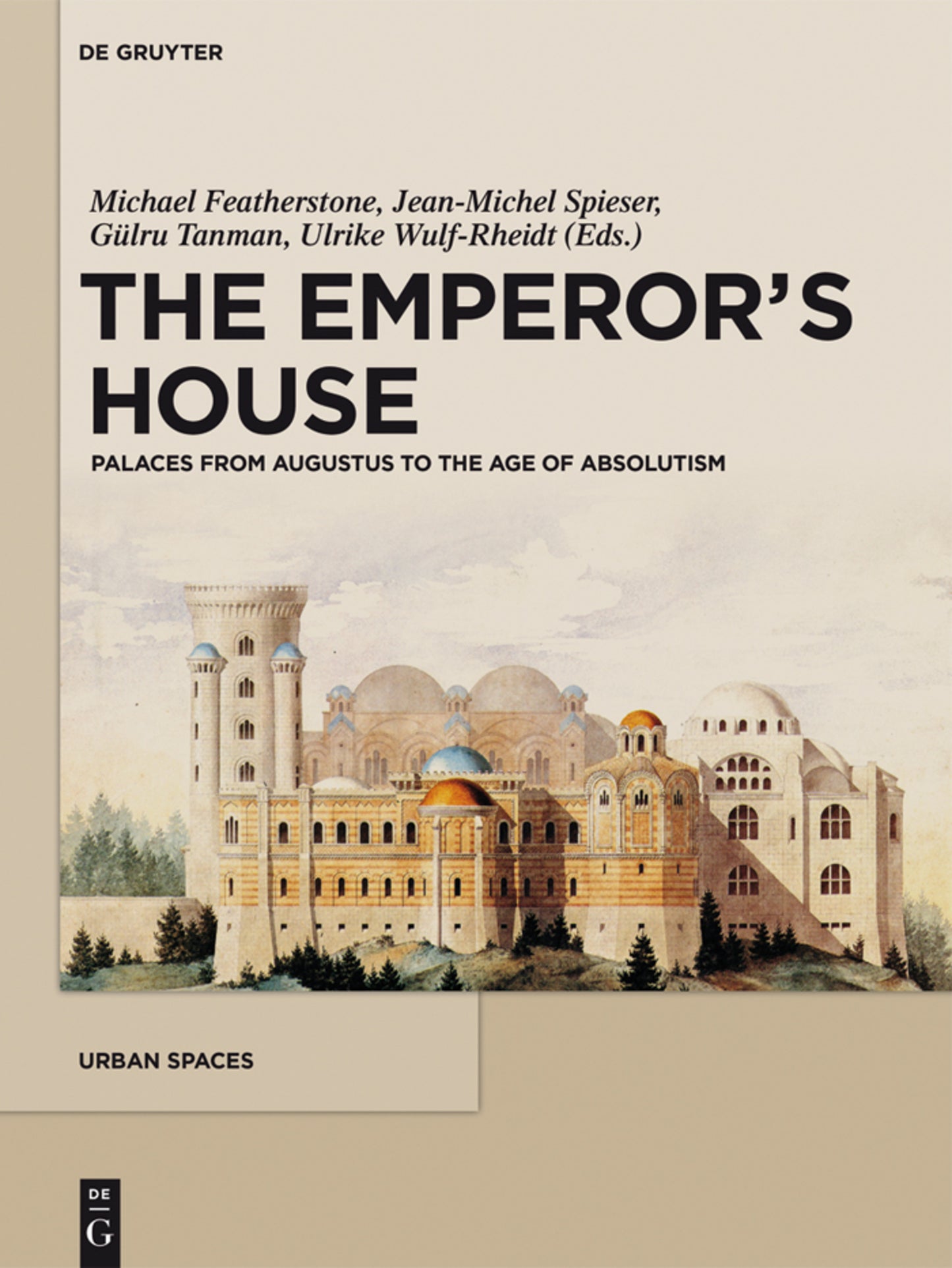
Evolving from a patrician domus, the emperor's residence on the Palatine became the centre of the state administration. Elaborate ceremonial regulated access to the imperial family, creating a system of privilege which strengthened the centralised power. Constantine followed the same model in his new capital, under a Christian veneer. The divine attributes of the imperial office were refashioned, with the emperor as God's representative. The palace was an imitation of heaven.
Following the loss of the empire in the West and the Near East, the Palace in Constantinople was preserved – subject to the transition from Late Antique to Mediaeval conditions – until the Fourth Crusade, attracting the attention of Visgothic, Lombard, Merovingian, Carolingian, Norman and Muslim rulers. Renaissance princes later drew inspiration for their residences directly from ancient ruins and Roman literature, but there was also contact with the Late Byzantine court. Finally, in the age of Absolutism the palace became again an instrument of power in vast centralised states, with renewed interest in Roman and Byzantine ceremonial.
Spanning the broadest chronological and geographical limits of the Roman imperial tradition, from the Principate to the Ottoman empire, the papers in the volume treat various aspects of palace architecture, art and ceremonial.


M. Featherstone, Paris/Fribourg; J.-M. Spieser, Fribourg; G. Tanman, Istanbul; U. Wulf-Rheidt, Berlin
M. Featherstone, Paris/Fribourg; J.-M. Spieser, Fribourg; G. Tanman, Istanbul; U. Wulf-Rheidt, Berlin