


Some error occured while loading the Quick View. Please close the Quick View and try reloading the page.
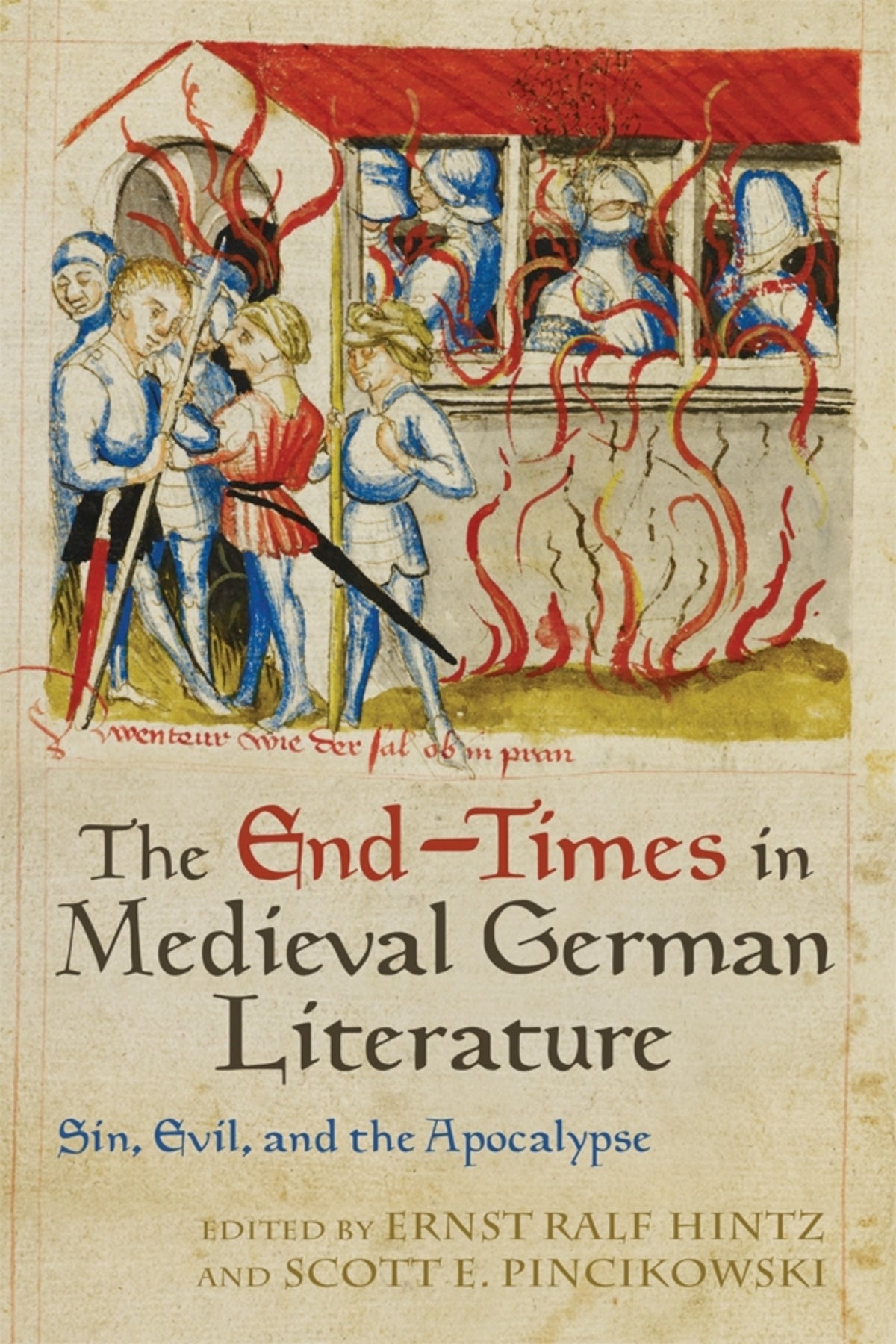
Drawing upon the most current methodologies, the essays in this book pursue the multifarious functions of end-times in medieval German texts.
The contemporary fascination with the end of the world and of life as we know it would not have surprised our counterparts a millennium ago; only the fact that such an end has not yet occurred. Current visions of the apocalypse encompass climate change, terrorism, antibiotic-resistant bacteria, and war. Popular culture expresses the fear associated with these global crises, obsessively portraying zombies, alien attacks, pandemics, and self-destructive technology. This book explores how end-times were envisioned in medieval Germany. The essays, written by well-established scholars, examine the period's fascination with the apocalypse by applying the most current methodological approaches to a wide range of literary genres. Drawing upon methodologies such as adaptation theory, gender analysis, space and place studies, reception studies, and memory studies, this book uncovers the rhetorical, didactic, narratological, mnemonic, thematic, cultural, and political functions of end-times in medieval German texts.
Contributors: Tina Boyer, Albrecht Classen, Winfried Frey, Will Hasty, Ernst Ralf Hintz, Winder McConnell, Evelyn Meyer, Scott E. Pincikowski, Marian E. Polhill, Alexander Sager, Alexandra Sterling-Hellenbrand, Joseph M. Sullivan.
Ernst Ralf Hintz is Professor of German and Medieval Studies at Truman State University. Scott E. Pincikowski is Professor of German at Hood College.
The contemporary fascination with the end of the world and of life as we know it would not have surprised our counterparts a millennium ago; only the fact that such an end has not yet occurred. Current visions of the apocalypse encompass climate change, terrorism, antibiotic-resistant bacteria, and war. Popular culture expresses the fear associated with these global crises, obsessively portraying zombies, alien attacks, pandemics, and self-destructive technology. This book explores how end-times were envisioned in medieval Germany. The essays, written by well-established scholars, examine the period's fascination with the apocalypse by applying the most current methodological approaches to a wide range of literary genres. Drawing upon methodologies such as adaptation theory, gender analysis, space and place studies, reception studies, and memory studies, this book uncovers the rhetorical, didactic, narratological, mnemonic, thematic, cultural, and political functions of end-times in medieval German texts.
Contributors: Tina Boyer, Albrecht Classen, Winfried Frey, Will Hasty, Ernst Ralf Hintz, Winder McConnell, Evelyn Meyer, Scott E. Pincikowski, Marian E. Polhill, Alexander Sager, Alexandra Sterling-Hellenbrand, Joseph M. Sullivan.
Ernst Ralf Hintz is Professor of German and Medieval Studies at Truman State University. Scott E. Pincikowski is Professor of German at Hood College.

Price: $130.00
Pages: 302
Publisher: Boydell & Brewer Inc.
Imprint: Camden House
Series: Studies in German Literature Linguistics and Culture
Publication Date:
15 December 2019
Trim Size: 9.00 X 6.00 in
ISBN: 9781571139894
Format: Hardcover
BISACs:
LITERARY CRITICISM / Medieval, Literary studies: ancient, classical and medieval, RELIGION / Eschatology, Theology

This collected volume under the editorship of Ernst Ralf Hintz and Scott E. Pincikowski . . . is the result of a successful collaboration of twelve Germanists, mostly Americans, among them Albrecht Classen, Will Hasty, and Winder McConnell. They have set themselves the goal of researching medieval conceptions of sin, evil, and the Apocalypse. The range of sources is diverse, comprising numerous legends, epics, and novels of courtly literature, post-courtly texts, and art objects, as well as religious texts. . . . The volume is to be recommended for readers who are . . . interested in conceptions of ethics and/or morals in the Middle Ages.
— Aleksej Burov
Dieser attraktive Sammelband ist eine Rarität: eine Reihe von Aufsätzen zur vormodernen deutschen Literatur, komplett in englischer Sprache und verfasst von Wissenschaftler*innen aus den USA. In dieser Hinsicht ist er enorm zu loben. Es gibt keinen Mangel an Kooperation zwischen dem deutsch- und dem englischsprachigen Raum in der Altgermanistik, aber es fehlen Bände, die vollständig in
englischer Sprache verfasst sind und daher das Feld sicherlich einem breiteren Publikum interdisziplinärer Mediävistinnen und Mediävisten öffnen. "
(This attractive collection is a rarity: a series of essays on premodern German literature written entirely in English by scholars based in the United States. In this regard, it deserves high praise. While there is no shortage of collaboration between German- and English-speaking scholars in the field of Old German Studies, volumes entirely in English remain scarce, making this book an important contribution that will undoubtedly open the field to a broader audience of interdisciplinary medievalists.)
— Aleksej Burov
Dieser attraktive Sammelband ist eine Rarität: eine Reihe von Aufsätzen zur vormodernen deutschen Literatur, komplett in englischer Sprache und verfasst von Wissenschaftler*innen aus den USA. In dieser Hinsicht ist er enorm zu loben. Es gibt keinen Mangel an Kooperation zwischen dem deutsch- und dem englischsprachigen Raum in der Altgermanistik, aber es fehlen Bände, die vollständig in
englischer Sprache verfasst sind und daher das Feld sicherlich einem breiteren Publikum interdisziplinärer Mediävistinnen und Mediävisten öffnen. "
(This attractive collection is a rarity: a series of essays on premodern German literature written entirely in English by scholars based in the United States. In this regard, it deserves high praise. While there is no shortage of collaboration between German- and English-speaking scholars in the field of Old German Studies, volumes entirely in English remain scarce, making this book an important contribution that will undoubtedly open the field to a broader audience of interdisciplinary medievalists.)
Introduction - Ernst Ralf Hintz and Scott E. Pincikowski
Thiu wirsa giburd: Cain's Legacy, Original Sin, and the End of the World in the Old Saxon Genesis - Alexander Sager
The Heliand Revisited: Spiritual Transgendering and the Defiance of Evil - Ernst Ralf Hintz
The Beginning of the End: Binary Dynamics and Initiative in Hartmann von Aue's Gregorius - Will Hasty
Poetic Reflections in Medieval German Literature on Tragic Conflicts, Massive Death, and Armageddon - Albrecht Classen
Beyond Good and Evil: Apocalyptic Vision without Judgment in the Nibelungenlied. An Essay - Winder McConnell
End-Times in the Hall: The Modern Reception of the Apocalyptic Ending of the Nibelungenlied - Scott E. Pincikowski
Past Present, Future Present? Visualizing Arthurian Romance and the Beholder's Share in a World that Refuses to End - Alexandra Sterling-Hellenbrand
Ich diene und wirbe / biz ich gar verdirbe: Lovesickness, Apocalypse and the End-Times in Mauritius von Craûn and Das Nibelungenlied - Marian E. Polhill
The Slippery Concept of Evil in Hartmann von Aue's Erec and Iwein - Evelyn Meyer
Wigamur's Lessons on the Complexity of Evil - Joseph M. Sullivan
The Miracles of the Antichrist - Tina Boyer
Monsters and Monstrosities in the Pamphlet Wars of the Reformation - Winfried Frey
Thiu wirsa giburd: Cain's Legacy, Original Sin, and the End of the World in the Old Saxon Genesis - Alexander Sager
The Heliand Revisited: Spiritual Transgendering and the Defiance of Evil - Ernst Ralf Hintz
The Beginning of the End: Binary Dynamics and Initiative in Hartmann von Aue's Gregorius - Will Hasty
Poetic Reflections in Medieval German Literature on Tragic Conflicts, Massive Death, and Armageddon - Albrecht Classen
Beyond Good and Evil: Apocalyptic Vision without Judgment in the Nibelungenlied. An Essay - Winder McConnell
End-Times in the Hall: The Modern Reception of the Apocalyptic Ending of the Nibelungenlied - Scott E. Pincikowski
Past Present, Future Present? Visualizing Arthurian Romance and the Beholder's Share in a World that Refuses to End - Alexandra Sterling-Hellenbrand
Ich diene und wirbe / biz ich gar verdirbe: Lovesickness, Apocalypse and the End-Times in Mauritius von Craûn and Das Nibelungenlied - Marian E. Polhill
The Slippery Concept of Evil in Hartmann von Aue's Erec and Iwein - Evelyn Meyer
Wigamur's Lessons on the Complexity of Evil - Joseph M. Sullivan
The Miracles of the Antichrist - Tina Boyer
Monsters and Monstrosities in the Pamphlet Wars of the Reformation - Winfried Frey