


Some error occured while loading the Quick View. Please close the Quick View and try reloading the page.
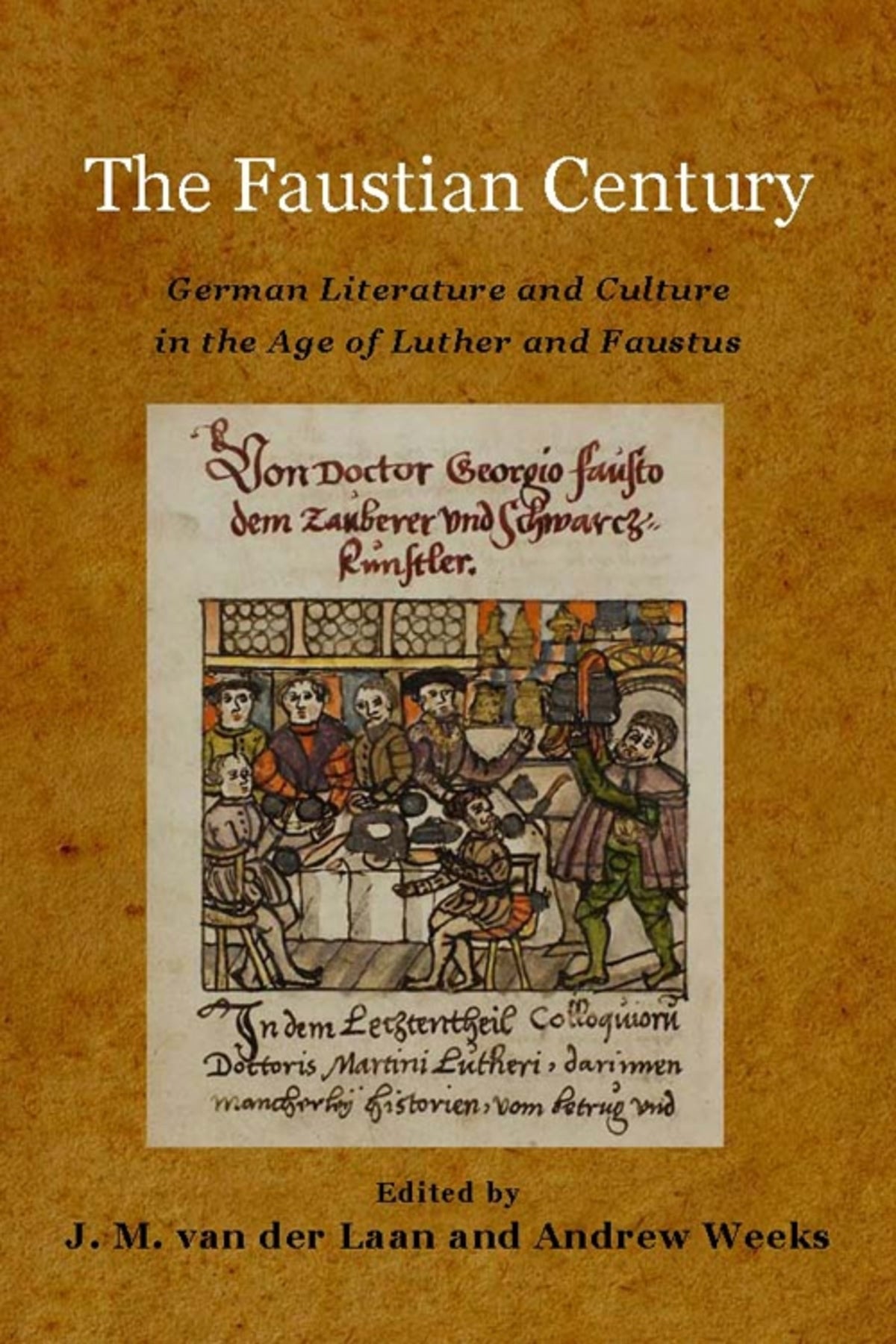
New essays revealing the enduring significance of the story made famous in the 1587 Faustbuch and providing insights into the forces that gave the sixteenth century its distinct character.
The Reformation and Renaissance, though segregated into distinct disciplines today, interacted and clashed intimately in Faust, the great figure that attained European prominence in the anonymous 1587 Historia von D. Johann Fausten. The original Faust behind Goethe's great drama embodies a remote culture. In his century, Faust evolved from an obscure cipher to a universal symbol. The age explored here as "the Faustian century" invested the Faustbuch and its theme with a symbolic significance still of exceptional relevance today.
The new essays in this volume complement one another, providing insights into the tensions and forces that gave the century its distinctcharacter. Several essays seek Faust's prototypes. Others elaborate the symbolic function of his figure and discern the resonance of his tale in conflicting allegiances. This volume focuses on the intersection of historical accounts and literary imaginings, on shared aspects of the work and its times, on concerns with obedience and transgression, obsessions with the devil and curiosity about magic, and quandaries created by shifting religious and worldlyauthorities.
Contributors: Marguerite de Huszar Allen, Kresten Thue Andersen, Frank Baron, Günther Bonheim, Albrecht Classen, Urs Leo Gantenbein, Karl S. Guthke, Michael Keefer, Paul Ernst Meyer, J. M. van der Laan, Helen Watanabe-O'Kelly, Andrew Weeks.
J. M. van der Laan is Professor of German and Andrew Weeks is Professor of German and Comparative Literature, both at Illinois State University.
The Reformation and Renaissance, though segregated into distinct disciplines today, interacted and clashed intimately in Faust, the great figure that attained European prominence in the anonymous 1587 Historia von D. Johann Fausten. The original Faust behind Goethe's great drama embodies a remote culture. In his century, Faust evolved from an obscure cipher to a universal symbol. The age explored here as "the Faustian century" invested the Faustbuch and its theme with a symbolic significance still of exceptional relevance today.
The new essays in this volume complement one another, providing insights into the tensions and forces that gave the century its distinctcharacter. Several essays seek Faust's prototypes. Others elaborate the symbolic function of his figure and discern the resonance of his tale in conflicting allegiances. This volume focuses on the intersection of historical accounts and literary imaginings, on shared aspects of the work and its times, on concerns with obedience and transgression, obsessions with the devil and curiosity about magic, and quandaries created by shifting religious and worldlyauthorities.
Contributors: Marguerite de Huszar Allen, Kresten Thue Andersen, Frank Baron, Günther Bonheim, Albrecht Classen, Urs Leo Gantenbein, Karl S. Guthke, Michael Keefer, Paul Ernst Meyer, J. M. van der Laan, Helen Watanabe-O'Kelly, Andrew Weeks.
J. M. van der Laan is Professor of German and Andrew Weeks is Professor of German and Comparative Literature, both at Illinois State University.

Price: $190.00
Pages: 412
Publisher: Boydell & Brewer Inc.
Imprint: Camden House
Series: Studies in German Literature Linguistics and Culture
Publication Date:
February 1, 2013
Trim Size: 9.00 X 6.00 in
ISBN: 9781571135520
Format: Hardcover
BISACs:
LITERARY CRITICISM / European / German, Literature: history and criticism, HISTORY / Europe / Germany, RELIGION / History, European history

[A]sk[s] and answer[s] some very interesting questions about the study and nature of legends, myths, and mythography.
Provides a useful insights into the recent research on Faust, and especially the Faust chapbook of 1587, without failing to do justice to earlier research . . . . High editorial values contribute to the cohesion of the volume . . . . The essays are not so much resumés, but instead tend to present new theses. This makes the project all the more interesting . . . . Stimulating for its great bandwidth of perspectives, from the revaluation of social institutions to literary aesthetics to Lutheran theology.
[A]n impressive and important piece of scholarship . . . . [T]his is an up-to-date work on Faust, the Faustbücher, the sixteenth century, the themes of good and evil, faith and reason, legend and history. Folklorists interested in the history and folklore of Early Modern Europe will appreciate the collection.
[O]ne can definitely recommend the volume as a fine and nicely illustrated collection of well-organized information and opinion on the meaning of Faust for the German sixteenth century.
A welcome addition even to the existing enormous body of literature on the Faust Theme . . . . [A] stimulating contribution to the ongoing scholarly debate.
— John L. Flood
[P]resents new and insightful material, well argued, and happily, very well written.
Provides a useful insights into the recent research on Faust, and especially the Faust chapbook of 1587, without failing to do justice to earlier research . . . . High editorial values contribute to the cohesion of the volume . . . . The essays are not so much resumés, but instead tend to present new theses. This makes the project all the more interesting . . . . Stimulating for its great bandwidth of perspectives, from the revaluation of social institutions to literary aesthetics to Lutheran theology.
[A]n impressive and important piece of scholarship . . . . [T]his is an up-to-date work on Faust, the Faustbücher, the sixteenth century, the themes of good and evil, faith and reason, legend and history. Folklorists interested in the history and folklore of Early Modern Europe will appreciate the collection.
[O]ne can definitely recommend the volume as a fine and nicely illustrated collection of well-organized information and opinion on the meaning of Faust for the German sixteenth century.
A welcome addition even to the existing enormous body of literature on the Faust Theme . . . . [A] stimulating contribution to the ongoing scholarly debate.
— John L. Flood
[P]resents new and insightful material, well argued, and happily, very well written.
Introduction: Faust Scholarship and the Project at Hand - James M. van der Laan
The German Faustian Century - Andrew Weeks
Faustus of the Sixteenth Century: His Life, Legend, and Myth - Frank Baron
Cornelius Agrippa's Double Presence in the Faustian Century - Michael Keefer
Converging Magical Legends: Faustus, Paracelsus, and Trithemius - Urs Leo Gantenbein
Faust from Cipher to Sign and Pious to Profane - James M. van der Laan
The Aesthetics of the 1587 Spies Historia von D. Johann Fausten - Marguerite de Huszar Allen
The Lutheran Faust: Repentance in the Augsburg Confession and the German Faustbuch - Kresten Thue Andersen
Marriage in the Historia von D. Johann Fausten (1587) - Paul Ernst Meyer
Antiauthoritarianism and the Problem of Knowledge in the Faustbuch - Andrew Weeks
Exploring the "Three-Fold World": Faust as Alchemist, Astrologer, and Magician - Helen Watanabe-O'Kelly
The Devil in the Early Modern World and in Sixteenth-Century German Devil Literature - Albrecht Classen
Encounters with "Schwarz-Hanz": Jacob Böhme and the Literature of the Devil in the Sixteenth Century - Günther Bonheim
D. Johann Faust and the Cannibals: Geographic Horizons in the Sixteenth Century - Karl S. Guthke
A Sixteenth-Century Chronology of Significant References to Faust with Parallel World Events
Select Bibliography
Notes on the Contributors
Index
The German Faustian Century - Andrew Weeks
Faustus of the Sixteenth Century: His Life, Legend, and Myth - Frank Baron
Cornelius Agrippa's Double Presence in the Faustian Century - Michael Keefer
Converging Magical Legends: Faustus, Paracelsus, and Trithemius - Urs Leo Gantenbein
Faust from Cipher to Sign and Pious to Profane - James M. van der Laan
The Aesthetics of the 1587 Spies Historia von D. Johann Fausten - Marguerite de Huszar Allen
The Lutheran Faust: Repentance in the Augsburg Confession and the German Faustbuch - Kresten Thue Andersen
Marriage in the Historia von D. Johann Fausten (1587) - Paul Ernst Meyer
Antiauthoritarianism and the Problem of Knowledge in the Faustbuch - Andrew Weeks
Exploring the "Three-Fold World": Faust as Alchemist, Astrologer, and Magician - Helen Watanabe-O'Kelly
The Devil in the Early Modern World and in Sixteenth-Century German Devil Literature - Albrecht Classen
Encounters with "Schwarz-Hanz": Jacob Böhme and the Literature of the Devil in the Sixteenth Century - Günther Bonheim
D. Johann Faust and the Cannibals: Geographic Horizons in the Sixteenth Century - Karl S. Guthke
A Sixteenth-Century Chronology of Significant References to Faust with Parallel World Events
Select Bibliography
Notes on the Contributors
Index