


Some error occured while loading the Quick View. Please close the Quick View and try reloading the page.
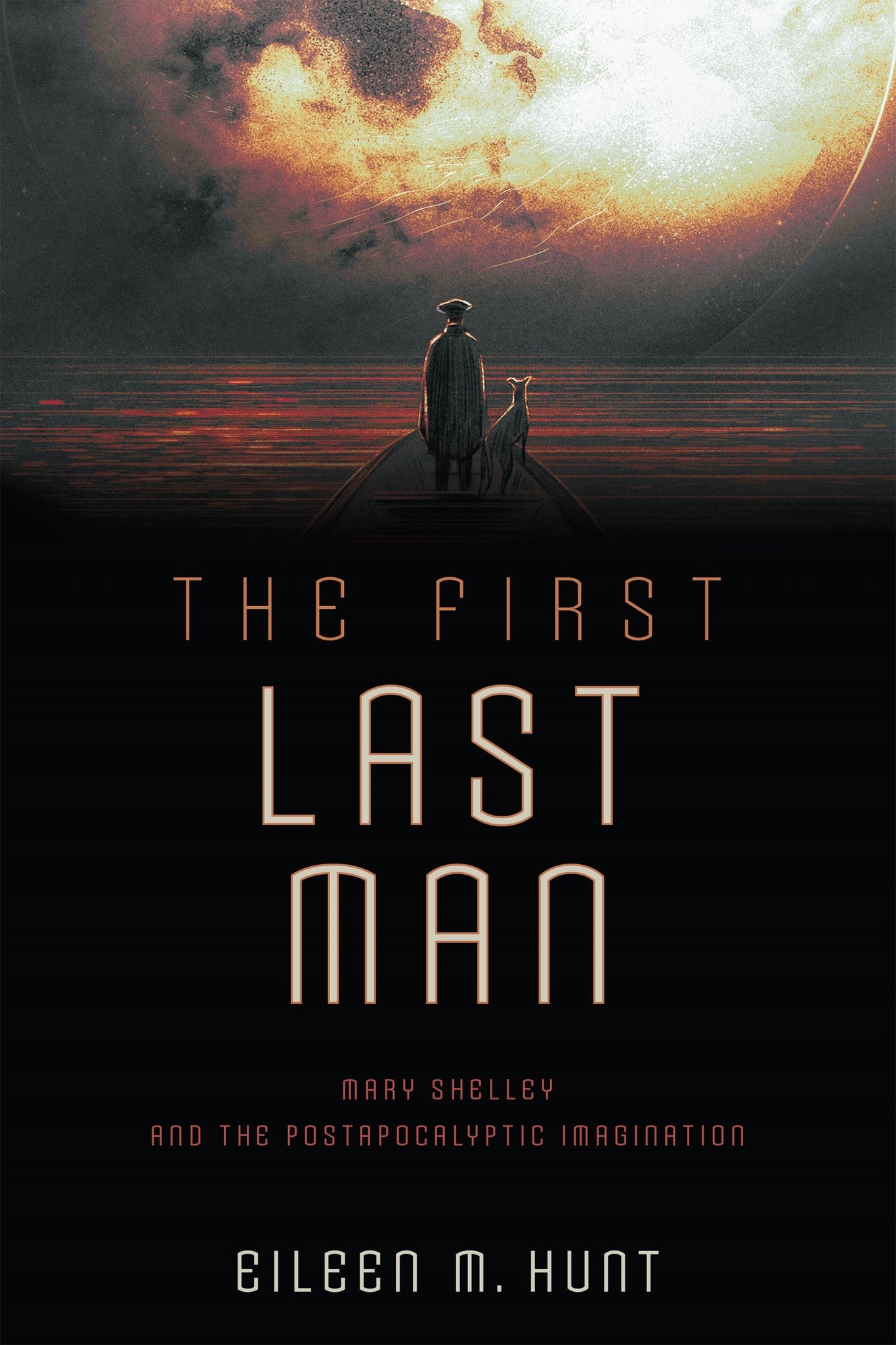
Beyond her most famous creation—the nightmarish vision of Frankenstein’s Creature—Mary Shelley’s most enduring influence on politics, literature, and art perhaps stems from the legacy of her lesser-known novel about the near-extinction of the human species through war, disease, and corruption. This novel, The Last Man (1826), gives us the iconic image of a heroic survivor who narrates the history of an apocalyptic disaster in order to save humanity—if not as a species, then at least as the practice of compassion or humaneness. In visual and musical arts from 1826 to the present, this postapocalyptic figure has transmogrified from the “last man” into the globally familiar filmic images of the “invisible man” and the “final girl.”
Reading Shelley’s work against the background of epidemic literature and political thought from ancient Greece to Covid-19, Eileen M. Hunt reveals how Shelley’s postapocalyptic imagination has shaped science fiction and dystopian writing from H. G. Wells, M. P. Shiel, and George Orwell to Octavia Butler, Margaret Atwood, and Emily St. John Mandel. Through archival research into Shelley’s personal journals and other writings, Hunt unearths Shelley’s ruminations on her own personal experiences of loss, including the death of young children in her family to disease and the drowning of her husband, Percy Bysshe Shelley. Shelley’s grief drove her to intensive study of Greek tragedy, through which she developed the thinking about plague, conflict, and collective responsibility that later emerges in her fiction. From her readings of classic works of plague literature to her own translation of Sophocles’s Oedipus Rex, and from her authorship of the first major modern pandemic novel to her continued influence on contemporary popular culture, Shelley gave rise to a tradition of postapocalyptic thought that asks a question that the Covid-19 pandemic has made newly urgent for many: What do humans do after disaster?


Preface. Mary Shelley Created “Frankenstein,” and Then a Pandemic
Introduction. Contagions of Misfortune: Plague as a Metaphor for Disaster
Chapter 1. Journals of Sorrow: Mary Shelley’s Existential Philosophy of Love
Chapter 2. The Plague of War: Salvaging the Significance of Mary Shelley’s Translation of Oedipus Rex
Chapter 3. Mary Shelley’s The Last Man: Existentialism and International Relations Meet the Postapocalyptic Pandemic Novel
Postface. The Last Woman in Self-Quarantine
Notes
Index
Acknowledgments. Or, Coming Full Circle