


Some error occured while loading the Quick View. Please close the Quick View and try reloading the page.
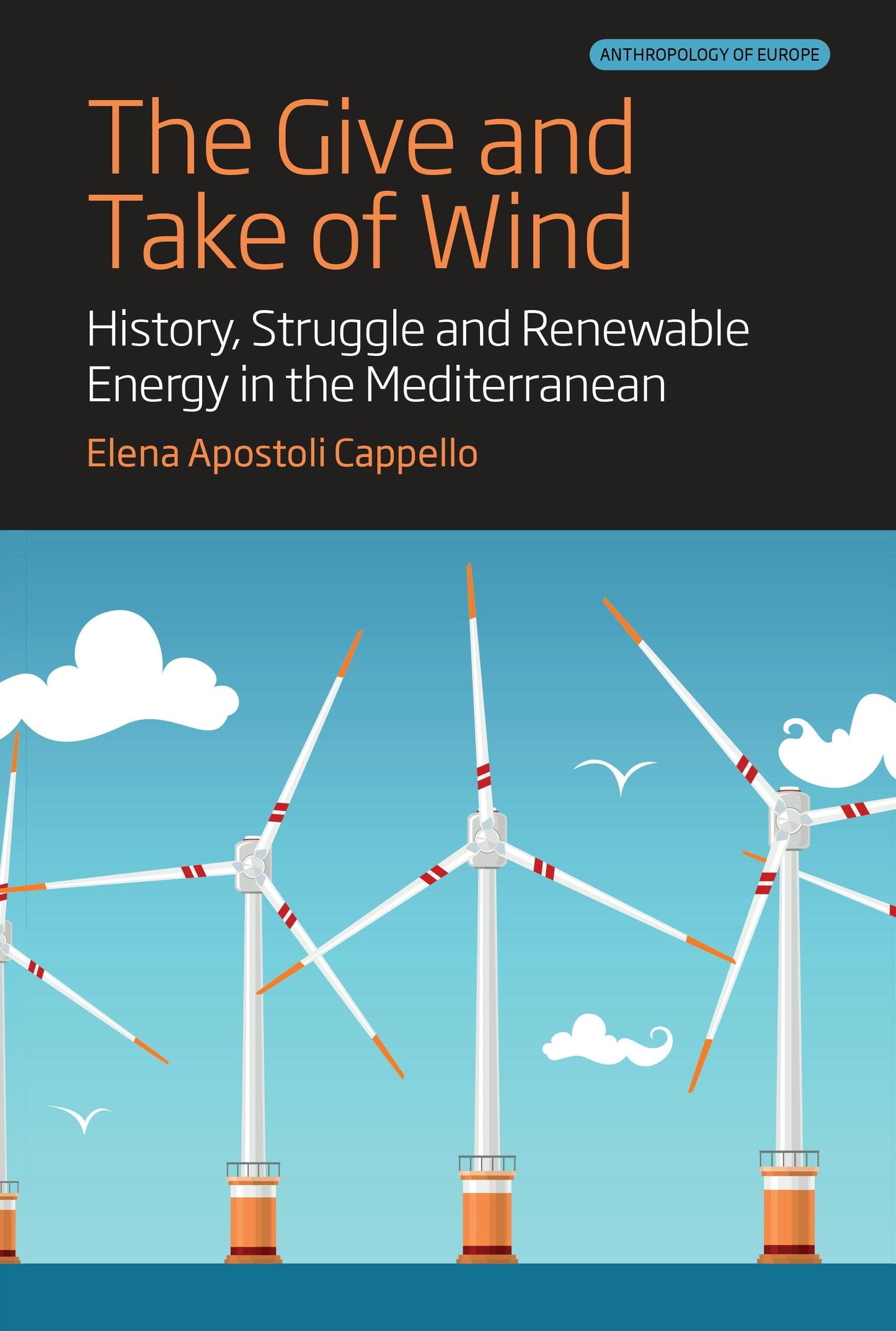
Approaching European transitional politics from an ethnographic perspective, The Give and Take of Wind focuses on the practices, frameworks and alternative strategies of those who resist the EU Green Deal. The book examines identity constructs related to territorial sovereignty, public participation and the (consequent) redefinition of the political sphere. By examining Sardinia and the meta-island San Pietro, this book analyses if energy transitions represent a horizon of possible change for communities or whether it is experienced as the imposition of development models. The political and identity-driven nature of such opposition challenges anthropology and other social sciences to elucidate a phenomenon that affects Europe and beyond.


Elena Apostoli Cappello is Researcher at the Laboratory of Architecture and Human Sciences (SASHA) at the Université Libre de Bruxelles. She has published widely on subjectification processes, activism, public participation and citizenship.
List of Illustrations
Acknowledgements
Notes on Text
Introduction
Chapter 1. Against the European Green Deal
Chapter 2. San Pietro Island: Centrality of a Margin
Chapter 3. Methodologies and Ethnographic Polyvalences
Chapter 4. ‘The Past Is Our Future’
Chapter 5. Tuna Against the Machine
Chapter 6. Fish, Red Sludge, Fear and Other Arguments Against Wind Farms
Chapter 7. Extractivism and Renewables
Chapter 8. Against Windmills
Chapter 9. Energy-scapes
Chapter 10. ‘Once, the Fish Died’: Becoming Margin and Dehistorifying the Negative
Chapter 11. ‘We Are Lucky That There Is a Mistral Wind’: Loss and Emptiness.
Chapter 12. Being Communists in Carloforte: Overturning Hegemony and Subalternity
Chapter 13. Local Move toward Towards a New Paradigm: The Grassroots Creation of a Renewable Energy Community
Conclusion
References
Index