


Some error occured while loading the Quick View. Please close the Quick View and try reloading the page.
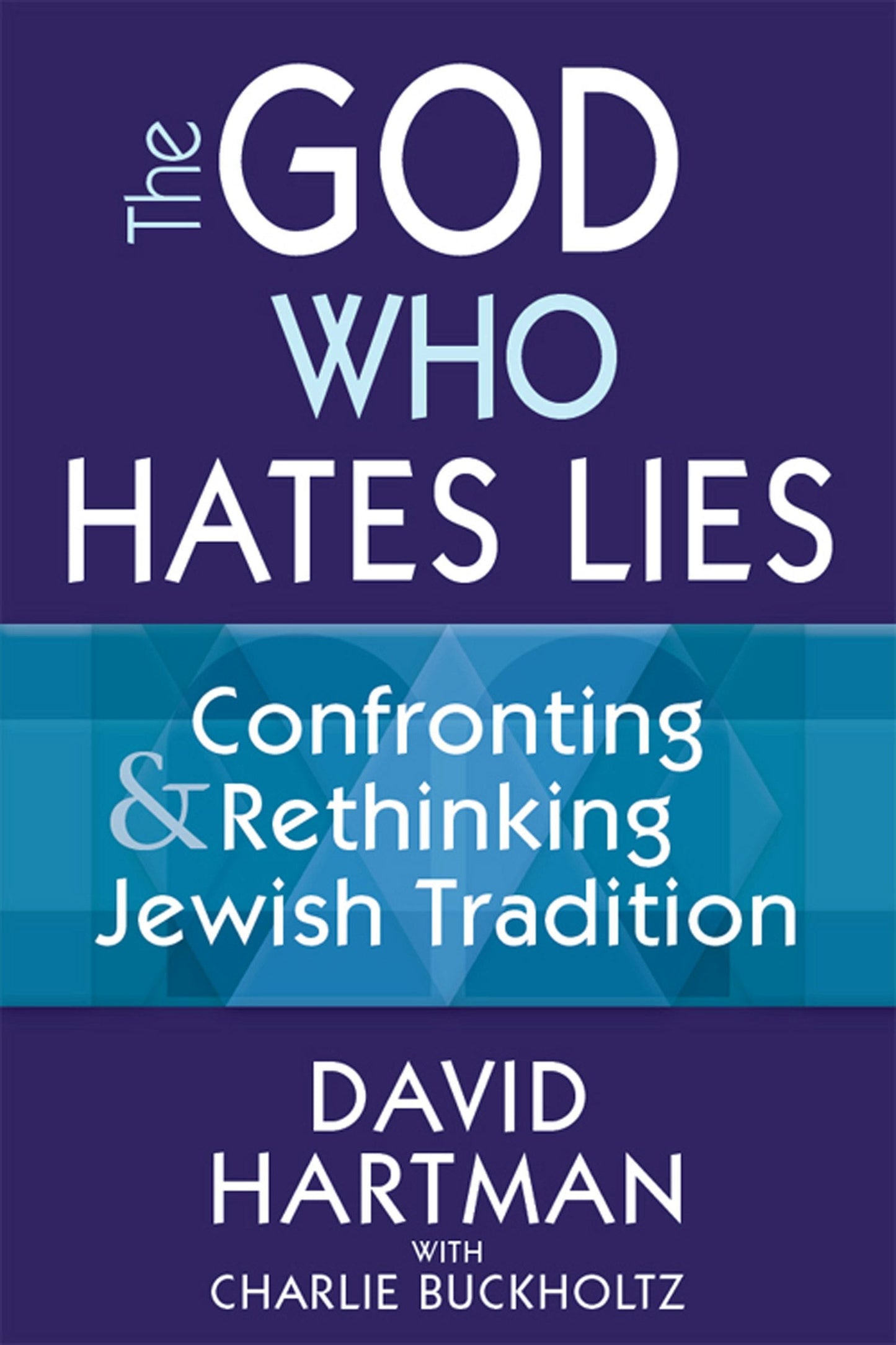
Covenant & Conscience—A Groundbreaking Journey to the Heart of Halakha
"Anyone curious about the Jewish way of life, yet dissatisfied with much of contemporary Jewish theology and practice—repelled, perhaps, by the cheap and vulgar apologetics of those who seek to justify and sustain some of the tradition's systematic immoralities, who smugly deny expression to any doubt or uncertainty, claiming a monopoly on absolute truth—is invited to join me on this pilgrimage."
—from the Introduction
In this deeply personal look at the struggle between commitment to Jewish religious tradition and personal morality, Dr. David Hartman, the world's leading Modern Orthodox Jewish theologian, probes the deepest questions at the heart of what it means to be a human being and a Jew.
Dr. Hartman draws on a lifetime of learning, teaching and experience as a social activist to present an intellectual framework for examining covenantal theology as it is applied to religious life. As much an expression of his impassioned commitment to Jewish law as it is testament to a lifetime of intellectual questioning and courage, this bold examination of the halakhic system offers fresh insights into Judaism and the quest for spiritual nourishment.


Hartman, David. The God Who Hates Lies: Confronting and Rethinking Jewish Tradition. Woodstock, VT: Jewish Lights, 2011. 192 pp. $24.99 (9781580234559). Also available as an eBook.
Hartman draws his title from his final chapter, which describes the dilemma of an Israeli with an adopted child, who had to lie to the Rabbinic Court about his own level of Jewish observance in order to convert the child to Judaism. The book as a whole is critical of the "Orthodox establishment," but that is not its main thrust. Hartman's main theme is his proposal of a different way of looking at halakhah (Jewish law). He sees it as a way of enriching God-consciousness and as something that can be viewed as a means of education so that a person, especially one new to halakhah, can take a gradual approach, adopting more and more as he becomes comfortable with it. The book describes several cases where the author has bent commonly accepted halakhah in order to prevent emotional suffering of the people involved.
For a reader whose point of view is Orthodox, the book is beyond radical, possibly scandalous. For readers who are Conservative or at the extreme left wing of Orthodoxy, it might make a lot of sense. The question must be raised as to whom the book is addressed and who will be the readers. The book belongs in a serious collection on Jewish religious thought and would find readers in Conservative synagogue libraries. The author was a pupil of Rav Soloveitchik, whom he greatly admires, but with whom he also differed. The style is conversational and accessible with notes, a bibliography and an index.
Sarah M. Barnard, Serials Librarian, Hebrew Union College Klau Library, Cincinnati, OH
Introduction
"What Planet Are You From?": A Yeshiva Boy's Pilgrimage into Philosophy, History, and Reality
1 Halakhic Spirituality: Living in the Presence of God
2 Toward a God-Intoxicated Halakha
3 Feminism and Apologetics: Lying in the Presence of God
4 Biology or Covenant? Conversion and the Corrupting Influence of Gentile Seed
5 Where Did Modern Orthodoxy Go Wrong? The Mistaken Halakhic Presumptions of Rabbi Soloveitchik
6 The God Who Hates Lies: Choosing Life in the Midst of Uncertainty
Notes
Suggestions for Further Reading
Index