


Some error occured while loading the Quick View. Please close the Quick View and try reloading the page.
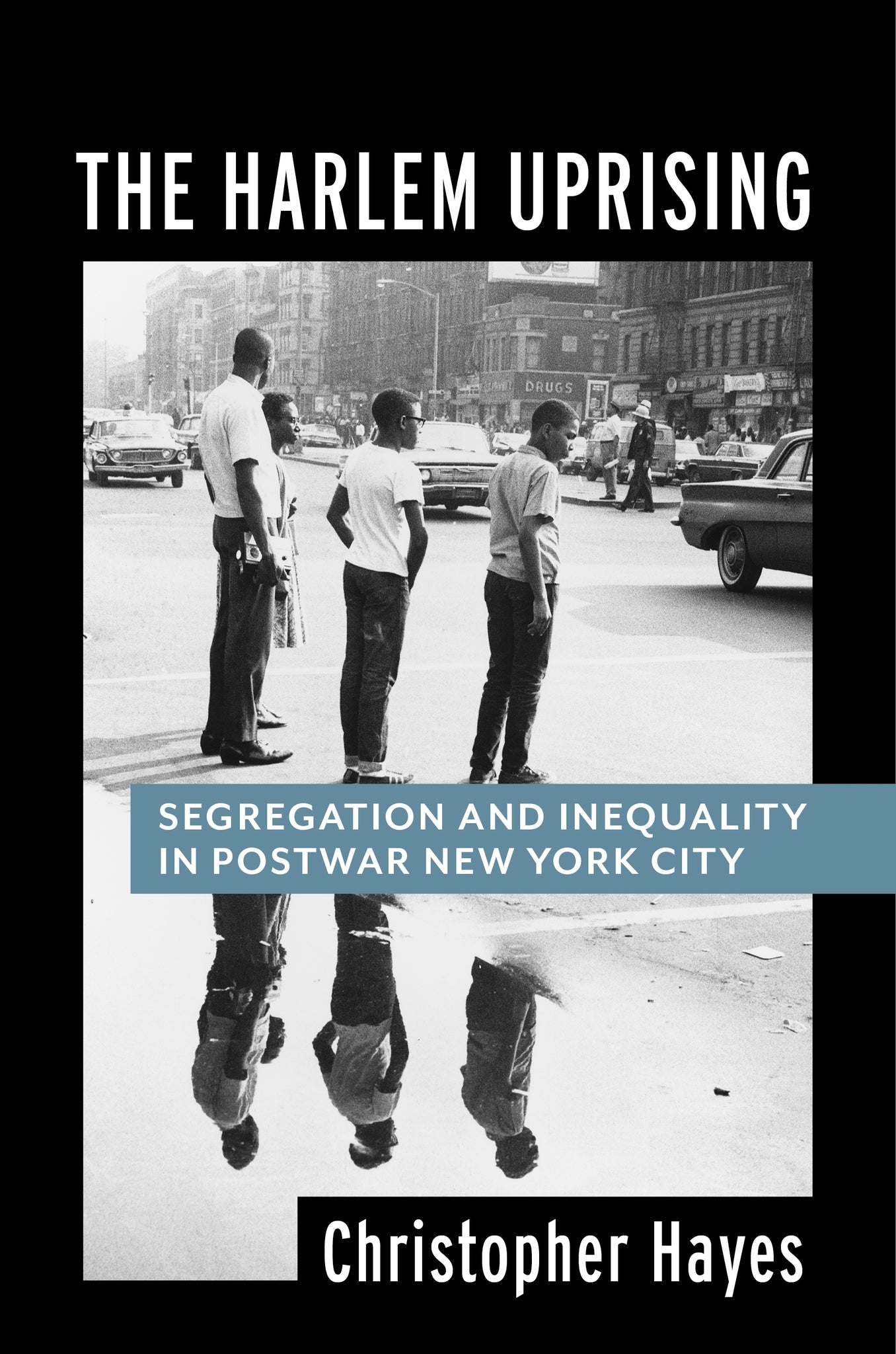
In July 1964, after a white police officer shot and killed an African American teenage boy, unrest broke out in Harlem and then Bedford-Stuyvesant. Protests rose up to call for an end to police brutality and the unequal treatment of Black people in a city that viewed itself as liberal. A week of upheaval ensued, including looting and property damage as well as widespread police violence, in what would be the first of the 1960s urban uprisings.
Christopher Hayes examines the causes and consequences of the uprisings, from the city’s history of racial segregation in education, housing, and employment to the ways in which the police both neglected and exploited Black neighborhoods. While the national civil rights movement was securing substantial victories in the 1950s and 1960s, Black New Yorkers saw little or uneven progress. Faced with a lack of economic opportunities, pervasive discrimination, and worsening quality of life, they felt a growing sense of disenchantment with the promises of city leaders. Turning to the aftermath of the uprising, Hayes demonstrates that the city’s power structure continued its refusal to address structural racism. In the most direct local outcome, a broad, interracial coalition of activists called for civilian review of complaints against the police. The NYPD’s rank and file fought this demand bitterly, further inflaming racial tensions. The story of the uprisings and what happened next reveals the white backlash against civil rights in the north and crystallizes the limits of liberalism.
Drawing on a range of archives, this book provides a vivid portrait of postwar New York City, a new perspective on the civil rights era, and a timely analysis of deeply entrenched racial inequalities.


The Harlem Uprising offers a powerful narrative of the riots and upheaval in Harlem and other African American neighborhoods in New York City in the summer of 1964. Hayes’s vividly written book provides a stinging portrayal of midcentury New York from the perspective of Black New Yorkers and offers an important new historiography of the carceral state.
— Kim Phillips-Fein, author of Fear City: New York’s Fiscal Crisis and the Rise of Austerity Politics
Such a needed study of New York's long history of racial inequality in housing, schools, jobs, and policing and the years of frustrated civil rights struggles that laid the ground for the 1964 Harlem uprising. Hayes examines Mayor Lindsay's decision to constitute a majority-civilian CCRB in its wake, the swift and successful police-led backlash that ended it, and the law and order politics that gained ascendancy in the city and the nation.
— Jeanne Theoharis, author of A More Beautiful and Terrible History: The Uses and Misuses of Civil Rights History
This is an exceptionally important and powerful book about white racism and police brutality in the Jim Crow North, especially New York City. That postwar urban crisis produced the 1964 Harlem and Brooklyn uprisings. This book’s argument is forceful and its grasp of historiography is masterful.
— Komozi Woodard, author of A Nation Within a Nation: Amiri Baraka and Black Power Politics
The Harlem Uprising is a welcome contribution to the intertwined histories of liberalism, policing, and urban rebellions in New York and, more broadly, the urban North.
The Harlem Uprising refines our understanding of protest culture in America and reminds us once again that neither James Powell in 1964 nor George Floyd in 2020 fell victim to individual failure but a failing system.
In this gripping and detailed account, the book explores how those in power have refused to address structural racism, while also examining the limits of liberalism.
A highly readable and evocative rendering of the Harlem uprising of 1964, its causes, and its immediate policy aftermath.
The Harlem Uprising is deserving of a wide readership. Hayes’s clear and engaging prose makes the work accessible, while his historical insight and contributions will be of use and interest to historians of urban America, the civil rights movement, and police brutality. The work also recontextualizes the history of policing, violence, and the Black community in New York and makes important inferences about local practices of injustice that still plague the city and state.
Hayes’s work deserves a wide readership. It makes important interventions in terms of understanding urban life and politics and the Black freedom struggle, as well as the course of liberalism and conservatism in the postwar era.
Acknowledgments
Introduction
1. Living
2. Working
3. Union Work
4. Learning
5. The New York City Police Department
6. A Death and Protests
7. Daybreak: Sunday, July 19
8. Spreading Anxiety: Monday, July 20
9. Day Four: Tuesday, July 21
10. Day Five: Wednesday, July 22
11. Day Six: Thursday, July 23
12. After
13. Reforming the Civilian Complaint Review Board
14. A Referendum
Epilogue: Insufficient Funds
Notes
Bibliography
Index