


Some error occured while loading the Quick View. Please close the Quick View and try reloading the page.
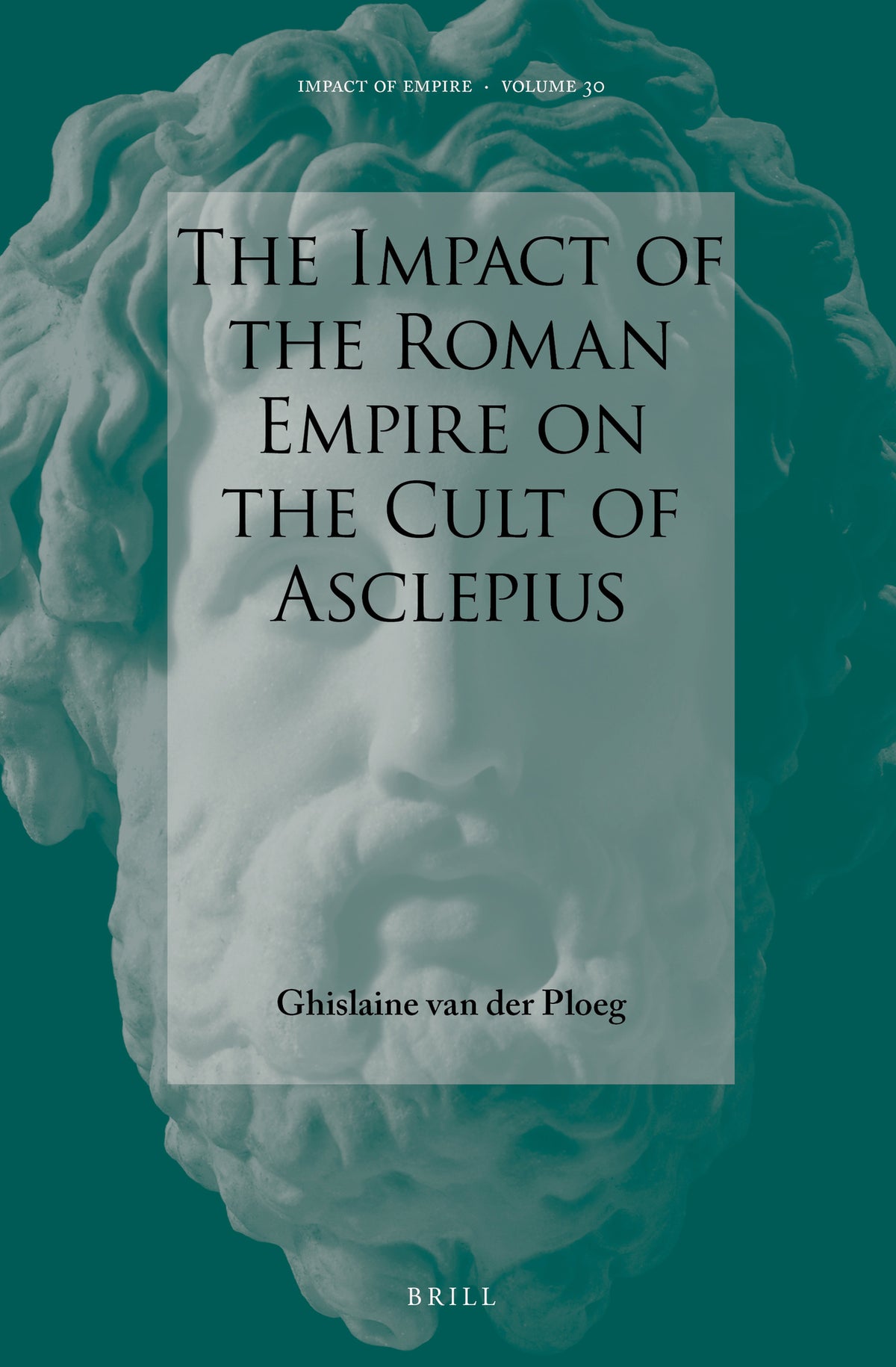
In The Impact of the Roman Empire on The Cult of Asclepius Ghislaine van der Ploeg offers an overview and analysis of how worship of the Graeco-Roman god Asclepius adapted, changed, and was disseminated under the Roman Empire. It is shown that the cult enjoyed a vibrant period of worship in the Roman era and by analysing the factors by which this religious changed happened, the impact which the Roman Empire had upon religious life is determined. Making use of epigraphic, numismatic, visual, and literary sources, van der Ploeg demonstrates the multifaceted nature of the Roman cult of Asclepius, updating current thinking about the god.

Price: $170.00
Pages: 320
Publisher: Brill
Imprint: Brill
Publication Date:
19 July 2018
ISBN: 9789004372528
Format: Hardcover

“Concluderend is dit voor mij een zeer belangrijke studie die de Romeinse Asklepios-cultus duidelijk heeft beschreven (…) Dit boek is zeer waardevol en zal zeer zeker vaak worden geciteerd in onderzoek gerelateerd aan Asklepios.” - Mark Beumer, in: Kleio-Historia, n.9
"The Impact of the Roman Empire on the Cult of Asclepius (...) comprises a significant contribution to the study of the Asclepius cult, examining the spread and flourish of the cult in the Roman Empire, which has not been subject to extensive historical research. (...) The author relies his study on abundant epigraphic, iconographic and numismatic material as well as on architectural remains, and accompanies his references to the sources with figures and tables which aggregate the preserved evidence. (..) it would be a necessary reading for those who are interested in the Roman history of the cult and its development in the Graeco-Roman era. The theoretical and methodological approach employed by the author provides a valuable paradigm for further studies on Asclepius as well as on other Graeco-Roman cults." - Olympia Panagiotidou, in: Arys, 16 (2018)
"Ghislaine van der Ploeg has tackled a subject that has rarely been the focus of scholarship on the cult of Asclepius: the god’s cult in the Roman world. (...) as her title states, the book’s goal is to show the “impact” of the Roman Empire on this Greek cult. Thus the bulk of her study is devoted to the interactions of certain Roman emperors with the cult of Asclepius and his prominent role in the religion of the Roman army, two underappreciated factors in the cult’s popularity and growth in Roman times. Van der Ploeg has achieved her goal successfully, making an important contribution that expands our understanding of the cult, and justifiably shines a spotlight on our sources for Asclepius’s worship in Roman times (specifically, 27 B.C.E.-235 C.E.)" - Gil H. Renberg, in: Bryn Mawr Classical Review, 2020.08.25. ''Important studies of Asclepius and his cult in the Roman period have appeared in the past decade, and van der Ploeg must now be added to this list. What is new here is a sustained focus on ways that increased connectivity in the Roman Empire both expanded the geographical range of the cult and also altered the nature of individual sanctuaries, some with long histories stretching back to the Classical period. van der Ploeg construes connectivity in terms of travel and communication, instantiated primarily by the reach of the Emperor and his court and by the movements of the army. The result is a rich discussion that takes the reader from Rome to Asia Minor, and from the Danube to northern Africa ... engaging a variety of material evidence as well as literary: medallions and coins, inscriptions, temple architecture, and sculpture.'' Bronwen Wickkiser in Religious Studies Review 06.2022.
"The Impact of the Roman Empire on the Cult of Asclepius (...) comprises a significant contribution to the study of the Asclepius cult, examining the spread and flourish of the cult in the Roman Empire, which has not been subject to extensive historical research. (...) The author relies his study on abundant epigraphic, iconographic and numismatic material as well as on architectural remains, and accompanies his references to the sources with figures and tables which aggregate the preserved evidence. (..) it would be a necessary reading for those who are interested in the Roman history of the cult and its development in the Graeco-Roman era. The theoretical and methodological approach employed by the author provides a valuable paradigm for further studies on Asclepius as well as on other Graeco-Roman cults." - Olympia Panagiotidou, in: Arys, 16 (2018)
"Ghislaine van der Ploeg has tackled a subject that has rarely been the focus of scholarship on the cult of Asclepius: the god’s cult in the Roman world. (...) as her title states, the book’s goal is to show the “impact” of the Roman Empire on this Greek cult. Thus the bulk of her study is devoted to the interactions of certain Roman emperors with the cult of Asclepius and his prominent role in the religion of the Roman army, two underappreciated factors in the cult’s popularity and growth in Roman times. Van der Ploeg has achieved her goal successfully, making an important contribution that expands our understanding of the cult, and justifiably shines a spotlight on our sources for Asclepius’s worship in Roman times (specifically, 27 B.C.E.-235 C.E.)" - Gil H. Renberg, in: Bryn Mawr Classical Review, 2020.08.25. ''Important studies of Asclepius and his cult in the Roman period have appeared in the past decade, and van der Ploeg must now be added to this list. What is new here is a sustained focus on ways that increased connectivity in the Roman Empire both expanded the geographical range of the cult and also altered the nature of individual sanctuaries, some with long histories stretching back to the Classical period. van der Ploeg construes connectivity in terms of travel and communication, instantiated primarily by the reach of the Emperor and his court and by the movements of the army. The result is a rich discussion that takes the reader from Rome to Asia Minor, and from the Danube to northern Africa ... engaging a variety of material evidence as well as literary: medallions and coins, inscriptions, temple architecture, and sculpture.'' Bronwen Wickkiser in Religious Studies Review 06.2022.
Ghislaine van der Ploeg, Ph.D (2015), University of Warwick, is a post-doctoral researcher in Classics and Ancient History at the University of Cologne. She has published articles on the cult of Asclepius, religious connectivity, and Ostia.