


Some error occured while loading the Quick View. Please close the Quick View and try reloading the page.
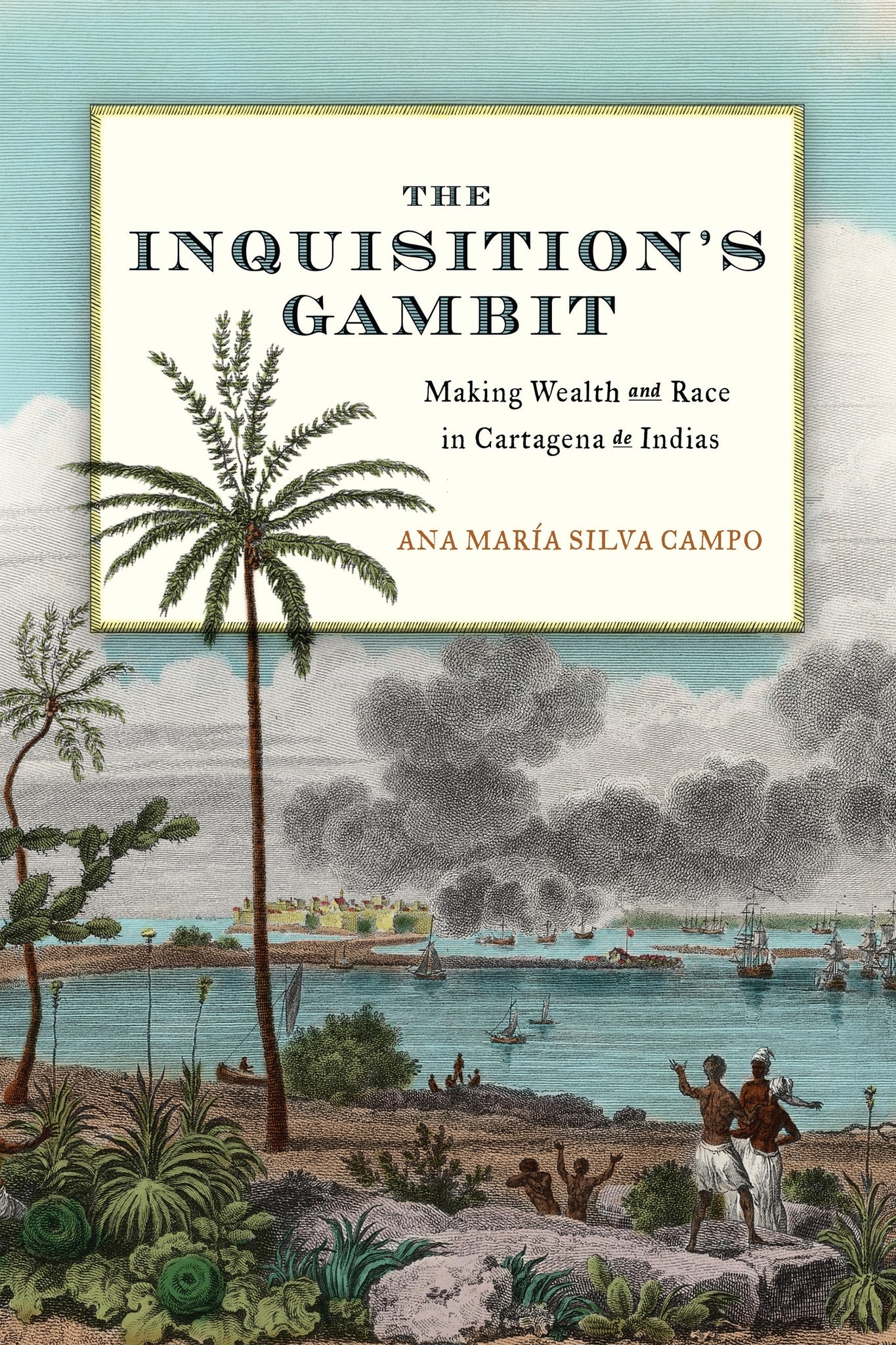
A demonstration of how the Spanish Inquisition’s property confiscations created a racialized economic order in colonial Cartagena de Indias
In 1632, in the port city of Cartagena de Indias in what is now Colombia, officials of the Spanish Inquisition, having recently arrived to take up their posts, arrested Teodora de Salcedo and fifteen other women of African descent who had once been enslaved, each of whom owned a wood-framed house in one of Cartagena’s rapidly changing neighborhoods. The Holy Office declared the women guilty of witchcraft and imposed a range of punishments that included permanent confiscation of all their property. The tribunal then auctioned off their houses to men of Catholic ancestry. During these same years, the Inquisition initially refrained from prosecuting members of the slave-trading elite who were widely suspected of the equally heretical activity of practicing Judaism in secret. It was only later, after they had firmly established themselves in the power structure of the city, that Inquisition officials arrested the Portuguese descendants of Iberian Jews and transferred their property to Old Christian families who were also actively involved in the same trade.
Using rarely studied financial records from the Inquisition’s archives, The Inquisition’s Gambit reveals how this process of selective persecution and wealth redistribution helped create racialized economic hierarchies in a key Spanish colonial city. When the first inquisitors arrived in Cartagena, they found a city where Spanish policies had created an unexpected social order. The Crown had envisioned Christian men controlling wealth and serving as the foundation of Catholic society overseas. Yet imperial policies—the union of the Spanish and Portuguese crowns in 1581 and Spain’s designation of Cartagena as the main port for the trade in African captives in 1595—had enabled descendants of Portuguese Jews and women of African descent to prosper. Ana María Silva Campo demonstrates how, through this targeted approach to dispossession and redistribution of property, the Inquisition shaped racialized economic hierarchies and long-term patterns of capital accumulation in the early modern Spanish world.


"The Inquisition’s Gambit constitutes a watershed moment for the study of the Inquisition in the Atlantic world. Its careful and creative examination of little studied financial records and a rich array of narrative archival sources tells a gripping story that will be of great interest to scholars of the transatlantic slave trade, social history of the Caribbean, urban history, religious history, and African diaspora studies."
"From the opening scene on the docks of Cartagena de Indias, Ana María Silva Campo uncovers an astounding seventeenth-century port city world—of Black businesswomen and property-owners, merchants descended from Iberian Jewish families, enslaved boat captains and midwives—and the Inquisition that threatened them all."