


Some error occured while loading the Quick View. Please close the Quick View and try reloading the page.
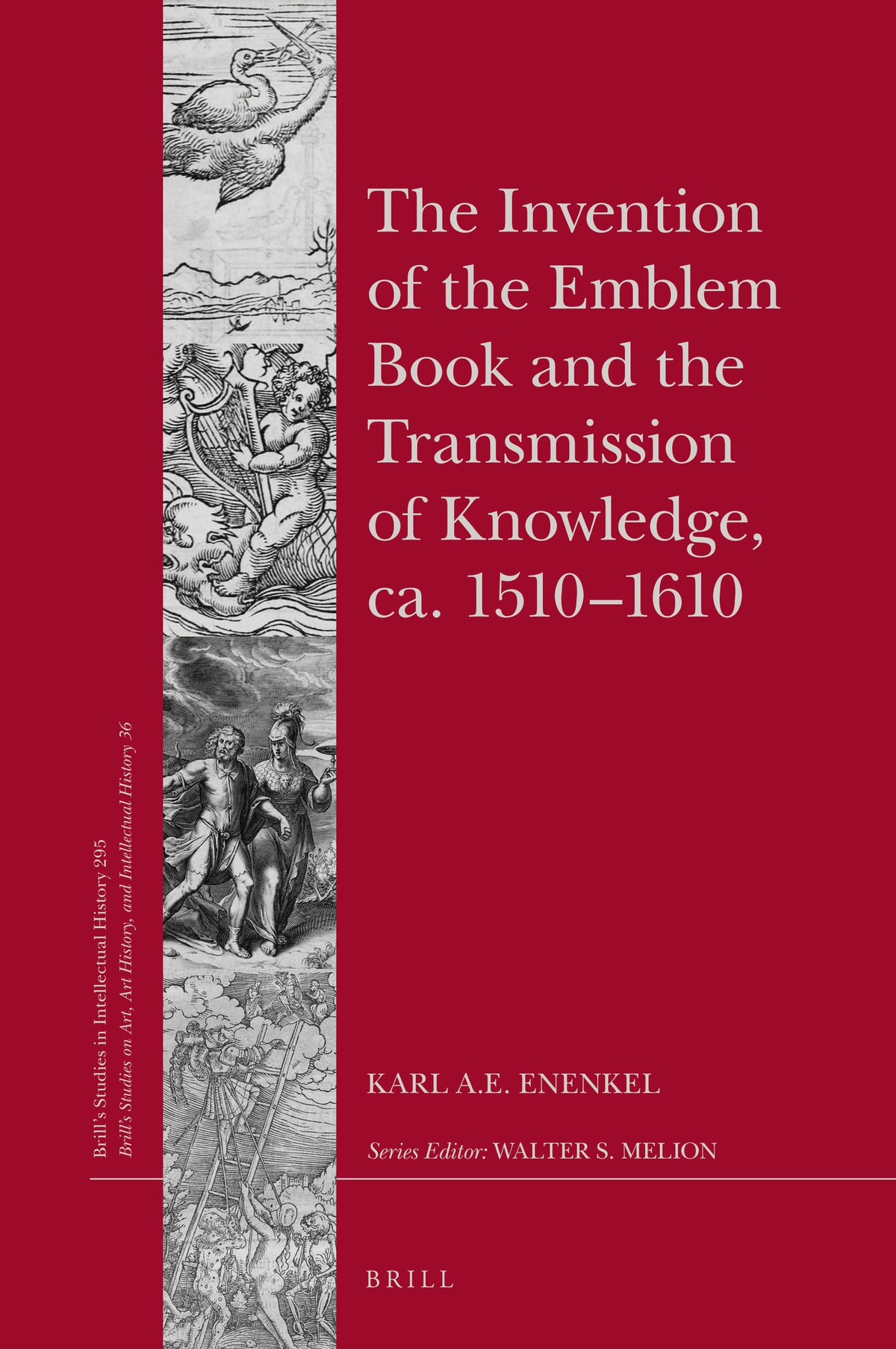
This study reexamines the invention of the emblem book and discusses the novel textual and pictorial means that applied to the task of transmitting knowledge. It offers a fresh analysis of Alciato’s Emblematum liber, focusing on his poetics of the emblem, and on how he actually construed emblems. It demonstrates that the “father of emblematics” had vernacular forebears, most importantly Johann von Schwarzenberg who composed two illustrated emblem books between 1510 and 1520.
The study sheds light on the early development of the Latin emblem book 1531–1610, with special emphasis on the invention of the emblematic commentary, on natural history, and on advanced methods of conveying emblematic knowledge, from Junius to Vaenius.
The study sheds light on the early development of the Latin emblem book 1531–1610, with special emphasis on the invention of the emblematic commentary, on natural history, and on advanced methods of conveying emblematic knowledge, from Junius to Vaenius.

Price: $276.00
Pages: 464
Publisher: Brill
Imprint: Brill
Publication Date:
December 13, 2018
ISBN: 9789004355255
Format: Hardcover

“a truly scholarly tour de force.”
Michael Bath, University of Glasgow. In: Emblematica, Vol. 3 (2020), pp. 313–324.
“This book provides a wealth of material and insights, where Karl Enenkel, an outstanding scholar of Neo-Latin, has brought his knowledge to bear on these topics. […] This rich book will be mined by future scholars.”
Mara R. Wade, University of Illinois at Urbana-Champaign. In: Historians of Netherlandish Art Reviews, March 2020.
“Enenkel has a firmer grasp of the classical sources than probably any other emblem scholar alive today.”
Peter Daly, McGill University, emeritus. In: Renaissance Quarterly, Vol. 73 , No 4 (Winter 2020), pp. 1371–1372.
“Enenkel brings much scholarship from German and Dutch to the English-speaking world and, in addition to helpful footnotes, the text includes an extensive bibliography and an index of names. […] In this trenchant study, Enenkel provides a vital foundation for the intellectual history of emblem books as a genre and should be considered necessary reading for students and scholars of Renaissance and Early Modern European Humanities.”
Jenny Davis Barnett, University of Queensland. In Ceræ: An Australasian Journal of Medieval and Early Modern Studies, 7 (2020), pp. 102–104.
Michael Bath, University of Glasgow. In: Emblematica, Vol. 3 (2020), pp. 313–324.
“This book provides a wealth of material and insights, where Karl Enenkel, an outstanding scholar of Neo-Latin, has brought his knowledge to bear on these topics. […] This rich book will be mined by future scholars.”
Mara R. Wade, University of Illinois at Urbana-Champaign. In: Historians of Netherlandish Art Reviews, March 2020.
“Enenkel has a firmer grasp of the classical sources than probably any other emblem scholar alive today.”
Peter Daly, McGill University, emeritus. In: Renaissance Quarterly, Vol. 73 , No 4 (Winter 2020), pp. 1371–1372.
“Enenkel brings much scholarship from German and Dutch to the English-speaking world and, in addition to helpful footnotes, the text includes an extensive bibliography and an index of names. […] In this trenchant study, Enenkel provides a vital foundation for the intellectual history of emblem books as a genre and should be considered necessary reading for students and scholars of Renaissance and Early Modern European Humanities.”
Jenny Davis Barnett, University of Queensland. In Ceræ: An Australasian Journal of Medieval and Early Modern Studies, 7 (2020), pp. 102–104.
Karl Enenkel is Professor of Medieval Latin and Neo-Latin at the University of Münster. Previously he was Professor of Neo-Latin at the University of Leiden. He has published widely on international humanism, early modern culture, paratexts, literary genres 1300–1600, Neo-Latin emblems, word and image relationships, and the history of scholarship and science.