


Some error occured while loading the Quick View. Please close the Quick View and try reloading the page.
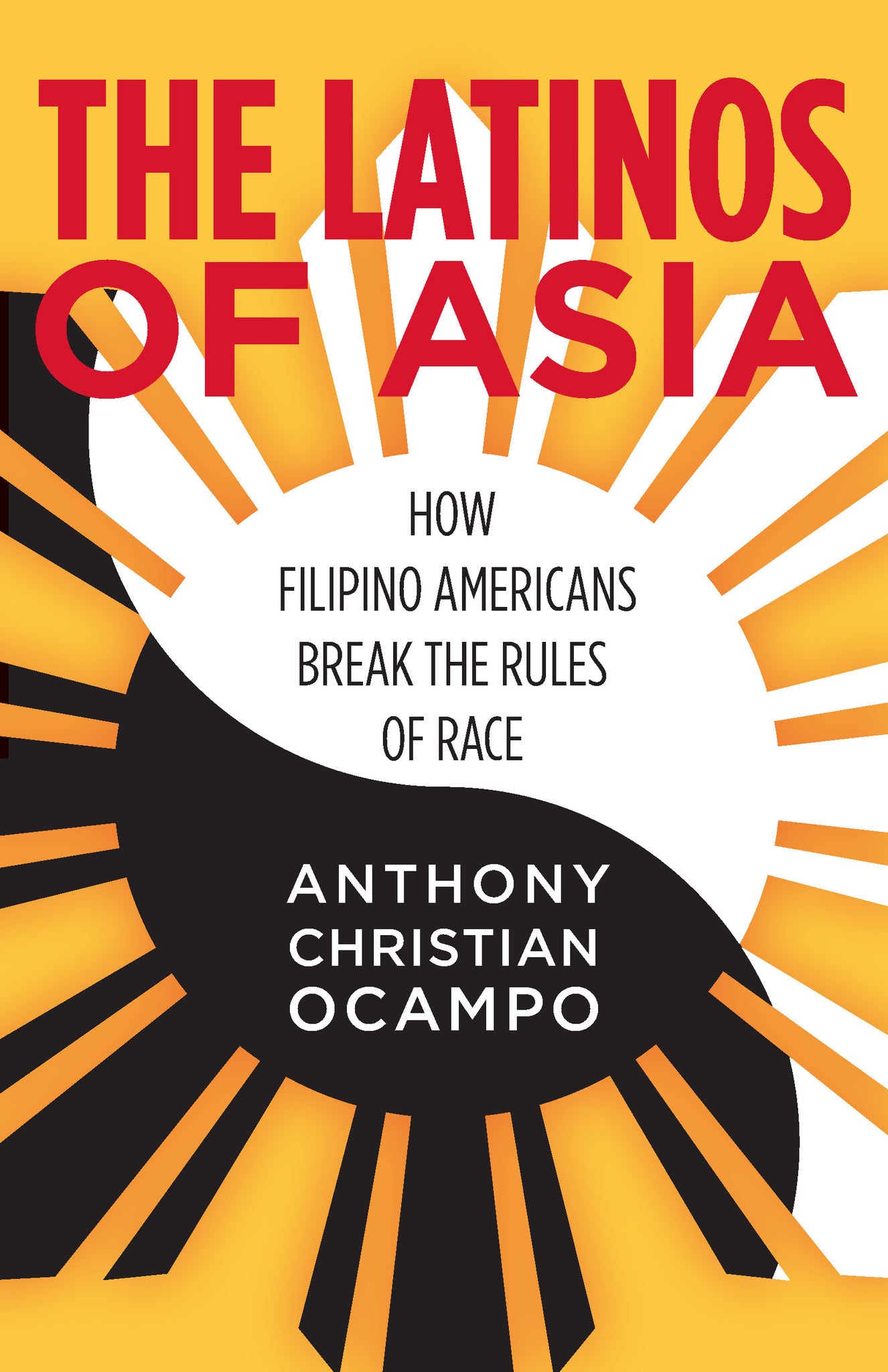
Is race only about the color of your skin? In The Latinos of Asia, Anthony Christian Ocampo shows that what "color" you are depends largely on your social context. Filipino Americans, for example, helped establish the Asian American movement and are classified by the U.S. Census as Asian. But the legacy of Spanish colonialism in the Philippines means that they share many cultural characteristics with Latinos, such as last names, religion, and language. Thus, Filipinos' "color"—their sense of connection with other racial groups—changes depending on their social context.
The Filipino story demonstrates how immigration is changing the way people negotiate race, particularly in cities like Los Angeles where Latinos and Asians now constitute a collective majority. Amplifying their voices, Ocampo illustrates how second-generation Filipino Americans' racial identities change depending on the communities they grow up in, the schools they attend, and the people they befriend. Ultimately, The Latinos of Asia offers a window into both the racial consciousness of everyday people and the changing racial landscape of American society.


— Jose Antonio Vargas
"Analyzing Filipino American experiences of 'looking Asian but having a Spanish last name' or 'looking Mexican but identifying as Asian,' Ocampo shows how the children of Filipino immigrants constantly challenge the prevailing racial mapping rules in America. The Latinos of Asia is groundbreaking, offering an ingenious perspective on racial dynamics and formation."
— Min Zhou
"Are Filipino Americans Asian, Latino, or something else entirely? In this provocative book, Anthony Ocampo deftly combines survey analysis, in-depth interviews, and personal narrative to show that the answer is not a simple one. It depends critically on context and has important implications for matters such as life chances, life choices, and race relations in a rapidly diversifying nation."
— Karthick Ramakrishnan, Professor and Associate Dean of Public Policy
"Engaging and timely, The Latinos of Asia shatters static, homogenizing, and binary categorizations of Asian Americans and Latinas/os. Presenting powerful testimonials by Filipinos from two Los Angeles communities and centering dynamics in schools and neighborhoods, this must-read book complicates understandings of race, identity, and Los Angeles."
— Gilda L. Ochoa
"The Latinos of Asia is groundbreaking. Ocampo examines racial identities among Filipino Americans not just in relation to whites, but in relation to other minorities. Through candid and eloquent responses from Filipino American young adults, and engaging links to scholarly discussions, Ocampo tracks the fluidity of race and argues that place matters in how people come to think about themselves."
— Robyn Rodriguez
"The Latinos of Asia presents an innovative analysis of Filipinos as an 'in-between' people straddling the stigmatized immigrant groups from Latin America and model minority newcomer populations from Asia. This book convincingly demonstrates that race is not a fixed characteristic of individuals and groups. Anthony Ocampo's work will capture the imagination of students of immigration, race, and ethnicity alike."
— Rubén Hernández-León
"In this innovative book, Anthony Ocampo brings to light the ambiguities and ambivalences of a racial identity that is always Filipina/o but also contingently Asian, Latina/o, and even Pacific Islander. Brimming with unexpected findings and insightful explanations, The Latinos of Asia underscores the intrinsic instability and enduring power of race."
— Moon-Kie Jung
"Anthony Ocampo shows that understanding race in today's America means understanding a group that toes different racial lines: Filipino Americans. Through rich interviews and accessible prose, Ocampo explains how Filipino Americans straddle Latino and Asian racial categories, and what that straddling says about race in the United States today. This is the definitive account of the contemporary Filipino American experience."
— Tomás R. Jiménez
"Anthony Ocampo's fascinating study illustrates how Filipinos do not fit neatly into American racial categories. His highly accessible narrative carries the reader through different social and institutional contexts that draw Filipinos back and forth over panethnic lines, and challenge our notion of what panethnicity means in America."
— Wendy Roth, Associate Professor of Sociology
"The Latinos of Asia is a very thought-provoking and well-researched book that makes a significant contribution to our understanding of the diverse cultural and social experiences of Filipino Americans and Asian Americans, especially in terms of their ethnic and racial identities...The Latinos of Asia promises to be a highly regarded work on the contemporary Filipino American experience."
— Jonathan Y. Okamura
"The Latinos of Asia is an important contribution to the field of sociology and social science understandings of Filipinos in the United States. Although Ocampo's findings may be unique to Filipinos in the Los Angeles area, his work pushes open the door for more sociological research to examine Filipinos in the United States."
— Daniel B. Eisen
"I learned a great deal from The Latinos of Asia. Ocampo's accessible writing style and vast knowledge of what it means to be Filipino in America make the book a page-turner. Ocampo certainly accomplishes what my student observed as the book's major strength—he thoughtfully illuminates factors shaping the racial identity of an important, yet overlooked, ethnic group."
— Emily Walton
"The Latinos of Asia is essential reading for those interested in understanding the complexity of American race relations. The beautifully written accounts reveal how Filipinos struggle with the role of race and place in America and the implications of this struggle for how they create life goals, choose whom to love, and decide whom they will befriend. Weaving together different stories, Ocampo expertly shows that, by questioning and accepting panethnicity, Filipinos break and remake the rules of race."
— G. Cristina Mora
"Ocampo's study makes valuable contributions to the theorization of comparative racialization processes in the United States. This book is particularly indispensable to students of Asian American racialization insofar as Ocampo's research demonstrates the undeniable necessity to reframe...the 'racial triangulation' of Asian Americans by more thoroughly accounting for the relational positionality of Latino Americans within that schema."––Alden Sajor Marte-Wood, Journal of Asian American Studies
Though classified as Asian by the U.S. Census, Filipinos have Spanish last names, are predominantly Catholic, and frequently encounter racial miscategorization. In other words, Filipinos do not map onto the American racial landscape very neatly, which affects how they experience race in everyday life. This chapter introduces sociological theory relevant to the racial experience of second generation Filipino young adults, who are classified as Asian, but who are culturally linked to Latinos, the emerging new majority in both the city and the state overall. The narratives of Filipinos in Los Angeles illustrate important lessons about the changing dynamics of race relations in an increasingly multiethnic society, how racial barriers persist, and most importantly, how we can break barriers if we more deeply understand the rules of race in everyday life.
Historical colonialism in the Philippines catalyzed the mass migration of Filipinos to the United States at the start of the twentieth century. However, colonialism has had very different effects on how Filipinos adapt to life in the United States, depending on the racial system that they entered. In the early twentieth century, American colonial policies allowed only for the migration of Filipinos who could work in the agricultural industry and other low skilled labor sectors. Meanwhile, back in the Philippines, American colonial policies were rapidly transforming the Philippines' social, cultural, and institutional landscape. Given the cultural and socioeconomic advantages that Filipinos acquired due to American colonialism, they today are much different from their predecessors—they are middle class, they hold professional jobs, and they live in racially integrated neighborhood because they can speak English.
Filipinos do not live in ethnic enclaves. They do not have to. As the previous chapter notes, Filipinos come to this country with socioeconomic resources and a cultural proficiency with the United States that most other immigrants do not possess. Instead, their children grow up in neighborhoods that are middle class and multiethnic. In many ways, their neighborhoods are a preview into the United States of tomorrow. Given the class and racial composition of their neighborhoods, second generation Filipinos come into their ethnic identity differently from other Asians. Other Asians rely on the dense presence of ethnic institutions and homogenous social networks to learn about their ethnic culture. In contrast, Filipinos spend time learning about ethnicity in their families and church.
Growing up in Los Angeles, Filipinos develop a keen awareness of the cultural traits they share with Latinos that can be traced back to Spanish colonialism, such as language, last names, and Catholic religion. This shared sense of peoplehood that Filipinos and Latinos develop emerges not through conscious political coalitions, but rather through mundane everyday interactions in the most intimate spaces of neighborhood life. Even though Filipinos are Asian, they do not all live with other Asians, which in turn affects their ability to identify with them panethnically—many Filipinos are openly ambivalent about pan-Asian identity.
Within public middle schools and high schools, which are more socioeconomically diverse and strongly enforce an academic tracking system, Filipinos become distant from their Latino peers due to the divergent ways that teachers and administrators racialize them. Within the educational context, to be Asian is to be a model minority (and vice versa). In the absence of other Asians within the district, Filipinos are more inclined to enroll in the honors and college preparatory tracks, given their socioeconomic advantages over Latinos and other minorities. Their tracking patterns lead to school experiences, which in turn facilitate a sense of Asian racial consciousness—one that is based on the model minority stereotype, rather than culture. For example, Filipinos receive preferential treatment and greater academic push from teachers, which in turn cultivate this Asian American consciousness. Within Catholic schools, the campus climate is intimate, and Filipinos develop deeper connections with their Latino peers.
In college, Filipinos encounter new rules of race related to their underrepresentation, social activism, and educational politics that they generally do not deal with within neighborhoods and their earlier schooling. Because of their residential patterns of in Los Angeles—their tendency to live in neighborhoods with large numbers of Latinos, rather than other Asians—college is the first opportunity that many Filipinos have to interact more intimately with other Asian ethnicities. In addition, Filipinos' status shifts from high school to college dramatically. In college, Filipinos experience unusually high rates of attrition and, on some campuses, even have the designation of "targeted underrepresented minority." Their increased traffic with other Asians, along with the shift in racial context, prompt many Filipinos to socially distance themselves from other Asians and disidentify from the racial label. Their status and experiences as underrepresented minorities reinforce their connections with Latinos and other non-Asian minority students.
The rules of race not only vary by neighborhood and school context, but also by life stage. This chapter narrates the story of Eileen, a Filipina American woman from Carson who has "identity crises" and "identity epiphanies" through her experiences at a public middle school, a private high school, a public university, and most recently, in medical school. Eileen's narrative shows how one person consciously navigates the varying social constructions of both Asian American and Latino identity through different stages of her personal life and education. In her story, Eileen went from strongly identifying as Asian American (in high school) to actively disidentifying from other Asians (in college) to developing a panminority identity with her Latino undergraduate and graduate student peers (in college and medical school).
Filipinos admit feeling "in-between" Asians and Latinos, which makes it difficult for others to map them onto the American racial landscape. To complicate matters more, they seem to fluctuate between Asian and Latino racial identification differently between neighborhoods and schools, and between childhood and adulthood—this is because the rules of race change in these different contexts and life stages. Filipinos transgress racial boundaries on a regular basis. This chapter closes with discussions of how Filipinos' unique racial experiences may influence their political involvement, their labor market outcomes, and even their love lives.