


Some error occured while loading the Quick View. Please close the Quick View and try reloading the page.
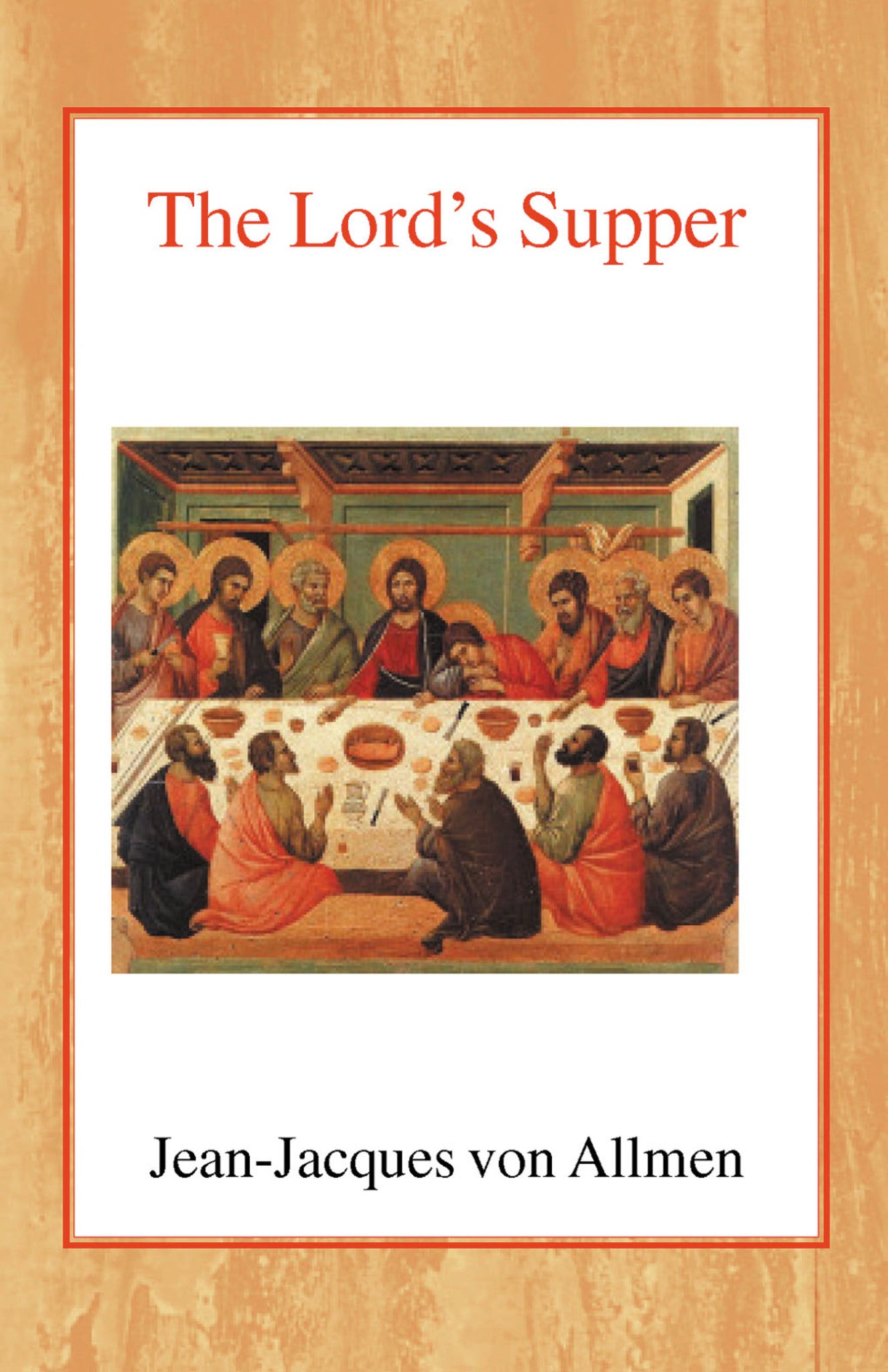
An essay on central sacrament from the perspective of the Reformed Tradition, viewing the Eucharist not only as a sign or symbol, but as Christ’s real presence.
Newly republished, Von Allmen’s essay on the central sacrament of the Christian faith examines the truths enshrined in the Lord’s Supper from within the Reformed Tradition. He concludes that the Eucharist must be understood not only as a ‘sign’, ‘symbol’ or ‘memorial’, but as the very real presence of Christ.
Newly republished, Von Allmen’s essay on the central sacrament of the Christian faith examines the truths enshrined in the Lord’s Supper from within the Reformed Tradition. He concludes that the Eucharist must be understood not only as a ‘sign’, ‘symbol’ or ‘memorial’, but as the very real presence of Christ.

Price: $120.00
Pages: 116
Publisher: Boydell & Brewer Inc.
Imprint: James Clarke
Publication Date:
01 September 2002
Trim Size: 8.50 X 5.51 in
ISBN: 9780227170441
Format: Hardcover

Introduction
The Supper: specific event of the Christian faith; problems raised by the information about its institution and celebration in the early Church; problems raised by later developments.
Plan followed in the study.
I. Anamnesis and Epiklesis
Biblical meaning of anamnesis; the Supper celebrates the anamnesis of Jesus Christ and in Him that of the whole history of salvation; the connection between the Eucharist and the Ministry of the Word. Who is to remember: the Church or God? The twofold danger of a eucharistic abuse; rejection of sacramental realism is not a remedy.
The epikletic attitude; doctrinal content of epiklesis; its place in liturgical development; why the Reformers did not rediscover epiklesis; action of the people.
II. The Eucharist, Revelation of the Limitations and of the Plenitude of the Church
Limitations: the baptismal nature of the Church; its apostolic nature; its local nature.
Plenitude: the basic structure of the Church; its mystery.
III. Communion with Christ and with the Brethren
Communion with Christ and communion in Christ; its nuptial character; its personal character.
Communion with the brethren: the assembly of the Church; the kiss of peace; why coincidence between eucharistic celebration and communion has declined; the Agape and possibility of its revival. Reasons for lack of intercommunion; Christian divisions not terminated by intercommunion. The Supper in the service of unity.
IV. Living Bread and Sacrifice
Realism of biblical terminology; the eucharistic event and its significance; what makes the Supper the Lord’s meal? Results of the Supper.
Difficulty of the problem of its sacrificial nature; uniqueness and sufficiency of the reconciling death of Christ. Why did Jesus institute the Supper? Three erroneous answers; three correct answers – soteriological, liturgical, eschatological. Temptations to which the Supper is exposed. Recovery by Protestant theology of the sacrifical aspect.
V. Prayer and Fulfilment
The Supper, centre, norm and culminating moment of Christian prayer; pledge of its fulfilment; anticipation of the Parousia; prefigurative fulfilment of the Lord’s Prayer. It sets the Church in the resurrection world; forms it into an eschatological people; is involved in what it confers. Ambiguity of the fulfilment.
VI. Mass and Eucharist
The Supper, place and moment of diastole-systole for the Church; terminological observations; the Church as mission and worship; geography and mission; the holy table as place of departure and return; Sunday as time of departure and return.
Conclusion
The Eucharist: sacrament of unity;sacrament of faith.
The Supper: specific event of the Christian faith; problems raised by the information about its institution and celebration in the early Church; problems raised by later developments.
Plan followed in the study.
I. Anamnesis and Epiklesis
Biblical meaning of anamnesis; the Supper celebrates the anamnesis of Jesus Christ and in Him that of the whole history of salvation; the connection between the Eucharist and the Ministry of the Word. Who is to remember: the Church or God? The twofold danger of a eucharistic abuse; rejection of sacramental realism is not a remedy.
The epikletic attitude; doctrinal content of epiklesis; its place in liturgical development; why the Reformers did not rediscover epiklesis; action of the people.
II. The Eucharist, Revelation of the Limitations and of the Plenitude of the Church
Limitations: the baptismal nature of the Church; its apostolic nature; its local nature.
Plenitude: the basic structure of the Church; its mystery.
III. Communion with Christ and with the Brethren
Communion with Christ and communion in Christ; its nuptial character; its personal character.
Communion with the brethren: the assembly of the Church; the kiss of peace; why coincidence between eucharistic celebration and communion has declined; the Agape and possibility of its revival. Reasons for lack of intercommunion; Christian divisions not terminated by intercommunion. The Supper in the service of unity.
IV. Living Bread and Sacrifice
Realism of biblical terminology; the eucharistic event and its significance; what makes the Supper the Lord’s meal? Results of the Supper.
Difficulty of the problem of its sacrificial nature; uniqueness and sufficiency of the reconciling death of Christ. Why did Jesus institute the Supper? Three erroneous answers; three correct answers – soteriological, liturgical, eschatological. Temptations to which the Supper is exposed. Recovery by Protestant theology of the sacrifical aspect.
V. Prayer and Fulfilment
The Supper, centre, norm and culminating moment of Christian prayer; pledge of its fulfilment; anticipation of the Parousia; prefigurative fulfilment of the Lord’s Prayer. It sets the Church in the resurrection world; forms it into an eschatological people; is involved in what it confers. Ambiguity of the fulfilment.
VI. Mass and Eucharist
The Supper, place and moment of diastole-systole for the Church; terminological observations; the Church as mission and worship; geography and mission; the holy table as place of departure and return; Sunday as time of departure and return.
Conclusion
The Eucharist: sacrament of unity;sacrament of faith.