


Some error occured while loading the Quick View. Please close the Quick View and try reloading the page.
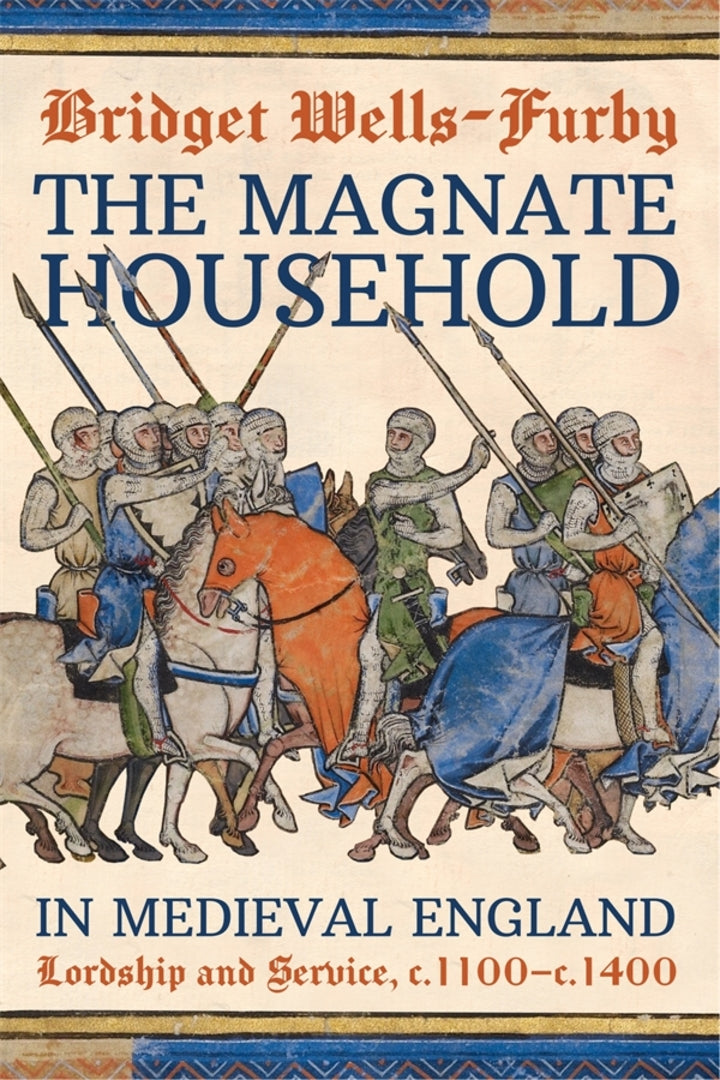
A radical reappraisal of lord-follower relations in the Middle Ages.
Orthodox scholarship holds that "feudalism", based on land tenure, dominated lord-follower relations during the twelfth and thirteenth centuries, developing in the later Middle Ages into "bastard feudalism", based on life annuities and cash fees awarded in contracts. This study, conversely, suggests that there was no such evolution from one system to another. Instead, it was the magnate household - the familia or meisnie - that provided the structure for these relationships from the Norman Conquest until at least the end of the fourteenth century, and was usually identified as the lord's following, in peace and war alike. The customary terms of household service could be modified, and it was these modifications that were incorporated in the service contracts that begin to survive from the late thirteenth century. The study also reviews the continuities over the longer period in the ways followers were rewarded, and the frequency with which individuals moved between the service of different lords, typically serving more than one over the course of a career. Ultimately, the magnate household emerges as the defining institution of aristocratic life and lordly power, reshaping our understanding of how power, loyalty and service were organised in medieval England.
Orthodox scholarship holds that "feudalism", based on land tenure, dominated lord-follower relations during the twelfth and thirteenth centuries, developing in the later Middle Ages into "bastard feudalism", based on life annuities and cash fees awarded in contracts. This study, conversely, suggests that there was no such evolution from one system to another. Instead, it was the magnate household - the familia or meisnie - that provided the structure for these relationships from the Norman Conquest until at least the end of the fourteenth century, and was usually identified as the lord's following, in peace and war alike. The customary terms of household service could be modified, and it was these modifications that were incorporated in the service contracts that begin to survive from the late thirteenth century. The study also reviews the continuities over the longer period in the ways followers were rewarded, and the frequency with which individuals moved between the service of different lords, typically serving more than one over the course of a career. Ultimately, the magnate household emerges as the defining institution of aristocratic life and lordly power, reshaping our understanding of how power, loyalty and service were organised in medieval England.

Price: $130.00
Pages: 290
Publisher: Boydell & Brewer Inc.
Imprint: Boydell Press
Publication Date:
22 September 2026
Trim Size: 9.21 X 6.14 in
ISBN: 9781837655052
Format: Hardcover
BISACs:
HISTORY / Europe / Medieval, European history: medieval period, middle ages, HISTORY / Europe / Great Britain / Norman Conquest to Late Medieval (1066-1485), Social and cultural history

Introduction
Appendix: Note on Terminology
Part I: Chronology
1. Household service c.1100 to c.1290
2. The advent of household contracts 1290-1330
3. Household service c.1330 to c.1400
Part II: Household Service in Practice
4. Rewards for service
5. Service relationships: the flexibility of household service
Conclusions
Appendix 1: contracts for household service
Appendix 2: agreements for household places
Appendix 3: single services
Appendix 4: the Damory household ordinance (1319)
Appendix: Note on Terminology
Part I: Chronology
1. Household service c.1100 to c.1290
2. The advent of household contracts 1290-1330
3. Household service c.1330 to c.1400
Part II: Household Service in Practice
4. Rewards for service
5. Service relationships: the flexibility of household service
Conclusions
Appendix 1: contracts for household service
Appendix 2: agreements for household places
Appendix 3: single services
Appendix 4: the Damory household ordinance (1319)