Skip to product information
1 of 1

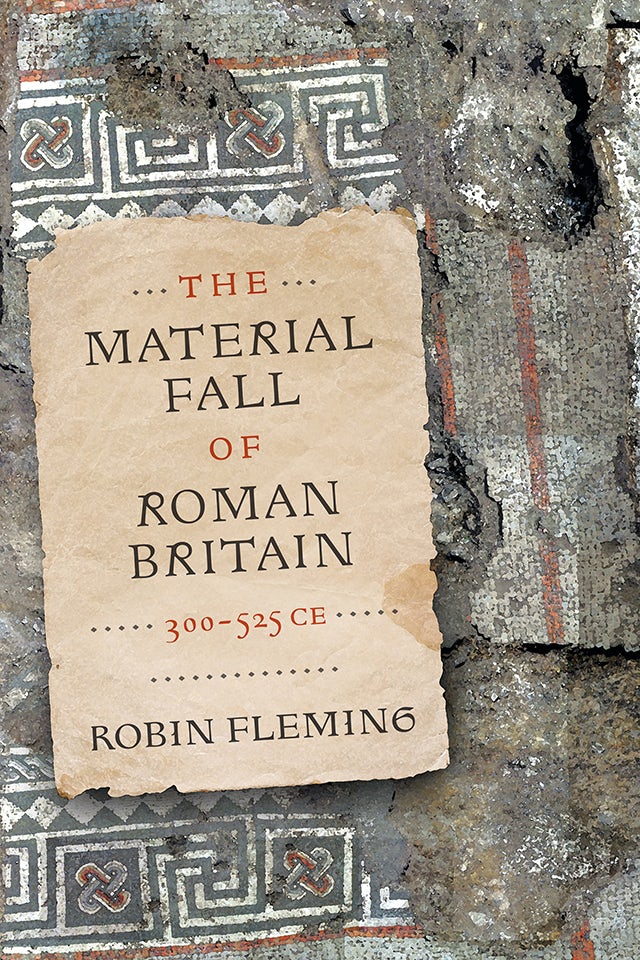
The Material Fall of Roman Britain, 300-525 CE

Regular price $29.95
Regular price $29.95 Sale price $29.95
Sold out
Although lowland Britain in 300 CE had been as Roman as any province in the empire, in the generations on either side of 400, urban life, the money economy, and the functioning state collapsed. Man...
Read More
  • 14 October 2025
View Product Details

Although lowland Britain in 300 CE had been as Roman as any province in the empire, in the generations on either side of 400, urban life, the money economy, and the functioning state collapsed. Many of the most quotidian and fundamental elements of Roman-style material culture ceased to be manufactured. Skills related to iron and copper smelting, wooden board and plank making, stone quarrying, commercial butchery, horticulture, and tanning largely disappeared, as did the knowledge standing behind the production of wheel-thrown, kiln-fired pottery and building in stone. No other period in Britain's prehistory or history witnessed the loss of so many classes of once-common skills and objects. While the reasons for this breakdown remain unclear, it is indisputable the collapse was foundational in the making of a new world we characterize as early medieval.

The standard explanation for the emergence of the new-style material culture found in lowland Britain by the last quarter of the fifth century is that foreign objects were brought in by "Anglo-Saxon" settlers. Marshalling a wealth of archaeological evidence, Robin Fleming argues instead that not only Continental immigrants, but also the people whose ancestors had long lived in Britain built this new material world together from the ashes of the old, forging an identity that their descendants would eventually come to think of as English. As with most identities, she cautions, this was one rooted in neither birth nor blood, but historically constructed, and advanced and maintained over the generations by the shared material culture and practices that developed during and after Rome's withdrawal from Britain.

files/i.png Icon
Price: $29.95
Pages: 320
Publisher: University of Pennsylvania Press, Inc.
Imprint: University of Pennsylvania Press
Publication Date: 14 October 2025
Trim Size: 9.00 X 6.00 in
ISBN: 9781512828818
Format: Paperback
BISACs: HISTORY / Europe / Great Britain / Middle Ages (449-1066), Ancient history, HISTORY / Ancient / Rome, SOCIAL SCIENCE / Archaeology, Archaeology
REVIEWS Icon
"[A] readable and thought-provoking volume, which draws not only on a wide range of published works, but also on the wealth of information recorded in ‘grey literature’ fieldwork reports available on the archaeology data service (ADS). The author is to be congratulated for having spent more time than most engaging with this valuable archive and, it is to be hoped, drawing its existence to the attention of a wider audience. Fleming writes as a historian partly for historians, who are often unaware of how much archaeological evidence exists, but also in an attempt to bridge the other scholarly gap she rightly identifies, between Romanists and early medievalists. She also focuses on the lives of ordinary people instead of the warlords and saints of the written sources, which still colour popular perception of this period…[A]n interesting and stimulating book that provides an account of the unravelling of Roman Britain, clearly linked to the lives of those who experienced it."
Robin Fleming is Professor of History at Boston College, a Fellow of the London Society of Antiquaries, and a recipient of the MacArthur "genius" grant. She is author of Britain After Rome: The Fall and Rise of the Middle Ages, 400-1070, among other works.