


Some error occured while loading the Quick View. Please close the Quick View and try reloading the page.
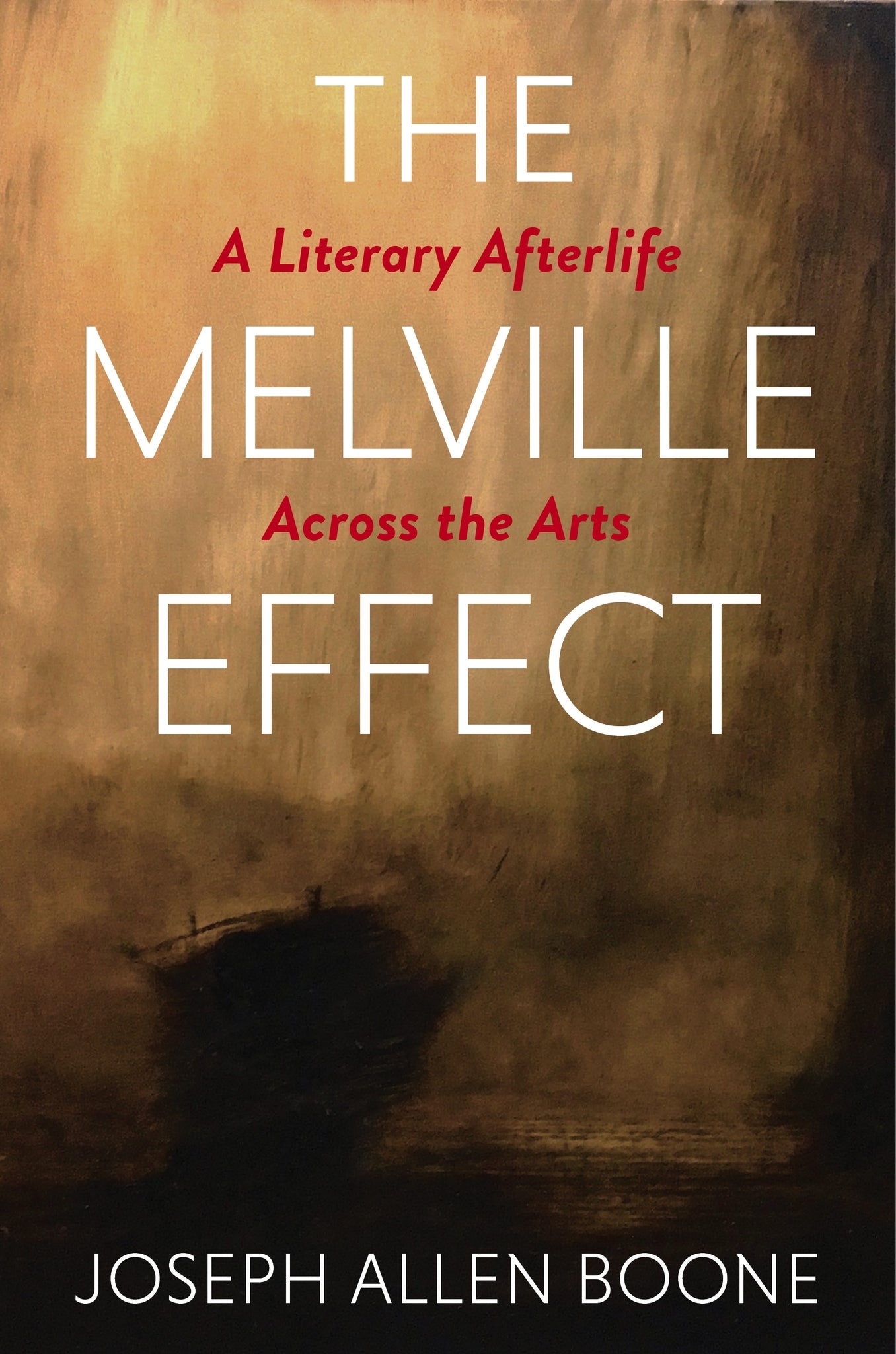
Traces of Herman Melville are everywhere. Works directly or loosely inspired by the nineteenth-century writer abound, from adaptations and artistic experiments to parodies and cheeky references. They are as distinct as Sena Jeter Naslund’s novel Ahab’s Wife, Laurie Anderson’s mixed-media spectacle Songs and Stories from Moby-Dick, Maurice Sendak’s queer illustrations of Pierre, and the collaborative Emoji Dick. Melville turns up in opera, concrete poetry, auteur cinema, monumental murals, and sperm whale–sized sculptures. Why are so many artists drawn to Melville? What does his continuing presence say about contemporary culture?
Charting how a vast variety of writers, filmmakers, and artists channel Melville, Joseph Allen Boone offers new insights into the author, his works, and his many legacies. He argues that contemporary artists are drawn to Melville’s patchwork aesthetics, especially his mingling of genres and media and his prolific borrowings from popular and high culture. Boone’s cases range from artists drawing on the use of whalebone in nineteenth-century fashion to critique gender roles to those obsessed, like Melville, with size and monumentality in ever-proliferating artworks. Other contemporary artists find Melville’s environmental themes strikingly prescient, turning to his work to examine waste, extinction, and planetary crisis. Tracing a once nearly forgotten author’s improbable contemporaneity, The Melville Effect sheds light on how artists turn to literary pasts to make sense of the present and create art for the future.


— Jennifer Greiman, author of Melville’s Democracy: Radical Figuration and Aesthetic Form
An impressive achievement and a masterly act of literary devotion, The Melville Effect charts and analyzes the remarkable recent acceleration in multimedia and mixed-media responses to Melville’s prose, especially Moby-Dick. Boone makes a major contribution both to Melville studies and to our understanding of artistic responses to literature as an integral aspect of literary history.
— Samuel Otter, author of Melville's Anatomies
The Melville Effect expands and deepens our knowledge and experience of Melville’s pervasive presence in contemporary arts and culture. Boone provides a highly perceptive and remarkably inclusive survey and analysis of the unexpected ways in which creators in our multimedia age continue to draw inspiration from Melville’s flexible aesthetic and humanistic ethic in shaping their own imaginative responses to the challenges of life today.
— Robert K. Wallace, author of Douglass & Melville: Anchored Together in Neighborly Style
Preface
1. Sounding the Melville Effect: Methods and Theory
2. Multimedia Melville, Messy Culture, Contemporary Remediations
3. Whence the Novel?Measuring the Melville Effect in Post-Postmodernist Fiction
4. Whalebone, Hoop Skirts, Corsets, Pants Roles: Women and Melville in Contemporary Art
5. Size Matters
6. Perverse Melville and the Sub-Sub’s Queer Investments
7. Plastic Seas, Pasteboard Masks, Planetary Futures
Acknowledgments
Notes
Index