


Some error occured while loading the Quick View. Please close the Quick View and try reloading the page.
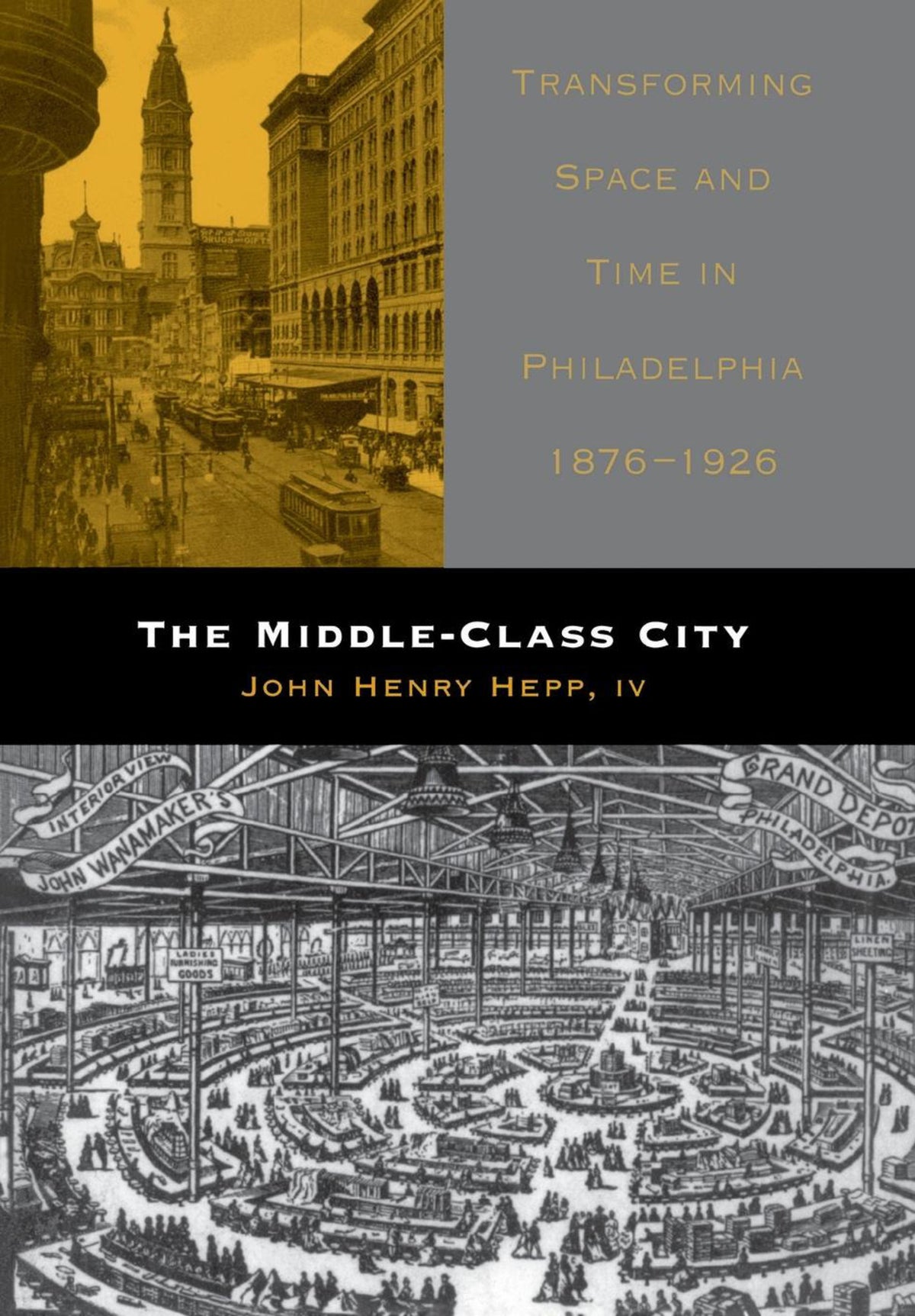
The classic historical interpretation of the late nineteenth and early twentieth centuries in America sees this period as a political search for order by the middle class, culminating in Progressive Era reforms. In The Middle-Class City, John Hepp examines transformations in everyday middle-class life in Philadelphia between 1876 and 1926 to discover the cultural roots of this search for order. By looking at complex relationships among members of that city's middle class and three largely bourgeois commercial institutions—newspapers, department stores, and railroads—Hepp finds that the men and women of the middle class consistently reordered their world along rational lines.
According to Hepp, this period was rife with evidence of creative reorganization that served to mold middle-class life. The department store was more than just an expanded dry goods emporium; it was a middle-class haven of order in the heart of a frenetic city—an entirely new way of organizing merchandise for sale. Redesigned newspapers brought well-ordered news and entertainment to middle-class homes and also carried retail advertisements to entice consumers downtown via train and streetcar. The complex interiors of urban railroad stations reflected a rationalization of space, and rail schedules embodied the modernized specialization of standard time. In his fascinating investigation of similar patterns of behavior among commercial institutions, Hepp exposes an important intersection between the histories of the city and the middle class.
In his careful reconstruction of this now vanished culture, Hepp examines a wide variety of sources, including diaries and memoirs left by middle-class women and men of the region. Following Philadelphians as they rode trains and trolleys, read newspapers, and shopped at department stores, he uses their accounts as individualized guidebooks to middle-class life in the metropolis. And through a creative use of photographs, floor plans, maps, and material culture, The Middle-Class City helps to reconstruct the physical settings of these enterprises and recreate everyday middle-class life, shedding new light on an underanalyzed historical group and the cultural history of twentieth-century America.


"A real contribution to the history of the city in general and Philadelphia in particular."
"Hepp examines areas of everyday living as opposed to the more traditional studies of politics, focusing on transportation, newspapers, department stores, and parks. This is a very thorough study of several broad social phenomena and those affected by these changes."
Preface
Introduction: A Revised and Enlarged Philadelphia
PART I. LATE NINETEENTH-CENTURY PHILADELPHIA
Prelude: I Went Out to the Centennial
1. The Most Traversed City by Railways in This Country, If Not the World
2. Such a Well-Behaved Train Station
3. A Pretty Friendly Sort of Place
4. A Sober Paper
Interlude: Went to Willow Grove
PART II. EARLY TWENTIETH-CENTURY PHILADELPHIA
The New Century: The Magnificent Metropolis of Today
5. If Dad Could Not Get . . . the Evening Bulletin It Was Practically the End of the World
6. We Never Realized That Department Stores Had an Upstairs
7. One Great Big Stretch of Middle Class
Postlude: Albion and I Went to the Sesqui
Conclusion: The Trouble with History
Appendix
Notes
Bibliography
Index