


Some error occured while loading the Quick View. Please close the Quick View and try reloading the page.
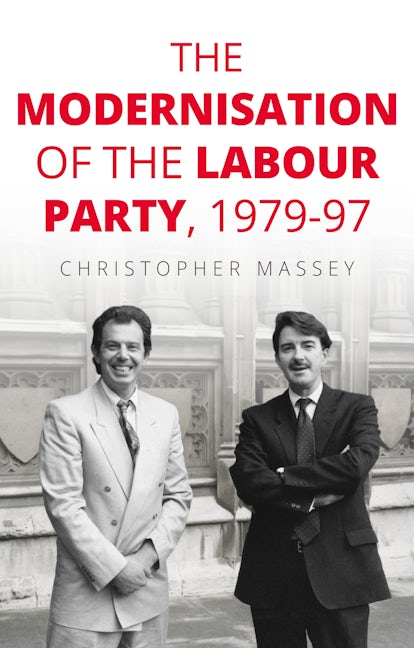
This monograph recasts the modernisation of the Labour Party and sheds new light on Labour’s years in the wilderness between 1979 and 1997. The monograph uniquely traces the party’s major organisational changes across its eighteen years of opposition. Labour’s organisational modernisation in this period fundamentally altered the party’s internal structures, policy-making pathways and constitution. The study begins with an investigation into the scene inherited by Labour’s leadership in the early 1980s and examines Neil Kinnock’s quest for a stable majority on the party’s ruling National Executive Committee between 1983 and 1987. From this position the monograph surveys the major organisational changes of the Labour Party in their period of opposition: the Policy Review (1987–92), One Member, One Vote (1992–94), Clause IV (1995–96) and Partnership in Power (1996–97). Through a re-examination of Labour’s modernisation, in the light of new source material and extensive primary interviews, this research significantly contributes to the understanding of the rise of New Labour.

Price: $130.00
Pages: 296
Publisher: Manchester University Press
Imprint: Manchester University Press
Series: Manchester University Press
Publication Date:
26 June 2020
ISBN: 9781526144423
Format: Hardcover
BISACs:
Politics and government, Political parties and party platforms, European history: medieval period, middle ages

'Among the many valuable contributions from The Modernisation of the Labour Party are moments where a political actor’s motivations are glimpsed—for example, through Sawyer’s journals—and we can begin to understand how actors reached judgements that affected Labour’s political trajectory.'
Twentieth Century British History