


Some error occured while loading the Quick View. Please close the Quick View and try reloading the page.
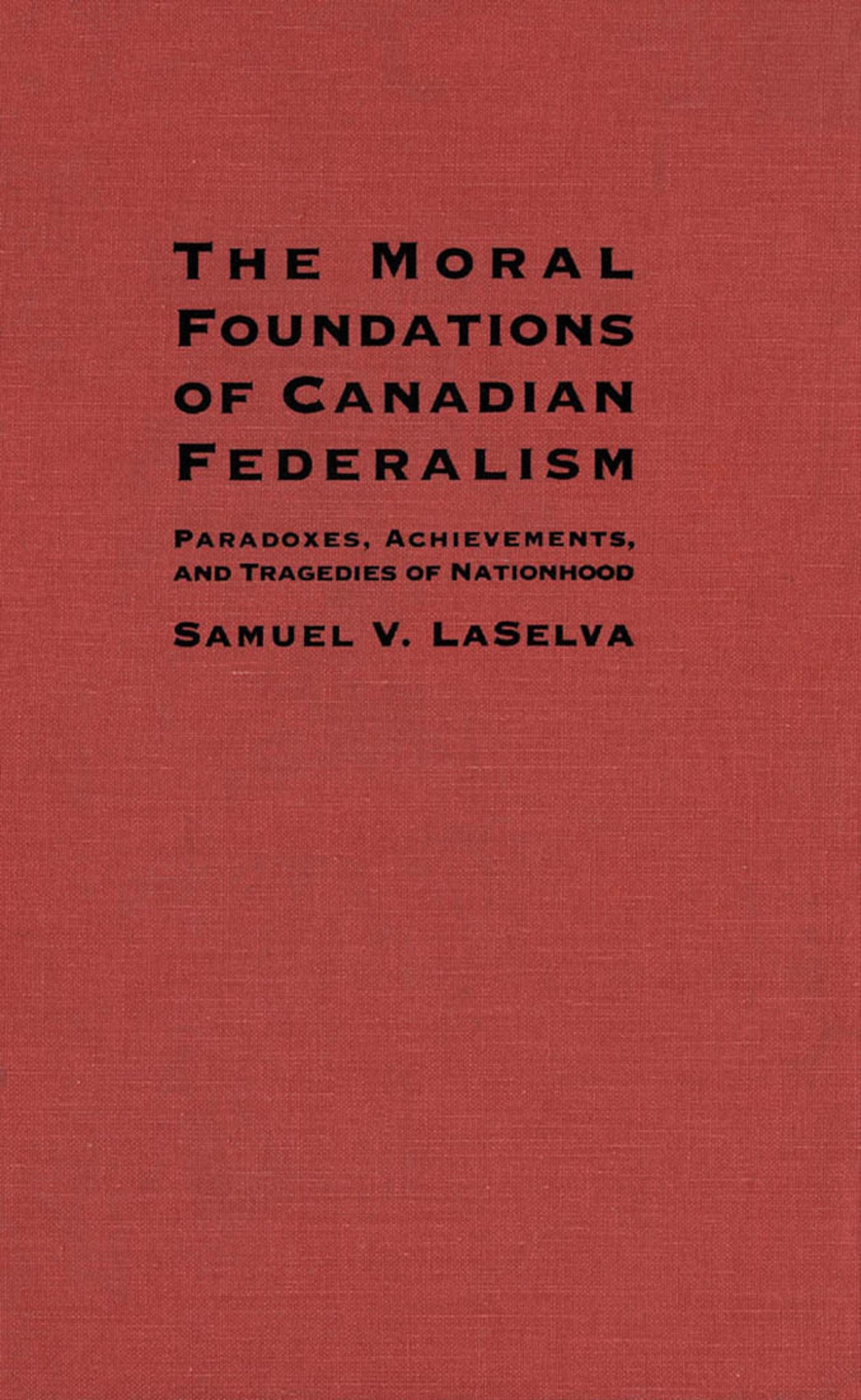
LaSelva argues that Canadian federalism is founded on a vision of a nation in which multiple identities and multiple loyalties can flourish within a framework of common political nationality. He contends that this dualistic belief affects not only our understanding of Canadian identity but also a host of fundamental concepts, including fraternity, justice, democracy, and federalism itself. LaSelva offers a compelling reconsideration of Confederation and of the pivotal role of George Étienne-Cartier, one of the fathers of Confederation, in both the achievement of confederation and the creation of a distinctively Canadian federalist theory. Given the current debates about Quebec sovereignty and Native self-government, the future of the Canadian federation is uncertain. The Moral Foundations of Canadian Federalism provides a timely and novel perspective in support of Canadian federalism.

Price: $37.95
Publisher: McGill-Queen's University Press
Imprint: McGill-Queen's University Press
Publication Date:
28 March 1996
ISBN: 9780773566002
Format: eBook
BISACs:
POLITICAL SCIENCE / American Government / General, HISTORY / Canada / General

"An extremely interesting and first-rate piece of work that makes a very useful contribution to the current debates about nationalism and federalism and the Canadian political community. LaSelva has a sharp, inquisitive intelligence to bring to bear on questions that have rarely been addressed in depth." Reg Whitaker, Department of Political Science, York University.