


Some error occured while loading the Quick View. Please close the Quick View and try reloading the page.
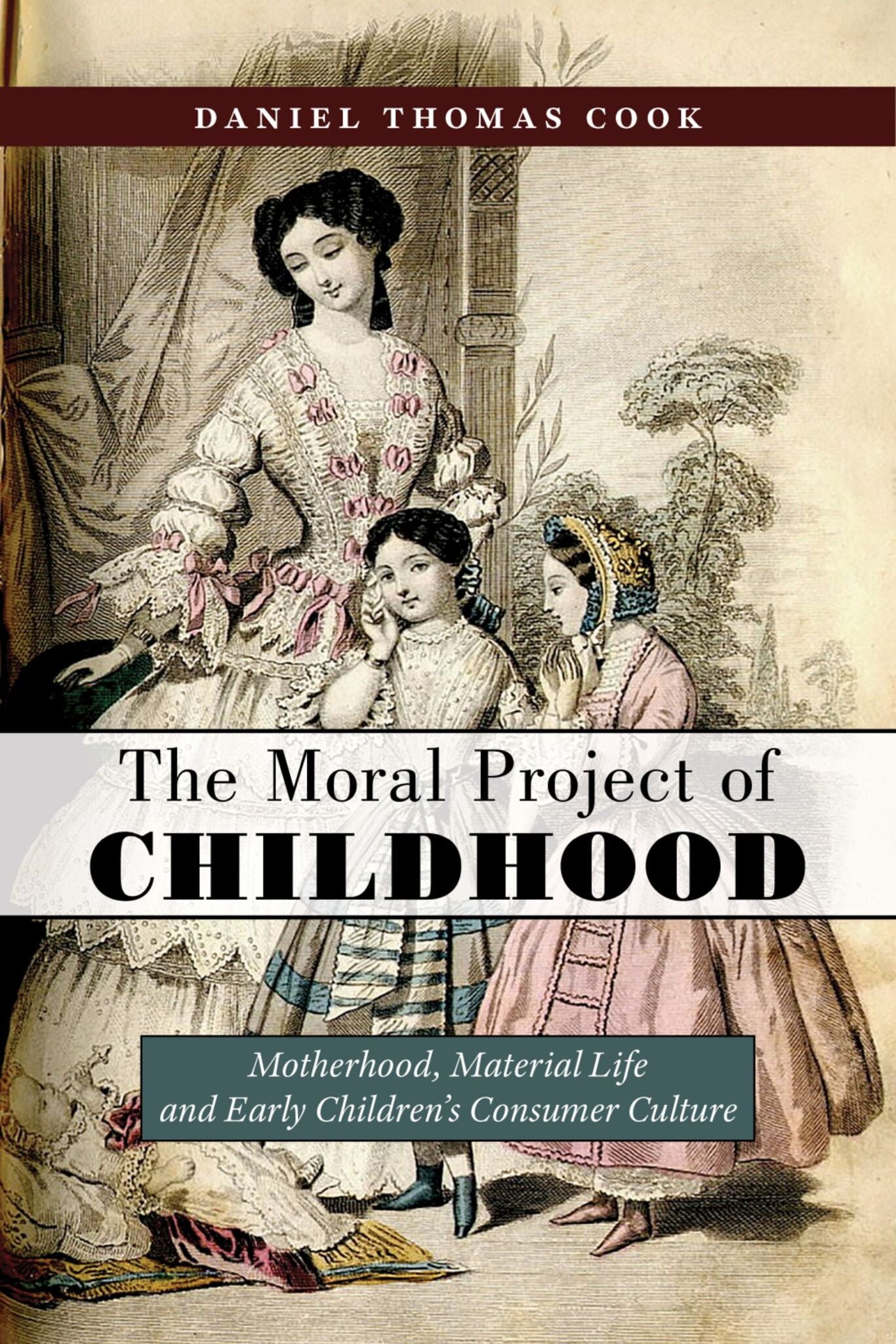
Examines the Protestant origins of motherhood and the child consumer
Throughout history, the responsibility for children’s moral well-being has fallen into the laps of mothers. In The Moral Project of Childhood, the noted childhood studies scholar Daniel Thomas Cook illustrates how mothers in the nineteenth-century United States meticulously managed their children’s needs and wants, pleasures and pains, through the material world so as to produce the “child” as a moral project.
Drawing on a century of religiously-oriented child care advice in women’s periodicals, he examines how children ultimately came to be understood by mothers—and later, by commercial actors—as consumers. From concerns about taste, to forms of discipline and punishment, to play and toys, Cook delves into the social politics of motherhood, historical anxieties about childhood, and early children’s consumer culture.
An engaging read, The Moral Project of Childhood provides a rich cultural history of childhood.


— Allison J. Pugh, author of The Tumbleweed Society: Working and Caring in an Age of Insecurity
"Cook makes a timely and exciting intervention into questions of value, providing stimulating insights into the tempestuous moral project of childhood. Examining 19th-century Anglo-American 'mother's magazines', he argues persuasively against the treatment of consumption as an intervention into 'pre-capitalist childhood'. By adeptly charting the co-constitutive logic of capital and childhood, and the weighty accountability this entails for mothers and motherhood, he offers a lens through which to view the making and exclusive idealization of middle-class White childhoods which resonate to this day. The book asks not just who is a 'child', but when and how bodies are made into children, urging us to interrogate the way contests over childhood are profoundly implicated in affective, moral, and economic valuations."
— Rachel Rosen, editor of Feminism and the Politics of Childhood: Friends or Foes?
"This book treats changes in upper-class education in the 19th-century northeastern US [...] Cook argues that rather than continuing to instruct children according to stern religious values to ensure their moral education, this period emphasized refined taste—a sense of which goods were and were not good—as the new basis of morality and defense of the status quo."
"A definitive, positive, and original impact on the field of childhood studies... useful for anyone documenting the historical, cultural, and discursive trajectory of childhood and parenting culture, no matter the specific raced, classed, religious, and national social-historical context."