


Some error occured while loading the Quick View. Please close the Quick View and try reloading the page.
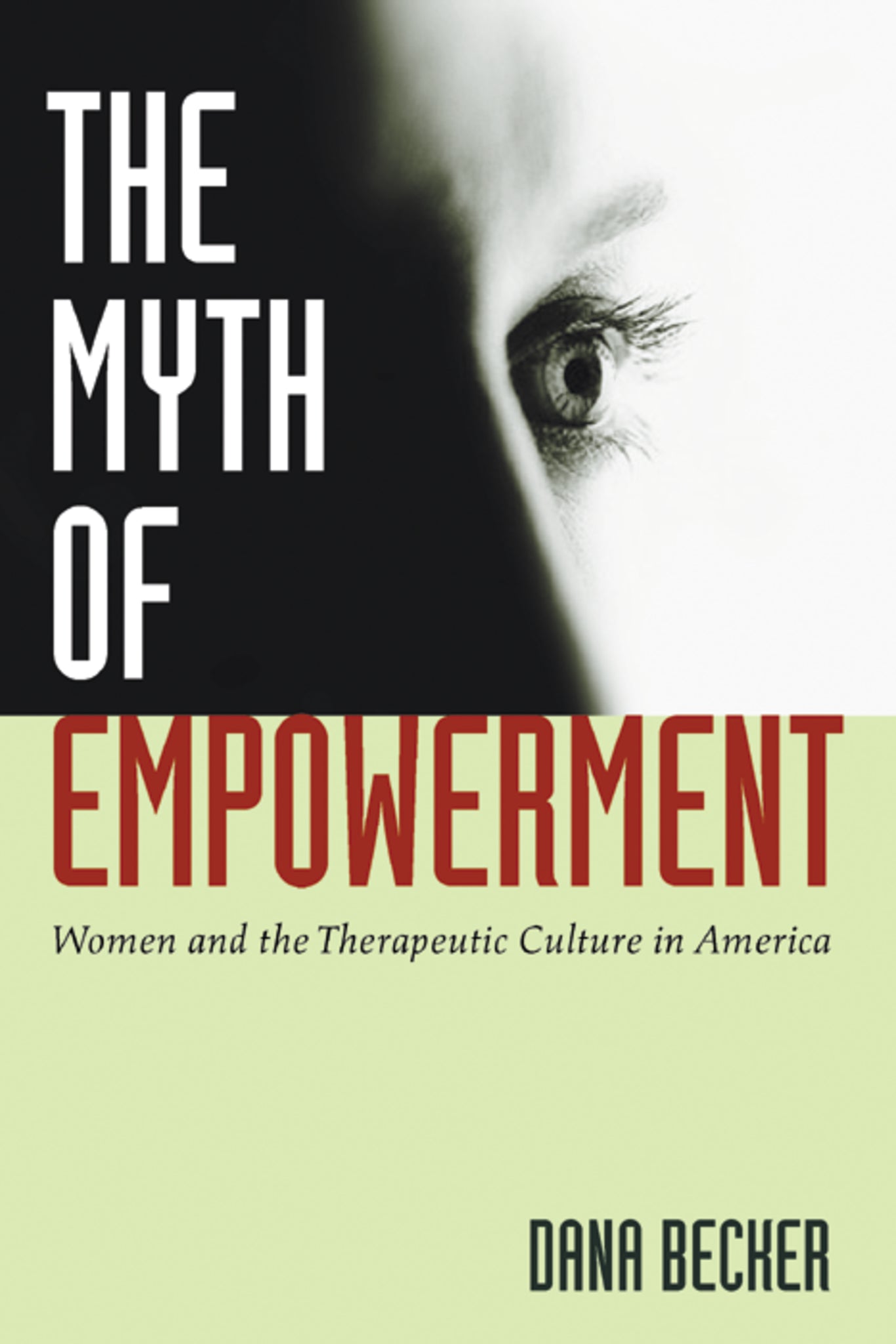
The Myth of Empowerment surveys the ways in which women have been represented and influenced by the rapidly growing therapeutic culture—both popular and professional—from the mid-nineteenth century to the present. The middle-class woman concerned about her health and her ability to care for others in an uncertain world is not as different from her late nineteenth-century white middle-class predecessors as we might imagine. In the nineteenth century she was told that her moral virtue was her power; today, her power is said to reside in her ability to “relate” to others or to take better care of herself so that she can take care of others. Dana Becker argues that ideas like empowerment perpetuate the myth that many of the problems women have are medical rather than societal; personal rather than political.
From mesmerism to psychotherapy to the Oprah Winfrey Show, women have gleaned ideas about who they are as psychological beings. Becker questions what women have had to gain from these ideas as she recounts the story of where they have been led and where the therapeutic culture is taking them.


— Jeanne Maracek
"Dana Becker writes that for the past few decades women have been encouraged to believe that by taking care of their psychological selves they are becoming ever more powerful. Not so. In this intelligent and chilling examination, Becker traces how the repackaging of the psychological as power has led to the ultimate colonization of women's psyches. She is a beautiful writer, an exacting historian of ideas, and a tremendously intelligent guide through these troubled waters."
— Sharon Lamb,Professor of Psychology, Saint Michael's College and author of The Secret Lives of Girls and The Trouble with Blame
"I was impressed with how the author marshaled this critical literature into a coherent and...compelling narrative."