


Some error occured while loading the Quick View. Please close the Quick View and try reloading the page.
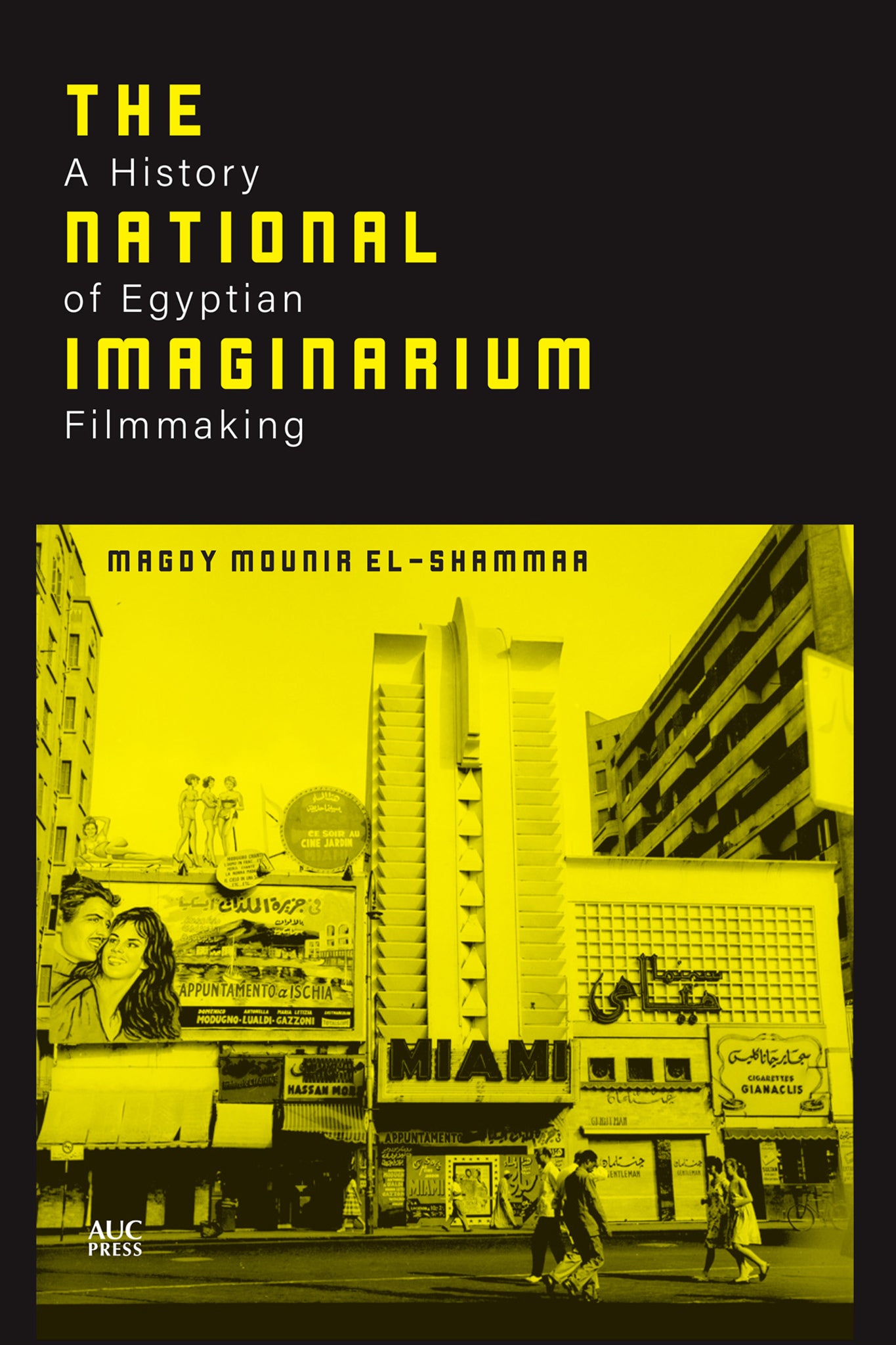
Spanning a century of Egyptian filmmaking, this work weaves together culture, history, politics, and economics to form a narrative of how Egyptian national identity came to be constructed and reconstructed over time on film. It goes beyond the films themselves to explore the processes of filmmaking—the artists that made it possible, the institutional networks, structures, and rules that bound them together, the changing social and political environment in which the films were produced, and the role of the state. In peeling back the curtain to reveal the complexities behind the screen, Magdy El-Shammaa shows cinema as at once both a reflection and a producer of larger cultural imaginings of the nation.
The National Imaginarium provides an in-depth description of the films discussed. It explores the construction of a populist consciousness that permeated and transcended class structures at mid-century in Egypt, and how this subsequently came undone in the face of the bewildering social, economic, and political transformations that the country underwent in the decades that followed. More than similar treatments of the topic, this book draws on theoretical ideas from outside the immediate discipline of Film Studies, including investigations into the materiality and colonial foundations of cosmopolitanism, the stakes and aesthetics of realism, policy shifts around women’s rights, transnational economic contexts, and the broader history of the country and region, including insightful snapshots of everyday life.


"[A] detailed and unique contribution to the
field of Egyptian cinema studies. . . . The National
Imaginarium combines extensive research of both Arabic and
English language sources with newly collected data and engaging textual
analysis of a representative group of films for each significant period. . . .
What makes this book additionally unique is the detailed history of political
and economic factors that determined the developments of each time
period."—Samirah Alkassim, Review
of Middle East Studies
“In delving so thoroughly into the
historical context of the film industry itself and the discourse surrounding
film production across more than eight decades, from the 1920s to the early
2000s, [El-Shammaa] demonstrates how Egyptian films have nurtured a
space—a national imaginarium—‘in which and
through which Egypt and Egyptians were imaginatively made and
remade.’” —Naomi
Sakr, Middle East Journal of Culture and
Communication
"Recommended. General readers, graduate students, faculty, and
professionals."—CHOICE
Magdy Mounir El-Shammaa holds a PhD in Ottoman and modern Middle East history from the University of California, Los Angeles. An independent scholar, he has taught at the University of Alberta, Canada, and the American University in Dubai. His current research interest is the historical roots and roles of populism, sectarianism, and regional rivalries in the wake of the Arab uprisings.
1. Early Egyptian Filmmaking: Reel vs. Real; Colonial Cosmopolitanism and Egyptian Film Histories
2. Realism, Modernism and Populism in Revolutionary Times: Cinema, Memory, and History
3. Reading “A Woman’s Youth”: Gender, Patriarchy, and Modernism
4. The Revolution’s Children: Gender, Generation, and the “New” Patriarchy
5. Behind the Silver Screen: Market, Artist, and State in the Production of Culture
6. Pathos and Passions: The Twilight of Nasserism
7. 1970s Egyptian Cinema: Sadat’s Infitah on screen
8. Mubarak’s Egypt and end-of-century Egyptian Cinema
Epilogue
Notes
Bibliography
Index