


Some error occured while loading the Quick View. Please close the Quick View and try reloading the page.
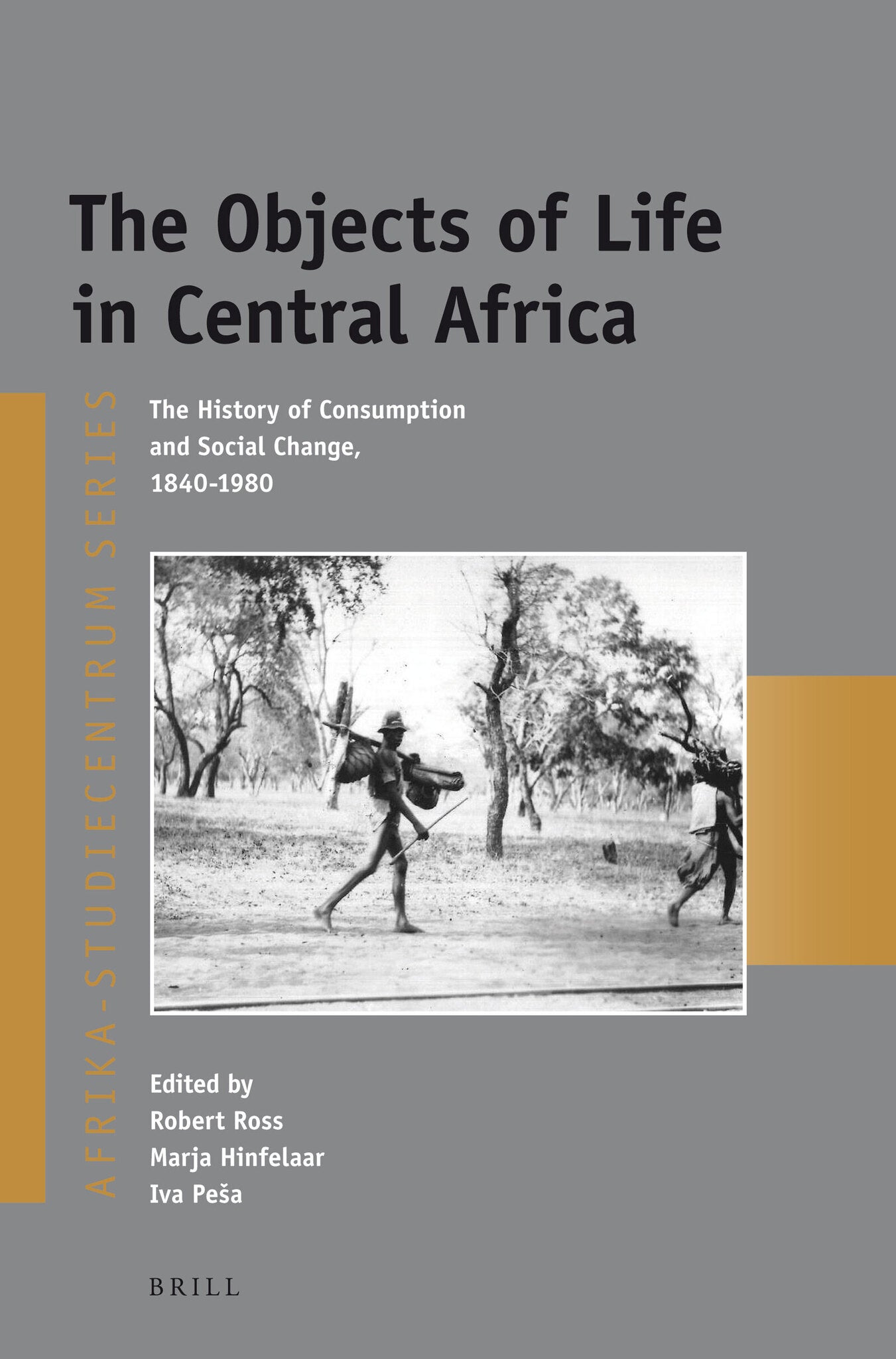
In The Objects of Life in Central Africa the history of consumption and social change from 1840 until 1980 is explored. By taking consumption as a vantage point, the contributions deviate from and add to previous works which have mainly analysed issues of production from an economic and political perspective. The chapters are broad-ranging in temporal and geographical focus, including contributions on Congo, Zambia, Zimbabwe and Angola. Topics range from the social history of firearms to the perception of the railway and include contributions on sewing machines, traders and advertising. By looking at the socio-economic, political and cultural meaning and impact of goods the history of Central Africa is reassessed.

Price: $66.00
Pages: 284
Publisher: Brill
Imprint: Brill
Publication Date:
08 August 2013
ISBN: 9789004254909
Format: Paperback

Robert Ross, Ph.D. (1974), Cambridge University, is Professor of African History at Leiden University. He has published extensively on South African history, recently focusing on material culture. He is co-editor of Cambridge History of South Africa(Cambridge University Press, 2010).
Marja Hinfelaar, Ph.D. (2001) in History, Utrecht University, is a historian working at the National Archives of Zambia, where she coordinates digitisation projects. Her research interests include the historical relationship between church and state in Zambia.
Iva Peša is a historian and is currently doing her PhD at Leiden University on the social history of Mwinilunga District in northwestern Zambia. Her interests include the changing patterns of (agricultural) production, consumption, labour migration and social relationships.
Marja Hinfelaar, Ph.D. (2001) in History, Utrecht University, is a historian working at the National Archives of Zambia, where she coordinates digitisation projects. Her research interests include the historical relationship between church and state in Zambia.
Iva Peša is a historian and is currently doing her PhD at Leiden University on the social history of Mwinilunga District in northwestern Zambia. Her interests include the changing patterns of (agricultural) production, consumption, labour migration and social relationships.