


Some error occured while loading the Quick View. Please close the Quick View and try reloading the page.
CHOICE Outstanding Academic Title, 2022
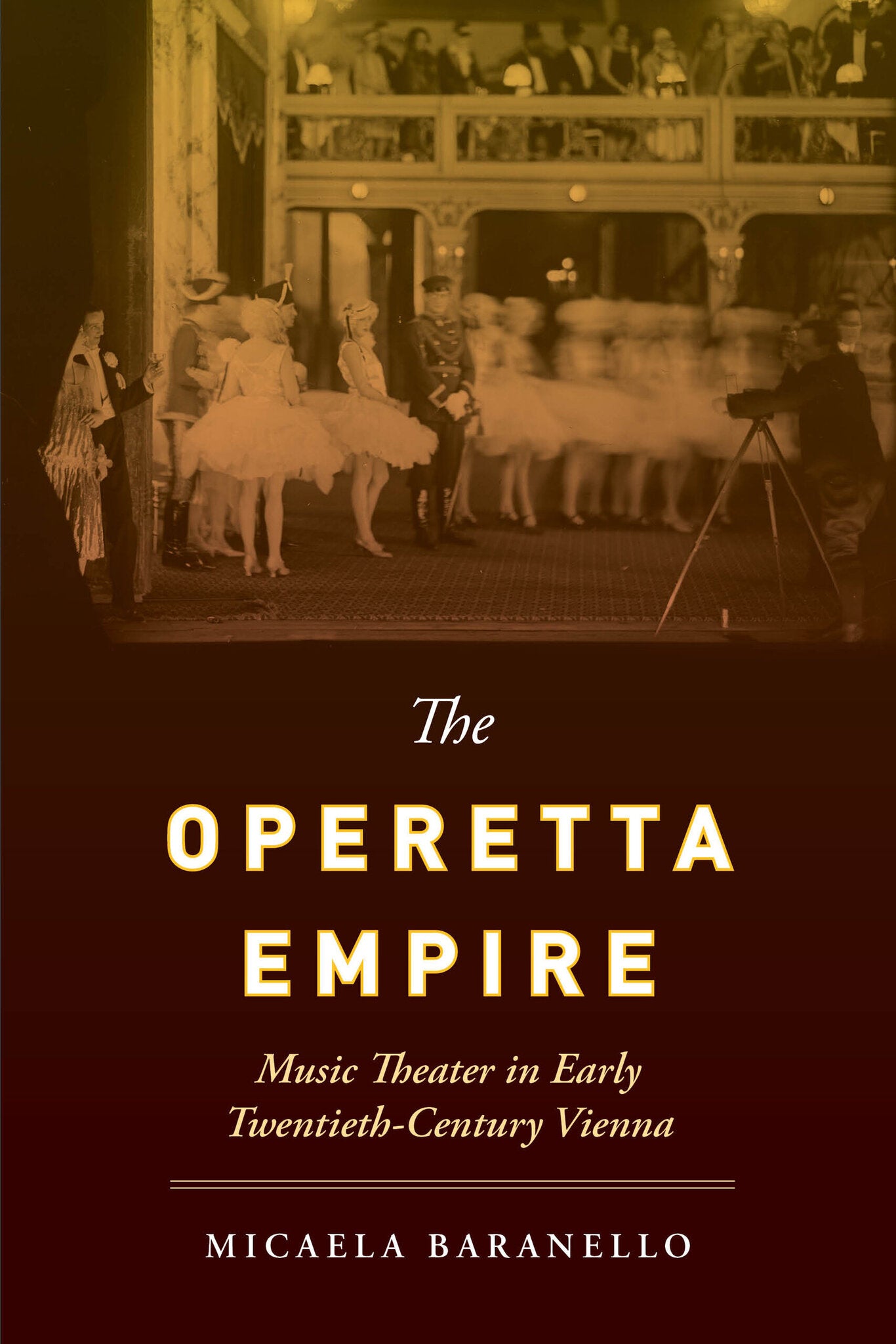
"When the world comes to an end," Viennese writer Karl Kraus lamented in 1908, "all the big city orchestras will still be playing The Merry Widow." Viennese operettas like Franz Lehár's The Merry Widow were preeminent cultural texts during the Austro-Hungarian Empire's final years. Alternately hopeful and nihilistic, operetta staged contemporary debates about gender, nationality, and labor. The Operetta Empire delves into this vibrant theatrical culture, whose creators simultaneously sought the respectability of high art and the popularity of low entertainment. Case studies examine works by Lehár, Emmerich Kálmán, Oscar Straus, and Leo Fall in light of current musicological conversations about hybridity and middlebrow culture. Demonstrating a thorough mastery of the complex early twentieth-century Viennese cultural scene, and a sympathetic and redemptive critique of a neglected popular genre, Micaela Baranello establishes operetta as an important element of Viennese cultural life—one whose transgressions helped define the musical hierarchies of its day.
"When the world comes to an end," Viennese writer Karl Kraus lamented in 1908, "all the big city orchestras will still be playing The Merry Widow." Viennese operettas like Franz Lehár's The Merry Widow were preeminent cultural texts during the Austro-Hungarian Empire's final years. Alternately hopeful and nihilistic, operetta staged contemporary debates about gender, nationality, and labor. The Operetta Empire delves into this vibrant theatrical culture, whose creators simultaneously sought the respectability of high art and the popularity of low entertainment. Case studies examine works by Lehár, Emmerich Kálmán, Oscar Straus, and Leo Fall in light of current musicological conversations about hybridity and middlebrow culture. Demonstrating a thorough mastery of the complex early twentieth-century Viennese cultural scene, and a sympathetic and redemptive critique of a neglected popular genre, Micaela Baranello establishes operetta as an important element of Viennese cultural life—one whose transgressions helped define the musical hierarchies of its day.

Price: $34.95
Pages: 250
Publisher: University of California Press
Imprint: University of California Press
Publication Date:
25 May 2021
ISBN: 9780520976542
Format: eBook

Preface
Acknowledgments
Map of Vienna
Introduction: Operetta in Vienna
1. Die lustige Witwe and the Creation of Silver Age Viennese Operetta
2. Sentimentality, Satire, and Labor
3. Hungary, Vienna, and the "Gypsy Operetta"
4. Operetta and the Great War
5. Exotic Liaisons
6. Operetta in the Past Tense
Notes
Bibliography
Index
Acknowledgments
Map of Vienna
Introduction: Operetta in Vienna
1. Die lustige Witwe and the Creation of Silver Age Viennese Operetta
2. Sentimentality, Satire, and Labor
3. Hungary, Vienna, and the "Gypsy Operetta"
4. Operetta and the Great War
5. Exotic Liaisons
6. Operetta in the Past Tense
Notes
Bibliography
Index